You’re finally comfortable in bed. The blanket is warm, the room is just right, and your toes still seem to be spending the night outdoors.
You rub your feet together and pull on another pair of socks. Sometimes that works. Other nights they stay stubbornly cold, and the annoyance follows you into the next day. After a while you start to wonder whether your feet are simply sensitive, or whether you’re missing something.
A few small details can tell you a lot.
Are Your Feet Actually Cold, or Do They Just Feel Cold?
It sounds like a strange question, but it’s a useful one. Touch your feet with your hands. Is the skin genuinely cool, or does it feel perfectly warm even though your feet insist they’re freezing?
When your feet are physically cold, blood flow often plays a part. To conserve heat, your body narrows the vessels near your skin, so less warm blood reaches your toes and your core stays protected. Your feet are among the farthest parts of your body from your heart, and cold floors or damp shoes can make them lose heat even faster.
The other possibility is that temperature isn’t the problem at all. Your nerves report hot and cold to your brain, and when those signals get distorted, your feet can feel icy without actually being cold.
Neither answer is a diagnosis, and a touch test isn’t a reliable measure of circulation or nerve function. But knowing which one fits you gives you a way to describe what you’re feeling, and somewhere to start.
7 Reasons Your Feet May Stay Cold
1. Your Feet Are Losing Heat Faster Than You Realize
Sometimes the cause isn’t inside your body at all. It’s what your feet put up with all day.
Tile floors, thin-soled shoes, chilly offices, and hours of sitting can leave your toes cold while the rest of you feels fine. Sweat makes it worse: damp socks stop insulating, and moisture evaporating from your skin carries heat away with it. Shoes that squeeze your toes can add to the discomfort. And some people simply run colder at the feet than others, with no illness behind it.
The reassuring pattern looks like this: both feet feel about equally cold, nothing else seems off, and they warm up once you change your surroundings. If warmth doesn’t make much difference, other explanations deserve a closer look.
2. Raynaud’s Phenomenon Can Affect Your Toes
Raynaud’s is best known for fingers, but toes can react in much the same way.
During an episode, small blood vessels tighten sharply in response to cold or emotional stress. Toes may turn pale, then bluish, then red as blood flow returns, and they can feel numb, prickly, or painful. Not everyone gets every color change. On darker skin the shifts may be subtle, and the nail beds are often the easiest place to spot them.
The pattern offers another clue. Raynaud’s typically causes episodes of coldness and color change, rather than a constant sensation that stays exactly the same. Many people have primary Raynaud’s, which occurs on its own, while in others it’s linked to an underlying condition. If your fingers get cold too, our guide to why your hands are always cold explores Raynaud’s and other possible causes. Arrange a medical evaluation if attacks are new, increasingly painful, or come with sores on your toes.
3. Peripheral Artery Disease May Reduce Blood Flow to Your Feet
Cramping calves and cold feet might seem unrelated. Sometimes they share a cause.
Peripheral artery disease (PAD) develops when fatty deposits narrow the arteries that supply your legs, making it harder for blood to reach the muscles and tissues beyond the narrowing. Cold feet can be one clue, but PAD doesn’t always announce itself, and some people have no obvious symptoms at all.
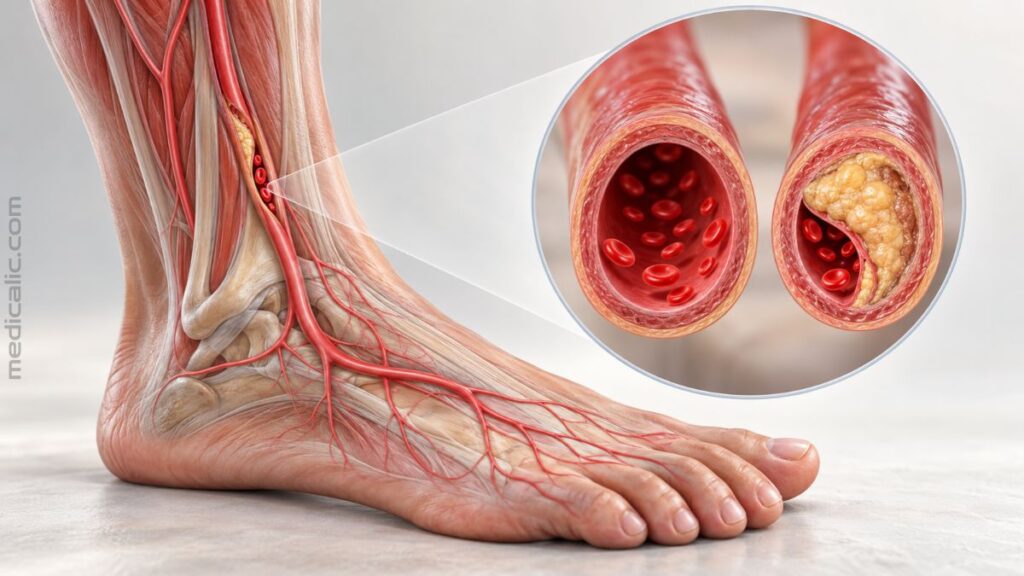
When symptoms do appear, you might notice aching or cramping in your calves when you walk, especially uphill, that eases after a few minutes of rest. One foot may feel cooler than the other, or a small wound on a toe may take unusually long to heal. PAD is more likely if you smoke or have diabetes, high blood pressure, or high cholesterol. Even so, cold feet alone don’t mean you have it.
One situation can’t wait. If one foot suddenly becomes much colder than the other, especially if it turns pale or blue, becomes painful or numb, or feels weak or hard to move, seek emergency care immediately. A sudden loss of blood supply can threaten the limb. Pain in your foot at rest or a wound that won’t heal also calls for prompt medical attention.
4. Nerve Problems Can Make Warm Feet Feel Freezing
This is the second possibility from the touch test: feet that feel like ice to you but normal to anyone who touches them.
It can happen with peripheral neuropathy, where nerves outside the brain and spinal cord become damaged or stop working properly. Feet are especially vulnerable because your longest nerves run all the way down to your toes.
Diabetes is a major cause, but not the only one. Vitamin B12 deficiency, heavy alcohol use, certain medications, and other health conditions can also affect these nerves. The sensations vary. Some people feel freezing toes, others burning, pins and needles, or numbness, and symptoms may be worse at night.
The bigger concern goes beyond discomfort. With reduced sensation, you might not notice a blister, a small cut, or a shoe rubbing against your skin. That’s why persistent numbness deserves attention even when your feet don’t hurt.
5. An Underactive Thyroid Can Make You Sensitive to Cold
When the thyroid doesn’t make enough hormone, a condition called hypothyroidism, your body’s energy use and heat production can slow down, and you become unusually sensitive to cold. Your feet might be where you notice it first, but the chill often isn’t limited to your toes.
Other signs include persistent tiredness, constipation, dry skin, thinning hair, and unexplained weight gain. They tend to build slowly, so you may not realize how much has changed until several show up together.
A blood test can check thyroid function. If hypothyroidism is behind the problem, treating it can make you less sensitive to cold.
6. Iron-Deficiency Anemia May Be Part of the Picture
Red blood cells rely on iron to carry oxygen. When iron deficiency progresses to anemia, cold hands and feet may come with fatigue, dizziness, headaches, or shortness of breath.
What matters more is often how you feel beyond your feet. Are you unusually exhausted after ordinary activities? Do stairs leave you more breathless than they used to? Have you had heavy periods or another possible source of blood loss? Those answers make anemia worth testing for.
A complete blood count and iron studies can help identify the problem. Don’t assume an iron supplement is the answer before you’ve been tested. Excess iron can be harmful, and anemia has several possible causes.
7. Medications and Nicotine Can Play a Role
Sometimes cold feet start around the same time as a change in medication. Certain beta-blockers, stimulants, and decongestants can affect blood vessels or worsen cold-triggered symptoms, and some cancer treatments can contribute to nerve problems. Nicotine in any form, including vaping, narrows blood vessels too.
So think back to when it started. Did you begin a new prescription or change a dose? Do your feet get colder after nicotine? That timeline can tell you more than guessing which condition you have.
If a medication seems involved, talk to your prescriber, and don’t stop taking it without their advice.
How to Warm Up Cold Feet Safely
When your toes are freezing, it’s tempting to park them right against a heater. Don’t. A bit of preparation works better than intense heat, especially if the feeling in your feet is reduced.
- Start with dry socks. Change them after exercise or whenever they get damp. Moisture-wicking fabrics can help keep sweat off your skin.
- Give your toes room. Choose shoes with a roomy toe box and enough insulation for the weather. Tight footwear makes cold feet more uncomfortable.
- Block the cold floor. Indoor slippers with insulating soles are often more effective than several thin pairs of socks.
- Break up long sitting. A short walk, some ankle circles, or a few toe wiggles help keep blood flowing.
- Warm up gradually. Drape a blanket over your feet and give them time. When you wash your feet, use warm water, never hot, and dry carefully between your toes.
One precaution matters most if you have diabetes or neuropathy: don’t use heating pads or hot water bottles on feet with reduced sensation. You could burn your skin without realizing it. Check the water temperature before washing your feet, and avoid soaking them. If you have diabetes, also look over your feet every day for blisters, cuts, redness, or sores, and wear well-fitting shoes rather than going barefoot. Small injuries can become serious when sensation or circulation is impaired.
Good habits make everyday cold feet easier to manage. They won’t fix an underlying thyroid problem, nerve damage, or a narrowed artery.
What If Your Feet Never Seem to Warm Up?
Start by noticing the pattern instead of just the temperature. Are both feet affected, or is one noticeably colder? Do your toes change color? Does it show up while you’re walking, after sitting, or when you’re trying to sleep?
If your feet stay cold despite reasonable warming, if things are getting worse, or if you notice pain, numbness, or recurring color changes, book an appointment. A photo of any color change, along with a note of when it happened, helps if your feet look normal by the time you’re seen.
A healthcare professional will likely examine your skin, check the pulses in your feet, and test how well you feel touch and temperature. Depending on your symptoms, they might suggest blood tests for anemia, thyroid function, blood sugar, or vitamin B12. If reduced arterial blood flow is suspected, an ankle-brachial index test compares the blood pressure at your ankle with your arm to help assess circulation. Not everyone needs every test. The choice follows what your symptoms point to.
Cold feet don’t always mean something is wrong. But if they keep coming back, the answer probably isn’t another pair of socks. It’s finding out why.
Update History
Originally written by Dr. Jubair Islam.
Medical review completed for clinical accuracy.
Your answer helps us improve the clarity and usefulness of our health content.