Your coffee is hot, the room is comfortable, and your fingers still feel like they’ve been dipped in ice water. You tuck them into your sleeves, wrap them around a mug, and notice that nobody else seems bothered. Eventually you stop mentioning it, because the answer is always the same: “Just wear gloves.”
Gloves help, of course. But when cold hands become a regular part of your day, it’s natural to wonder whether something more is going on. And the most useful clue isn’t how cold your hands feel. It’s when it happens, how long it lasts, and what else comes with it.
Why Are My Hands Cold Even When the Rest of My Body Is Warm?
Your body is very good at protecting its core. When you’re exposed to cold, the tiny blood vessels near your skin narrow, a process called vasoconstriction. Less warm blood reaches the surface, so less heat escapes.[1]
Fingers feel this first. They’re slender, with a lot of skin for their volume, so they lose heat quickly. That’s how your hands can feel chilly while your chest and stomach stay perfectly comfortable.
This is a normal response, and your hands should warm up once you do. But if they stay cold indoors, start to hurt, or change color, the thermostat probably isn’t the whole explanation.
9 Possible Reasons Your Hands Are Always Cold
Not every case of cold hands points to a medical condition. Some causes, though, leave recognizable clues. Let’s start with the one most people have heard of.
1. Raynaud’s Phenomenon
Ever noticed your fingertips turn strangely pale after reaching into the freezer? That may be a small version of Raynaud’s.
In Raynaud’s phenomenon, the small blood vessels in your fingers overreact to cold or emotional stress. They tighten suddenly, and blood flow drops for a while. During an attack, fingers often turn white, then blue, and then red as circulation returns. Numbness, tingling, or throbbing may follow. Not everyone sees every color, and the changes can be harder to spot on darker skin.
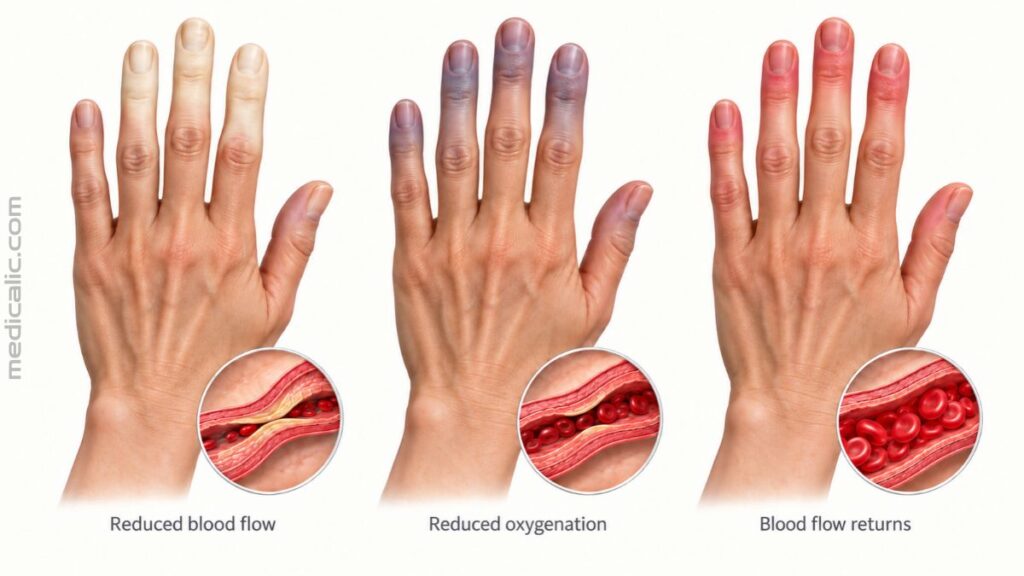
There are two types. Primary Raynaud’s occurs on its own and is usually milder. Secondary Raynaud’s is linked to another health condition and can be more severe.[2]
Both hands are usually affected, though individual fingers may react differently. Attacks that are new, unusually painful, or limited to one side deserve a medical check.
2. Iron-Deficiency Anemia
If cold hands come with constant tiredness, iron is worth a look.
Your body needs iron to make hemoglobin, the protein in red blood cells that carries oxygen. When iron runs low and anemia develops, cold hands and feet can join other signs: dizziness, pale skin, breathlessness, and fatigue that rest doesn’t fix.[3] Common causes include heavy periods, too little iron in the diet, and blood loss from the digestive tract.
A simple blood test can confirm it. Don’t start iron supplements just because your hands are cold. Too much iron can be harmful.
3. Hypothyroidism (Underactive Thyroid)
Your thyroid sets the pace at which your body uses energy and produces heat. When it makes too little hormone, you can feel cold in a room that everyone else finds pleasant.[4]
Hypothyroidism tends to creep in slowly. Other clues include dry skin, constipation, low energy, thinning hair, and unexplained weight gain. Since these overlap with so many other conditions, a thyroid blood test will tell you far more than guesswork.
4. Reduced Blood Flow to Your Hands
“Poor circulation” is a catch-all phrase, and it can mean different things. Sometimes narrowed or blocked arteries limit how much blood reaches the hand. That can cause persistent coldness, discomfort, or sores that heal slowly. If one hand is clearly colder than the other, it’s worth paying attention.
If one hand suddenly turns very cold, pale or blue, and painful, especially with numbness or weakness, seek emergency care. A sudden blockage can damage tissue if treatment is delayed.[5]
5. Diabetes and Nerve Problems
Sometimes your hands feel freezing without being especially cold to the touch. Nerves help your brain read temperature, and when they’re irritated or damaged, they can send misleading signals.
Diabetic neuropathy, nerve compression, and some other neurological conditions can all do this. Often the tingling, burning, reduced sensation, or trouble feeling objects stands out more than the cold itself. Feeling cold doesn’t always mean your skin is short of blood.
6. Autoimmune Conditions
In autoimmune disease, the immune system turns on the body’s own tissues. Some of these conditions, particularly systemic sclerosis and lupus, can affect blood vessels and connective tissue, and they’re a known cause of the secondary Raynaud’s described above.
Doctors look for companions such as swollen joints, unexplained rashes, tightening skin around the fingers, or fingertip sores. These conditions aren’t the most common reason for cold hands. But when several unusual symptoms appear together, it’s worth connecting the dots.
7. Certain Medications and Nicotine
Sometimes the cause is sitting in your medicine cabinet. Some beta-blockers, ADHD stimulants, and decongestants can narrow blood vessels or make cold-triggered symptoms worse. Nicotine does the same, whether it comes from cigarettes or vaping.
If your hands got colder after you started a medication, mention it to your prescriber. Don’t stop a prescribed medicine on your own. An adjustment or an alternative may be possible.
8. Acrocyanosis
Acrocyanosis can look like Raynaud’s, but the pattern is different. Raynaud’s comes in episodes. Acrocyanosis causes a more lasting discoloration, usually in both hands. Your fingers may look bluish or purplish, feel cool, and sometimes turn clammy. The primary form is typically painless.
It’s often harmless, but new or unexplained discoloration should be examined rather than diagnosed at home.
9. Stress and Frequent Cold Exposure
Remember how your hands feel before a tense conversation? Stress activates your nervous system and can tighten small blood vessels, which for some people means colder fingers.
Your surroundings add to it. Air-conditioned offices, trips into refrigerated aisles, and long stretches outdoors can all keep your hands uncomfortable. If the chill follows these situations and eases with warmth, the trigger is probably easy to spot. Even so, ongoing pain or marked color changes shouldn’t simply be put down to anxiety.
How to Warm Up Cold Hands and Keep Them Comfortable
When your fingers are icy, the instinct is to grab the hottest thing nearby. Don’t. Gentle, gradual warming is safer, especially if your hands are numb.
Start with your whole body. Your hands respond to your overall temperature, so an extra sweater can do more than you’d expect. Then a few habits can help:
- Use comfortably warm water. Hold your hands under warm, not hot, running water, or tuck them under your armpits until they thaw.
- Keep gloves within reach. Insulated gloves or mittens suit the outdoors, and thin ones help with frozen foods.
- Keep moving. Walking and gentle arm movements support healthy circulation.
- Plan for temperature swings. Carry a layer for the jump from warm weather to a heavily air-conditioned building.
- Notice your triggers. If caffeine seems to make things worse, cut back and see what changes.
You don’t need expensive “circulation boosters” or supplements with uncertain benefits. For cold-triggered symptoms, small routine changes are often enough. If an underlying condition is responsible, though, lasting relief depends on treating that condition.
When Should You Worry About Cold Hands?
You don’t need to worry every time your fingers feel chilly. But book an appointment if the problem is becoming more frequent, getting in the way of daily life, or worsening even when you keep warm. Repeated color changes, persistent tingling, painful episodes, and sores are also good reasons to get checked.
Your doctor will usually begin with questions and a physical exam: when it started, whether both hands are affected, what sets off an episode, and which medications you take. Your skin and pulses can offer more clues. Depending on what they find, testing might include:
- A complete blood count and iron studies to look for anemia.
- A thyroid-stimulating hormone (TSH) test to check thyroid function.
- Blood glucose testing if diabetes is a concern.
- Autoimmune blood tests or nailfold capillaroscopy if secondary Raynaud’s is suspected.[6]
You won’t necessarily need all of them. The aim is to test only the possibilities that fit your symptoms.
One small tip makes the visit far more useful: photograph your fingers when they change color. Note what you were doing, how long it lasted, and whether it hurt. By the time you’re in the exam room, your hands may look completely normal, and a photo tells the story they no longer can.
You don’t have to accept permanently cold fingers as just another part of life. Understanding your own pattern is the first step toward relief that actually lasts.
Medical References
Update History
New medical references added.
Medical review completed for clinical accuracy.
Originally written by Dr. Jubair Islam.
Your answer helps us improve the clarity and usefulness of our health content.