After a night of drinking, waking up with sudden urgency, loose stools, or stomach cramps can be frustrating. Diarrhea after drinking alcohol is uncomfortable, but it is not unusual. Alcohol can irritate the digestive tract, change how quickly food moves through the intestines, and contribute to fluid loss. These effects may cause watery stools, nausea, or bloating.
A mild, isolated episode often improves with hydration, rest, and a break from alcohol. Diarrhea that happens every time you drink or comes with severe pain, bleeding, fever, or dehydration needs medical attention.
Common Symptoms of Alcohol-Related Diarrhea
Alcohol-related diarrhea may involve more than loose stools. Common symptoms include:
- Loose or watery stools
- Sudden bowel urgency
- Abdominal cramps
- Nausea
- Bloating
Some people may notice symptoms within a few hours of drinking, while others experience them the following morning.
Why Does Alcohol Cause Diarrhea?
In some people, alcohol triggers diarrhea by affecting the stomach, intestines, and normal fluid absorption. Symptoms may depend on how much and how quickly you drink, what else is in the beverage, what you eat, and whether your digestive system is already sensitive.
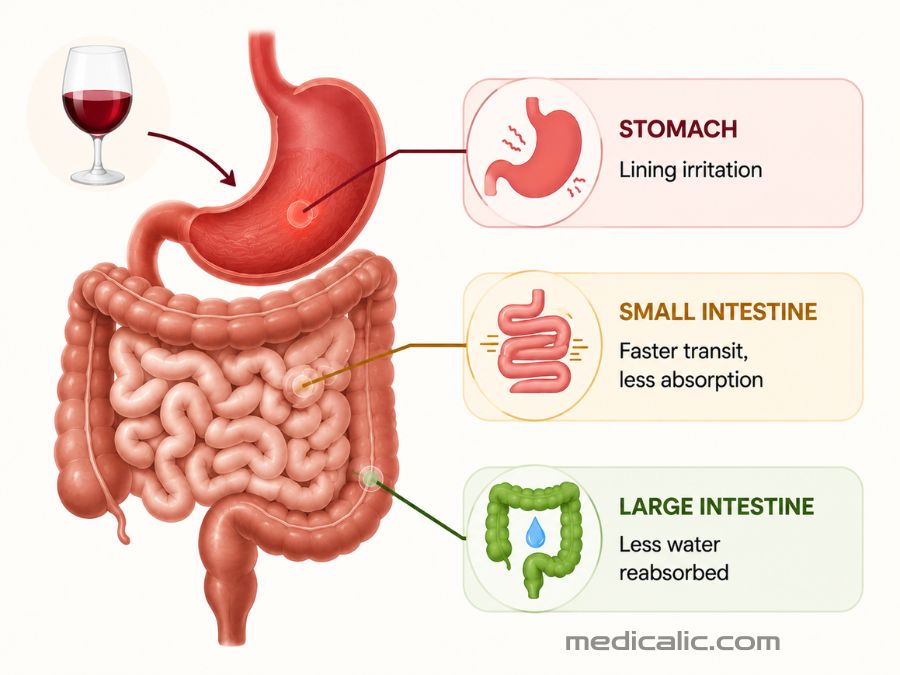
It irritates the digestive tract
Alcohol irritates the stomach lining, worsening nausea, reflux, and upper abdominal discomfort. Larger amounts can also damage and inflame the intestinal lining.
An irritated intestine may handle fluid and nutrients less efficiently, contributing to cramps, urgency, and loose stools.
It changes intestinal movement and water absorption
Your intestines move waste at a controlled pace while absorbing water. Alcohol can disrupt this process. Depending on the amount and concentration, it may alter intestinal muscle activity and shorten the time available for water absorption. [7] When too much water remains in the stool, diarrhea can result.
This helps explain why reactions vary. One person may develop diarrhea after a few drinks, while another may experience constipation or no bowel change.
People with sensitive digestive systems may notice symptoms even after smaller amounts of alcohol, while others may tolerate occasional drinking without major digestive problems.
It may affect the gut barrier and microbiome
Frequent or heavy alcohol use can disturb the intestinal barrier and change the microorganisms living in the gut. Research links heavy consumption and alcohol use disorder with intestinal inflammation and microbiome changes, although scientists are still studying how directly these changes cause short-term diarrhea. [4]
For an occasional episode, immediate irritation and altered bowel movement are usually more useful explanations than “bad gut bacteria” alone.
Other ingredients may contribute
The amount of alcohol generally matters more than whether you choose beer, wine, or liquor. Still, sugary mixers, caffeine, carbonation, large servings, or ingredients you do not tolerate may add to bloating or urgency.
Some people notice symptoms more often with specific drinks or ingredients. Beer may contribute to bloating because of carbonation and carbohydrates, sugary cocktails may worsen diarrhea in some individuals, and wine may trigger symptoms in some people who are sensitive to compounds such as sulfites or histamine.
A brief record of the drink type, amount, food eaten, and symptoms may reveal a pattern. Do not keep testing a beverage that repeatedly makes you ill.
Drinking on an empty stomach may worsen symptoms
Food slows alcohol absorption, so drinking without eating can produce faster absorption and stronger effects. A meal does not fully protect your gut, but eating beforehand may reduce symptoms for some people. Avoiding alcohol remains the most reliable prevention strategy when it consistently triggers diarrhea.
Is Diarrhea After Drinking Alcohol Normal?
An occasional mild episode can happen and does not automatically signal a serious condition. However, frequent episodes deserve attention, especially when they happen after small amounts of alcohol or continue over time.
Repeated diarrhea after small amounts may reflect individual sensitivity or another digestive issue. Irritable bowel syndrome, inflammatory bowel disease, celiac disease, food intolerance, infection, medication side effects, and pancreatic problems can also cause diarrhea. Alcohol may be the trigger, or the timing may be coincidental. NIDDK lists infections, food poisoning, and medication side effects among common causes of acute diarrhea. [1]
Talk with a clinician if symptoms occur nearly every time you drink, have become more frequent, wake you from sleep, or continue when you avoid alcohol.
What Do Watery, Burning, or Yellow Stools Mean?
Watery diarrhea usually means the colon did not absorb enough fluid before the stool passed. Sudden or “explosive” diarrhea describes urgency, not a specific diagnosis.
Burning around the anus is often caused by repeated watery stools, frequent wiping, and irritated skin. Rinse gently, pat dry, and consider a thin layer of plain barrier ointment. Avoid fragranced wipes.
Temporary stool color changes can occur when digestion speeds up, but persistent changes should be evaluated.
Persistent pale, greasy, yellow, black, or bloody stools or ongoing mucus should be assessed rather than blamed on alcohol.
How Long Does Alcohol-Related Diarrhea Last?
A mild episode usually settle within several hours to a day after you stop drinking, rehydrate, and resume eating. Acute diarrhea from other causes often lasts one or two days, so ongoing symptoms are not necessarily alcohol-related.
Contact a healthcare professional if diarrhea lasts more than two days, worsens, or repeatedly returns. Consider food poisoning or infection if other people who shared your food are also sick, or if you have fever, vomiting, or recent travel.
What to Do for Diarrhea After Drinking Alcohol
Stop drinking until your symptoms have fully resolved. More alcohol may prolong irritation.
Replace fluids gradually. Water may be enough for mild symptoms, while an oral rehydration solution can replace fluid and electrolytes when diarrhea is frequent. Sip slowly if you feel nauseated. Dark urine, reduced urination, intense thirst, dizziness, and marked fatigue may signal dehydration.
Eat when you feel able. Simple foods such as bananas, rice, toast, crackers, oatmeal, potatoes, soup, and eggs may feel comfortable while your digestive system recovers. A highly restrictive diet is unnecessary. NIDDK advises that most adults can return to their normal diet when appetite returns. [6] Temporarily avoid alcohol, very greasy meals, heavy spices, and large amounts of caffeine.
Ask a pharmacist or clinician before using an over-the-counter antidiarrheal, especially if you take other medicines. Do not self-treat diarrhea with blood, black stool, or fever unless a healthcare professional advises it.
How to Prevent Diarrhea After Drinking
The simplest way to prevent alcohol-related diarrhea is to reduce alcohol intake or avoid alcohol if it consistently triggers symptoms. If you choose to drink, set a lower limit, drink slowly, eat beforehand, and alternate with nonalcoholic fluids.
In the United States, one standard drink contains about 14 grams of pure alcohol roughly 12 ounces of 5% beer, 5 ounces of 12% wine, or 1.5 ounces of 40% spirits. Many cocktails, cans, and large pours contain more than one standard drink. [2]
CDC guidance defines moderate drinking as no more than two drinks in a day for men or one for women, on days alcohol is consumed. [3] These are limits, not health targets, and drinking less is safer than drinking more. Some people should not drink, including those who are pregnant, cannot control their intake, have certain medical conditions, or take medications that interact with alcohol.
If even a small amount reliably causes diarrhea, avoiding alcohol may be the most practical solution.
When to Seek Medical Care
This guide can help you decide when home care may be enough and when medical evaluation may be needed. Most mild cases of alcohol-related diarrhea improve with hydration and rest. However, symptoms such as blood or black stools, severe abdominal pain, fever, significant dehydration, or diarrhea that does not improve may require medical evaluation. These signs can indicate a condition other than simple alcohol-related diarrhea.
Severe upper abdominal pain especially pain spreading to the back with vomiting requires urgent assessment because it may be a symptom of pancreatitis, which can be associated with heavy alcohol use. [5]
Frequently Asked Questions
Alcohol can irritate your digestive tract, increase intestinal movement, and reduce water absorption in your intestines. This can leave extra water in your stool, causing loose or watery diarrhea the next day.
Yes. In some people, alcohol can quickly stimulate the digestive system and irritate the gut, causing urgency and loose stools soon after drinking.
Stop drinking alcohol, drink plenty of fluids, and eat easy-to-digest foods such as bananas, rice, toast, or soup. Avoid greasy foods, caffeine, and alcohol until symptoms improve.
Frequent diarrhea after drinking may be related to alcohol sensitivity, intolerance, reactions to certain drink ingredients, or an underlying digestive condition. Repeated symptoms should be discussed with a healthcare professional.
The Bottom Line
Diarrhea after drinking alcohol may result from irritation, inflammation, altered intestinal movement, and reduced water absorption. Hydration, normal gentle eating, and avoiding further alcohol usually help a mild episode. Tracking when symptoms occur can help you identify your triggers and make better decisions about alcohol use.
Medical References
Update History
Medically reviewed by Dr. Rahul Kushwaha.
Originally written by Dr. Jubair Islam.
Your answer helps us improve the clarity and usefulness of our health content.