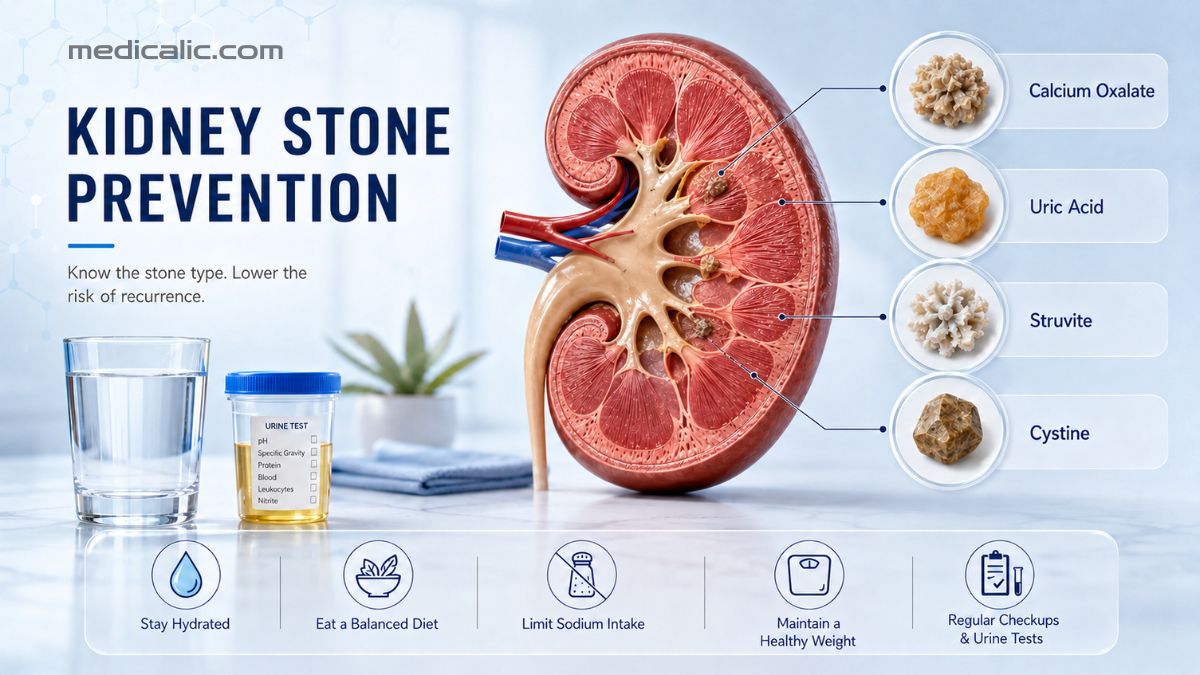
Kidney stone prevention works best when it is based on your stone type, urine chemistry, medical history, diet pattern, and fluid intake. General advice can help, but people who form stones repeatedly often need a more personalized plan. [1]
The foundation is simple: drink enough fluid to keep urine diluted, avoid excessive sodium, get enough calcium from food, moderate animal protein, and have a stone analyzed if you pass one or have one removed. For people at higher risk of recurrence, a clinician may recommend a 24-hour urine test to measure urine volume, calcium, oxalate, citrate, uric acid, sodium, and pH. The European Association of Urology recommends reliable stone analysis and metabolic evaluation for stone formers, with more specific testing for high-risk patients. [1]
This guide explains the prevention steps with the strongest support, where the evidence needs nuance, and which habits can help reduce the chance of future stones.
The Short Answer
Kidney stone prevention is not one universal diet. The best plan depends on the type of stone and the chemistry of your urine. [1][2]
For many stone formers, the core prevention steps are to drink enough fluid to produce diluted urine, reduce sodium, eat normal amounts of calcium from food, avoid very high animal-protein intake, and limit high-oxalate foods only when relevant. NIDDK notes that food and drink choices may depend on stone type and may involve sodium, animal protein, calcium, or oxalate changes. [2]
For recurrent stones, a 24-hour urine test can turn generic advice into a targeted plan. It can show whether your main issue is low urine volume, high urine calcium, high oxalate, low citrate, high uric acid, high sodium, or abnormal urine pH.
Key Facts About Kidney Stones
Kidney stones are common. In the United States, NIDDK reports that about 11% of men and 6% of women have kidney stones at least once in their lifetime. [3]
People who have had a stone before are also more likely to develop another one, and low fluid intake is one recognized risk factor. [3]
Calcium stones are the most common type of kidney stone, and calcium oxalate stones are more common than calcium phosphate stones. A safer way to phrase this is: calcium oxalate is the most common stone pattern in many patients, but exact percentages vary by population, region, and study.
Why Kidney Stones Form
Kidney stones form when urine becomes concentrated enough for minerals and salts to crystallize. When urine volume is low, substances such as calcium, oxalate, uric acid, cystine, and phosphate can become more concentrated.
Think of it like adding too much sugar to a small amount of water. At first, the sugar dissolves. Once the liquid becomes oversaturated, crystals begin to appear. A similar process can happen in urine when stone-promoting substances are high or stone-inhibiting substances, such as citrate, are low.
The main prevention goal is to make the urine environment less favorable for crystals to form, grow, and clump together.
Stone Type Changes the Prevention Plan
Not every kidney stone is prevented the same way. That is why stone analysis matters.
| Stone Type | Common Pattern | Main Prevention Focus |
|---|---|---|
| Calcium oxalate | Common calcium stone pattern | Fluids, normal calcium intake, sodium reduction, oxalate strategy when needed |
| Calcium phosphate | May be linked with higher urine pH or metabolic factors | Fluids, sodium control, evaluation for underlying causes |
| Uric acid | Often linked with acidic urine, gout, metabolic syndrome, or high purine intake | Raise urine pH when appropriate, moderate purines and animal protein |
| Struvite | Usually linked with infection | Treat and prevent urinary tract infections |
| Cystine | Genetic condition called cystinuria | High fluid intake, urine alkalinization, specialist treatment |
The EAU guideline discusses multiple stone types, including calcium oxalate, calcium phosphate, uric acid, struvite, cystine, drug stones, and others. So the most accurate wording is “different stone types require different prevention strategies.” [1]
Hydration: The Most Important Foundation
“Drink more water” is common advice, but the better prevention target is urine output, not just the number of glasses you drink.
The EAU guideline recommends generous fluid intake, preferably water, to allow a 24-hour urine volume above 2.5 liters. The AUA also recommends fluid intake that achieves a urine volume of at least 2.5 liters daily for stone formers. [1][4]
Practical hydration goal
Aim for urine that is usually pale yellow, not dark yellow or amber. Dark urine often means urine is concentrated, which may increase stone-forming risk.
You may need more fluid if you sweat heavily, exercise often, live in a hot climate, work outdoors, have vomiting or diarrhea, have cystine stones, or have been told by your doctor to increase urine volume.
People with kidney failure, heart failure, liver disease with fluid restrictions, or another condition requiring fluid limits should not suddenly increase fluid intake without medical advice.
Best drinks for kidney stone prevention
The EAU guideline notes that citrus fruit juices may be useful because of citrate or alkalinizing effects, but water should remain the preferred fluid. [1]
Drinks to limit
| Drink | Why to Limit |
|---|---|
| Sugar-sweetened soda | Associated with higher stone risk in cohort data |
| Cola drinks | May be a concern, especially when they replace water |
| Excess alcohol | Can contribute to dehydration and other health risks |
| High-sugar juice | Adds sugar; use small portions if included |
A safer message is not “all soda causes stones,” but rather: water should be the main drink, and sugar-sweetened beverages should be limited.
The Kidney Stone Prevention Diet
A kidney stone prevention diet is not one universal “stone diet.” It depends on stone type and urine results. Still, several principles help many people:
Drink enough fluid, keep sodium moderate, avoid very high animal-protein intake, do not restrict dietary calcium unless advised, limit high-oxalate foods only when relevant, and use stone analysis or 24-hour urine testing to personalize the plan.
NIDDK explains that food choices may depend on stone type and may involve changing sodium, animal protein, calcium, or oxalate intake. [2]
The Calcium Rule Most People Get Wrong
Many people think calcium stones mean they should avoid calcium. That is usually wrong.
For calcium oxalate stones, enough calcium from food can help because calcium binds oxalate in the digestive tract before oxalate is absorbed and reaches the kidneys. NIDDK explains that calcium, in the right amounts, can block other substances in the digestive tract that may cause stones. [2]
The EAU guideline also states that calcium should not be restricted unless there are strong reasons to do so and lists a daily calcium requirement of 1,000–1,200 mg. [1]
Better calcium strategy
Get calcium mainly from food, pair calcium-containing foods with higher-oxalate meals, and ask a clinician or dietitian if you need a specific calcium target.
Be careful with random calcium supplements, high-dose supplements, or calcium supplements taken between meals unless your clinician recommends them.
A good practical rule: do not go low-calcium on your own.
Sodium: A Major Risk Factor You Can Control
High sodium intake can increase kidney stone risk. NIDDK says your chance of developing kidney stones increases when you eat more sodium and notes that adults should generally aim for less than 2,300 mg sodium per day, unless a clinician gives a different target. [2]
The EAU guideline explains that high salt intake can increase urinary calcium, reduce urinary citrate, and increase the risk of sodium urate crystal formation. [1]
High-sodium foods to reduce
Packaged snacks, instant noodles, canned soups, deli meats, fast food, restaurant meals, salty sauces, pickles, processed cheese, chips, and crackers are common sodium sources.
Animal Protein: Moderate, Don’t Panic
Animal protein is not forbidden, but excess intake can increase stone risk in some people. NIDDK says eating animal protein may increase the chance of developing kidney stones and suggests replacing some animal protein with plant-based foods such as beans, dried peas, and lentils. [2]
The EAU guideline says animal protein should not be consumed in excess and lists several stone-promoting effects of excessive animal protein, including lower urinary citrate, lower urine pH, hyperoxaluria, and hyperuricosuria. [1]
A practical approach is to keep portions moderate, limit organ meats and large red-meat servings, use plant proteins more often, and balance protein with vegetables, fruits, and whole grains.
Foods to Limit If You Are Stone-Prone
You do not need to fear every food. The key is knowing your stone type and urine results.
| Food or Drink | Why It May Matter | Better Advice |
|---|---|---|
| Spinach, rhubarb, wheat bran | High in oxalate | Limit if you form calcium oxalate stones or have high urine oxalate |
| Nuts and peanuts | Can be high in oxalate | Use smaller portions; pair with calcium-containing foods when appropriate |
| High-sodium processed foods | Can raise urinary calcium | Aim for lower sodium overall |
| Organ meats, large red-meat portions, shellfish | High purine load may affect uric acid | Limit especially for uric acid stones or gout |
| Sugar-sweetened soda | Associated with higher risk | Replace with water most of the time |
| High-dose vitamin C supplements | Vitamin C is a precursor of oxalate; risk remains debated | Avoid excessive doses unless prescribed |
EAU notes that vitamin C is a precursor of oxalate, although its role as a risk factor remains controversial; it still advises calcium oxalate stone formers to avoid excessive intake. [1]
Foods That Can Help
NIDDK says studies show the DASH diet can reduce kidney stone risk. The DASH-style pattern emphasizes fruits, vegetables, whole grains, low-fat dairy, and less sodium. [2][6]
DASH Diet and Kidney Stones
The DASH diet was originally designed to support healthy blood pressure, but it also fits many kidney stone prevention goals. It emphasizes fruits, vegetables, whole grains, low-fat dairy, beans, nuts, and moderate protein while limiting sodium and highly processed foods. [2][6]
A DASH-style eating pattern has been associated with a lower risk of kidney stones in observational research. It may help because it supports normal calcium intake, adds more fruits and vegetables, reduces sodium, and encourages a more balanced protein pattern. However, DASH should not be viewed as a guaranteed way to prevent stones for everyone. Your stone type, urine chemistry, and medical history still matter. [2][6]
Supplements: What Helps, What Needs Caution
Supplements are not a shortcut. The best choice depends on the person’s stone type, kidney function, medications, and 24-hour urine results.
| Supplement or Therapy | Evidence-Based Position | Who Might Need It |
|---|---|---|
| Potassium citrate | Stronger evidence in selected patients; prescription in many places | Low urinary citrate, uric acid stones, selected calcium stone formers |
| Calcium with meals | Helpful in specific cases, especially oxalate binding | Low dietary calcium or enteric hyperoxaluria, under guidance |
| Magnesium | Low-level evidence; not a universal prevention supplement | Selected patients with low magnesium or specialist recommendation |
| Vitamin B6 | May be used in specific hyperoxaluria conditions | Specialist-guided cases |
| Probiotics for oxalate | Emerging; not established as standard prevention | Research area, not a guaranteed treatment |
| Vitamin C | Excessive supplemental intake may be risky in calcium oxalate formers | Avoid high-dose use unless medically advised |
EAU labels magnesium evidence as low-level and lists magnesium therapy for selected situations, not as a strongly proven universal prevention strategy. [1]
Prescription Medications for Recurrent Stones
Some people need medication, especially if they have frequent stones, high-risk stone types, or abnormal 24-hour urine results.
| Medication | Possible Use | Important Nuance |
|---|---|---|
| Potassium citrate | Low citrate, uric acid stones, selected calcium stones | Needs urine pH and potassium monitoring |
| Thiazide diuretics | Selected calcium stone formers with high urinary calcium | Newer evidence makes routine use more nuanced |
| Allopurinol | High uric acid or selected uric acid/calcium oxalate cases | Not for everyone |
| Sodium bicarbonate or potassium bicarbonate | Urine alkalinization for uric acid or cystine stones | Must be monitored |
| Tiopronin or D-penicillamine | Cystine stones | Specialist treatment |
Important thiazide update
Older guidance often described thiazides as clearly reducing calcium stone recurrence. EAU still notes that thiazides reduce urinary calcium, but a 2023 randomized trial in the New England Journal of Medicine found that hydrochlorothiazide did not substantially reduce recurrence compared with placebo and had more adverse events, including hypokalemia, gout, and new-onset diabetes. [5]
Lifestyle Changes That Matter
Maintain a healthy body weight
Being overweight can increase kidney stone risk. NIDDK notes that studies have shown being overweight increases risk. [2]
Exercise, but replace fluid loss
Exercise is helpful, but heavy sweating without fluid replacement can increase risk by lowering urine volume.
Review medications
Some medicines and supplements can affect stone risk. If you take topiramate, high-dose vitamin C, high-dose vitamin D, calcium supplements, certain antacids, or other long-term medications, ask your clinician whether they affect your personal stone risk.
The 24-Hour Urine Test: Why It Is So Useful
A 24-hour urine test can measure urine volume, calcium, oxalate, citrate, sodium, uric acid, pH, and cystine when needed. EAU recommends two consecutive 24-hour urine samples for specific metabolic evaluation in appropriate patients. [1]
This test helps turn generic advice into a personal plan:
| Finding | What It May Suggest |
|---|---|
| Low urine volume | Stronger hydration plan |
| High urine calcium | Sodium reduction and medication discussion when appropriate |
| Low urine citrate | More fruits and vegetables, citrate therapy discussion |
| High urine oxalate | Oxalate strategy plus calcium-with-meals approach |
| Low urine pH | Uric acid stone prevention strategy |
| High urine sodium | Sodium reduction focus |
Kidney Stone Prevention Checklist
Kidney Stone Prevention Checklist
Use this as a daily prevention guide:
- Drink enough fluid to keep urine pale yellow most of the day.
- Aim for a urine output target discussed with your clinician; many guidelines use at least 2.5 L/day for recurrence prevention.
- Do not restrict calcium from food unless advised.
- Eat calcium-containing foods with higher-oxalate meals when appropriate.
- Keep sodium below 2,300 mg/day unless your clinician gives a different target.
- Limit large portions of animal protein.
- Replace some meat with lentils, beans, or other plant proteins.
- Limit sugar-sweetened soda and cola.
- Avoid excessive vitamin C supplementation if you form calcium oxalate stones.
- Ask for stone analysis if you pass or remove a stone.
- Ask about a 24-hour urine test if stones recur.
- Work with a urologist, nephrologist, or renal dietitian for recurrent or high-risk stones.
When to Seek Medical Help Urgently
Get urgent medical care if you have severe side or back pain, fever or chills, vomiting that prevents drinking fluids, blood in urine with severe pain, inability to urinate, known kidney disease with stone symptoms, pain during pregnancy, or symptoms of urinary infection with stone pain.
A blocked kidney with infection can be dangerous and needs urgent treatment.
Frequently Asked Questions
For many people, the foundation is drinking enough fluid, preferably water, to keep urine diluted. EAU recommends fluid intake that allows a 24-hour urine volume above 2.5 liters for recurrence prevention. [1]
Usually, no. Calcium from food can help bind oxalate in the gut. NIDDK explains that calcium, in the right amounts, can block other substances in the digestive tract that may cause stones. [2]
Sugar-sweetened soda and punch have been associated with higher stone risk in cohort data, and reducing soft drink intake lowered symptomatic recurrence in one trial, although the evidence level was limited. Water is the preferred fluid. [1]
They may help selected patients, especially those with high urinary calcium, but the evidence is more nuanced than older articles suggest. A 2023 trial found hydrochlorothiazide did not substantially reduce recurrence compared with placebo and caused more adverse events. [5]
Key Takeaways
Kidney stone prevention is possible, but the best plan should not be based on guesswork. It should be based on stone type, urine volume, diet pattern, medical history, and 24-hour urine chemistry.
The most reliable prevention steps are to drink enough water to keep urine diluted, target urine output rather than only glasses of water, avoid low-calcium dieting unless prescribed, reduce sodium, moderate animal protein, limit high-oxalate foods only when relevant, use citrus as a helpful habit rather than a cure, be cautious with supplements, get stone analysis when possible, and ask about 24-hour urine testing if stones recur.
Medical References
Update History
Medically reviewed by Dr. Rahul Kushwaha.
Originally written by Dr. Rahul Kushwaha.
Your answer helps us improve the clarity and usefulness of our health content.