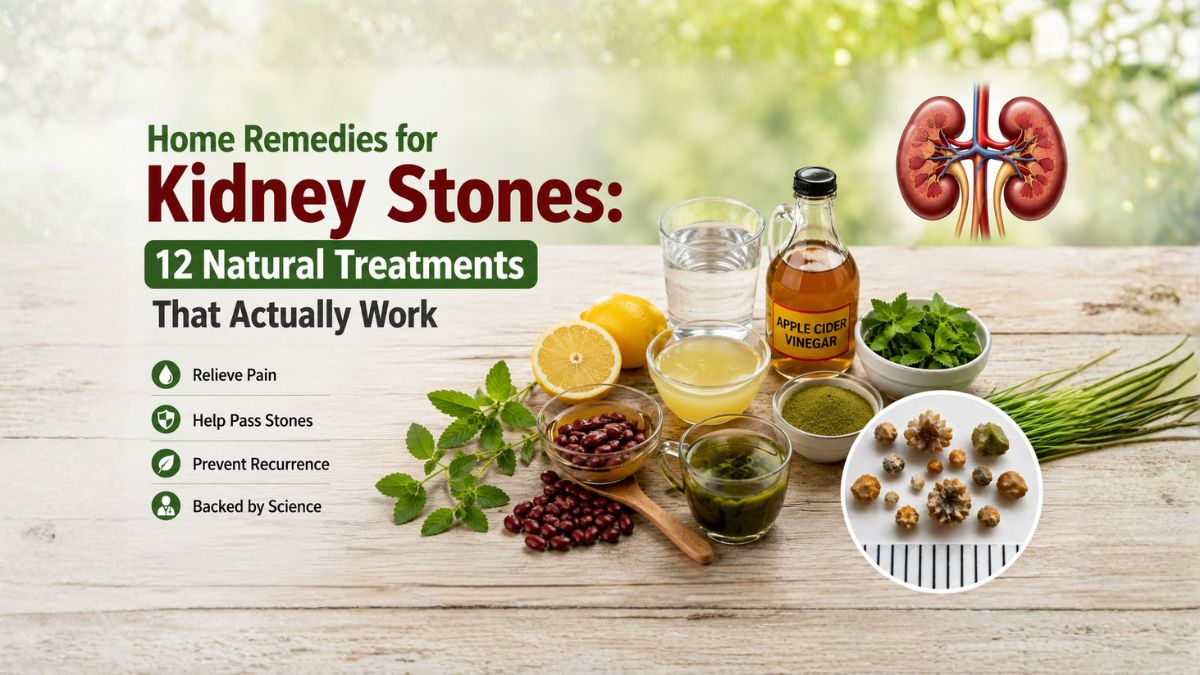
Passing a kidney stone is incredibly painful, but many smaller stones can be successfully managed right at home. Backed by science and clinical insights, here is a look at the treatments that actually work.
What Are Kidney Stones?
Kidney stones, medically called nephrolithiasis or renal calculi, are hardened mineral and salt deposits that form inside the kidneys. They range in size from a tiny grain of sand to a golf ball. When these stones travel from the kidney down through the ureter toward the bladder, they can cause intense, cramping pain.
More than 10% of people worldwide will experience at least one kidney stone in their lifetime. Recurrence rates are also high, reaching around 50% within five years if you do not make lifestyle changes. The good news is that most kidney stones under 5mm pass on their own, and there are real, evidence-supported ways to help the process along.
The pain kidney stones cause is called renal colic, and it tends to come in waves. This pain usually starts in the back or side below the ribs before radiating toward the lower abdomen and groin. Many people describe it as worse than childbirth, so it definitely isn’t something to push through without a clear plan.
The 4 Types of Kidney Stones
Understanding which type of stone you have matters because different stones respond to different remedies and dietary changes. Your doctor can determine the type through urine tests or by analyzing a passed stone.[2]
Most common type. Triggered by high oxalate intake, low fluid intake, and low citrate in urine.
Linked to high-purine diets (red meat, shellfish), gout, and acidic urine (low pH).
Often caused by urinary tract infections. More common in women. Can grow large (staghorn stones).
Rare, genetic condition (cystinuria). Requires specialized medical management.
How Kidney Stones Form: The Complete Cycle
Understanding the mechanism behind stone formation helps explain why specific remedies work. The diagram below maps the full journey from risk factors to formation and passage, showing exactly where each home remedy intervenes.
12 Home Remedies for Kidney Stones
The remedies below are ranked roughly by how strong the current evidence is. None of them replace medical care for large, stuck, or infected stones, but for small, confirmed-passable stones, they can make a real difference in speed and comfort.
Water: The Non-Negotiable First Step
There’s no remedy on this list that works without adequate water intake, and most of them need water as their delivery vehicle. Dehydration is the single biggest modifiable risk factor for kidney stones. When you’re not drinking enough, minerals in the urine become more concentrated and crystallize more easily.
The target for people with active kidney stones or high recurrence risk is producing about 2 liters of urine per day. For most people, that means drinking around 2.5–3 liters of fluid daily, depending on activity level and climate. You can gauge hydration by urine color, which should be pale yellow to near-clear (see the urine color guide below).[1]
How to use: Drink a minimum of 8–10 glasses (roughly 2–2.5 liters) of water daily. Set an alarm if you forget. Keep a water bottle on your desk. If the stone is actively passing, bump up to 3 liters a day.
Fresh Lemon Juice
This is one of the most legitimate natural interventions for kidney stones, particularly for calcium oxalate stones, which are the most common type. Lemons are exceptionally rich in citrate, a naturally occurring compound that binds to calcium in urine and stops it from pairing with oxalate to form crystals.[3]
At pharmacological (supplement) doses, potassium citrate is a medically-approved treatment for kidney stones. Fresh lemon juice doesn’t match those levels, but regular consumption does meaningfully raise urinary citrate and has been shown in multiple studies to reduce recurrence risk. It also helps break up very small stones that have already begun to form.
One thing to be clear about is that dietary lemon juice won’t dissolve a 10mm stone that’s been there for months. But it can prevent new stones and assist in clearing micro-crystals before they become a problem.
How to use: Squeeze half a fresh lemon (not bottled, as bottled juice often has far less citrate) into 8 oz of water and drink first thing in the morning and again in the afternoon. Follow with a plain glass of water immediately.
Apple Cider Vinegar (ACV)
Apple cider vinegar contains acetic acid, which has been studied for its role in reducing kidney stone formation. A 2019 review of studies found that vinegar consumption was associated with reduced stone formation, possibly because acetic acid helps prevent crystal nucleation and may help alkalinize the urine slightly, which reduces uric acid stone risk.
There’s a common claim online that ACV can “dissolve” existing stones. This is an overstatement. What the evidence actually supports is that ACV may help prevent new stones and can ease some of the discomfort and inflammation during passage. Clinical trials are ongoing to compare ACV directly with other beverages for stone prevention.
Don’t overdo it, as excess ACV can damage tooth enamel, cause acid reflux, and interact with insulin and diuretic medications.
How to use: Mix 2 tablespoons of raw, unfiltered ACV into 6–8 oz of water. Drink once daily, ensuring you have no more than one serving. Use a straw to protect tooth enamel. Do not use if you have diabetes without speaking to your doctor first.
Basil Juice (Tulsi)
Basil has deep roots in Ayurvedic medicine as a kidney tonic. It contains antioxidants, flavonoids, and anti-inflammatory compounds including eugenol. A 2020 rat study found basil may support kidney function and help reduce stone formation, but human clinical trials are still lacking.
Even without strong human evidence, basil is safe, nutrient-rich, and worth adding to your routine. If nothing else, it’s a great addition to a kidney-friendly diet for its anti-inflammatory properties.
How to use: Blend 5–10 fresh basil leaves into a smoothie or juice, or steep dried basil to make tea and drink 2–3 cups per day. The traditional Ayurvedic preparation involves mixing 1 tsp of fresh basil juice with 1 tsp of raw honey on an empty stomach each morning.
Celery Juice
Celery contains a flavonoid called apigenin, which has demonstrated anti-inflammatory and anti-stone properties in lab studies. It’s also a natural diuretic, meaning it increases urine output, which helps move stones along. A 2019 animal study found celery extract helped break down existing kidney stones, and observational data suggests women who eat more celery tend to have lower kidney stone rates.
As with most plant-based remedies, we’re still waiting on robust human clinical trials. But celery juice is safe, widely available, and the diuretic effect alone is mechanistically useful during stone passage.
How to use: Blend 2–3 celery stalks with half a cup of water and drink once daily. Start with a small amount if you have IBS or digestive sensitivity, as celery can be a trigger for some people.
Chanca Piedra (Stone Breaker Tea)
Phyllanthus niruri, commonly known as chanca piedra (Spanish for “stone breaker”), is one of the most studied herbal remedies for kidney stones. Research suggests it may reduce calcium oxalate crystal formation, inhibit aggregation of crystals into larger stones, and increase urinary magnesium, which is an important inhibitor of stone growth.
Multiple small human trials have shown promising results in stone clearance and prevention of recurrence. It’s more credibly studied than most herbal kidney stone remedies. That said, dose standardization and long-term safety data are still limited.
How to use: Steep 20g of dried chanca piedra in 1 liter of boiling water for 15 minutes, strain, and drink 2–3 cups per day. It is available at health food stores as tea or capsule extract. Do not use during pregnancy.
Wheatgrass Juice
Wheatgrass is packed with antioxidants, chlorophyll, and trace minerals. One notable finding: a 2017 laboratory study found that wheatgrass extract inhibited urinary crystallization by up to 88%. This is a dramatic result that, while not yet replicated in clinical human trials, is biologically plausible given its mechanism of increasing urine volume and improving mineral balance.
Traditional use has long promoted wheatgrass as a kidney cleanser, and its diuretic effect alone supports its use during stone passage. Take it on an empty stomach to reduce nausea risk.
How to use: Start with 1 oz (30ml) of fresh wheatgrass juice daily, working up to 2–4 oz. If fresh juice isn’t available, powdered wheatgrass dissolved in water works well. Best taken in the morning before eating.
Pomegranate Juice
Pomegranate juice is rich in antioxidants, particularly punicalagins and anthocyanins, which support kidney function and reduce oxidative stress in the renal system. While the National Kidney Foundation notes it doesn’t directly prevent kidney stones, it’s an excellent choice for overall kidney health compared to high-sugar alternatives.
It may also help keep the kidneys functioning better during stone passage, and it’s preferable to sodas or sweetened drinks that can increase stone risk.
How to use: One 8 oz glass of pure, unsweetened pomegranate juice per day. Check interactions with cholesterol-lowering medications (statins) before using regularly.
Kidney Bean Broth
The pod liquid from cooked kidney beans is a centuries-old South Asian folk remedy for kidney and urinary health. The broth is rich in magnesium and other minerals that act as natural stone inhibitors. While formal clinical evidence is thin, kidney beans as a food (not just the broth) are an excellent source of plant-based protein, which is highly relevant because high animal protein is a risk factor for multiple stone types.
If your doctor recommends reducing animal protein, kidney beans are a great substitute. The broth itself is mild, easy to prepare, and low-risk.
How to use: Cook kidney beans (do not use the canned liquid, but instead start from dried or fresh pods). Strain the cooking water, let cool, and drink a cup 2–3 times per day. The pods themselves can also be eaten.
Dandelion Root
Dandelion (Taraxacum officinale) root has been used as a diuretic and kidney tonic for centuries across European and Chinese traditional medicine. One lab study found it effective in preventing kidney stone formation in isolated samples, though this hasn’t translated to large human trials yet. It does increase urine output and supports bile flow, improving overall kidney function.
Important caution: Dandelion root interacts with diuretic medications and is not recommended for people with heart, liver, or kidney disease. If you’re allergic to ragweed, chrysanthemums, or daisies, you may also react to dandelion.
How to use: Use dried dandelion root to make tea: steep 1–2 tsp in boiling water for 10 minutes. Drink up to 3 cups per day. It is available as a tea, tincture, or capsule, but you should always use a quality, verified source.
Horsetail (Equisetum arvense)
Horsetail is one of the most used medicinal plants in Europe for urinary health. A 2021 review of research confirmed it has antibacterial and antioxidant properties relevant to urinary tract health, and may reduce calcium oxalate crystal formation and inflammation in the urinary passages.
It acts as a diuretic, increasing urine output to help flush stones, and has shown benefits in overall kidney function. However, it’s not recommended for children, pregnant or breastfeeding women, or people with kidney disease, as noted by the National Kidney Foundation.
How to use: Steep 2–3 tsp of dried horsetail in 8 oz of boiling water for 5–10 minutes. Drink up to 3 cups per day for a maximum of 6 weeks. It is available as a tea, capsule, or liquid extract.
Magnesium Supplementation
Magnesium is one of the body’s natural stone inhibitors. It binds with oxalate in the gut before it reaches the kidneys, reducing how much is available to form calcium oxalate stones. A 2025 dose-response study in adults over 50 found that higher magnesium intake was significantly associated with lower kidney stone rates.
Dietary magnesium sources include pumpkin seeds, dark chocolate, leafy greens, and legumes. For supplementation, magnesium citrate is the most common form used for kidney stone prevention and is generally well-tolerated at 200–400 mg/day.
How to use: Increase dietary magnesium through food first. If supplementing, take 200–400 mg of magnesium citrate daily with food. Speak with your doctor before supplementing, as excess magnesium can cause diarrhea and interfere with other medications.
Urine Color: Your Daily Hydration Report Card
One of the simplest tools for monitoring kidney stone risk is the color of your urine. Here’s what each shade tells you and what to do about it.
The Kidney Stone Diet: What to Eat and What to Avoid
Diet accounts for a substantial portion of kidney stone risk, particularly for calcium oxalate stones. The table below covers the most impactful dietary changes by stone type.
| Food / Nutrient | Effect on the Body | Stone Type Affected | Final Verdict |
| Water / Fluids | Dilutes urine concentration to prevent crystal aggregation | All stone types | ✓ Essential |
| Lemon / Citrus Juice | Raises urinary citrate levels and inhibits calcium stone growth | Calcium oxalate | ✓ Highly Recommended |
| Calcium-Rich Foods (Dairy, leafy greens) | Binds with oxalate in the gut before it can reach the kidneys | Calcium oxalate | ✓ Eat with Meals |
| Magnesium-Rich Foods (Seeds, legumes) | Acts as a natural oxalate binder and potent stone inhibitor | Calcium oxalate | ✓ Increase Intake |
| Plant-Based Protein (Beans, tofu, lentils) | Lowers purine and acid load compared to animal protein | Uric acid, Calcium oxalate | ✓ Preferred Source |
| High-Oxalate Foods (Spinach, beets, nuts, tea) | Significantly elevates urinary oxalate levels | Calcium oxalate | ✗ Limit (Don’t Eliminate) |
| Red & Organ Meats / Shellfish | High purine content accelerates uric acid production | Uric acid | ✗ Reduce Significantly |
| Table Salt / Sodium | Increases urinary calcium excretion into the kidneys | All calcium stones | ✗ Target <2,300mg/Day |
| Sugary Sodas / Fructose | Direct driver of high uric acid levels and stone risk | Uric acid | ✗ Avoid Entirely |
| High-Dose Vitamin C (Supplements) | Converts directly into dangerous oxalate in the body | Calcium oxalate | ✗ Stay Under 1,000mg/Day |
| Alcohol (Especially beer) | Dehydrates the body while rapidly raising uric acid | Uric acid, All types | ✗ Minimize Strictly |
| Coffee / Tea (Moderate) | Provides a mild diuretic effect with modest protective benefits | All types | ▲ Moderate Consumption OK |
When Home Remedies Are NOT Enough: Warning Signs
🚨 Seek Emergency Care Immediately If You Have:
- Fever above 38°C (100.4°F) or chills, which may indicate a dangerous kidney infection.
- Severe, uncontrollable pain that doesn’t ease within 30–60 minutes.
- Visible blood in your urine, resulting in a pink, red, or brown appearance.
- Inability to urinate, or a significantly reduced urine output.
- Continuous nausea and vomiting that completely prevents fluid intake.
- Pain in your kidney if you have only one functioning kidney.
Stones larger than 6mm rarely pass without intervention. Medical options include extracorporeal shock wave lithotripsy (ESWL), ureteroscopy with laser lithotripsy, or percutaneous nephrolithotomy (PCNL) for handling very large stones. These are outpatient or minimally invasive procedures that come with high success rates.
FAQ
No home remedy dissolves kidney stones quickly. However, drinking 2–3 liters of water daily combined with fresh lemon juice for citrate is the most evidence-backed approach to help small stones pass faster. Chanca piedra tea has the most evidence among herbal approaches, while stones larger than 6mm typically require medical treatment such as lithotripsy.
Apple cider vinegar contains acetic acid which may help prevent new kidney stones from forming and can reduce stone recurrence. However, there is currently no strong clinical evidence that ACV can dissolve already-formed stones. Claims that it “melts” stones are not supported by the current literature, so you should use it as a preventive tool instead of a cure.
The time varies significantly by stone size. Stones under 4mm usually pass within 1–2 weeks with adequate hydration. Stones between 4–6mm may take 2–4 weeks, and about 50% of these cases require some kind of medical assistance, while stones over 6mm rarely pass on their own. The location of the stone in the urinary tract also matters because stones closer to the bladder pass faster than those still in the ureter near the kidney.
Water is the most important fluid, so you should aim for 2.5 to 3 liters daily. Lemon water significantly helps with calcium oxalate stones due to its citrate content. Celery juice and horsetail tea act as diuretics to increase urine flow, while chanca piedra tea has the most evidence among herbal drinks. Make sure to avoid alcohol, sugary sodas, and very concentrated fruit juices.
Yes, many do. About 80% of kidney stones under 4mm pass spontaneously with adequate fluid intake and time. The smaller and lower they are in the urinary tract, the more likely they are to pass without intervention. However, even small stones can cause serious complications such as obstruction or infection if they get stuck, which is why medical evaluation is always recommended, even if home management is the plan.
Interestingly, several observational studies have found that moderate coffee consumption is associated with a slightly lower risk of kidney stones, possibly due to its mild diuretic effect and antioxidant content. However, caffeinated coffee can also mildly raise urinary calcium. The consensus is that moderate coffee consumption of 2 to 3 cups per day is probably fine for most stone formers, but it should never replace plain water as your primary fluid.
Medical References
Update History
Medically reviewed by Dr. Rahul Kushwaha.
Originally written by Dr. Jubair Islam.
Your answer helps us improve the clarity and usefulness of our health content.