Waking up with a pounding headache and wondering if it’s just stress, a typical migraine, or an early sign of COVID-19? A headache can be an early sign of COVID-19, appearing alone or alongside symptoms like fever, fatigue, cough, sore throat, and body aches.[1]
Because a COVID headache feels similar to a tension headache or migraine, there is no specific pain pattern that confirms the infection. Recent exposure and other symptoms may raise suspicion, but testing can help determine whether an active COVID-19 infection is present.
What Does a COVID Headache Feel Like?
While testing is the only way to know for sure, paying attention to the specific characteristics of your pain can be helpful. A COVID-related headache varies from person to person. Common presentations include:
- Pressure or tightness across the head.
- A dull, persistent, or throbbing ache.
- Sensitivity to light or sound, or pain that worsens with movement.
COVID-19 can trigger migraine attacks, cause a new migraine-like headache, or worsen an existing migraine disorder. Since these features overlap with other conditions like dehydration or poor sleep, consider testing promptly if the headache follows a known exposure, occurs with other respiratory symptoms, or feels unusual and has no clear explanation.
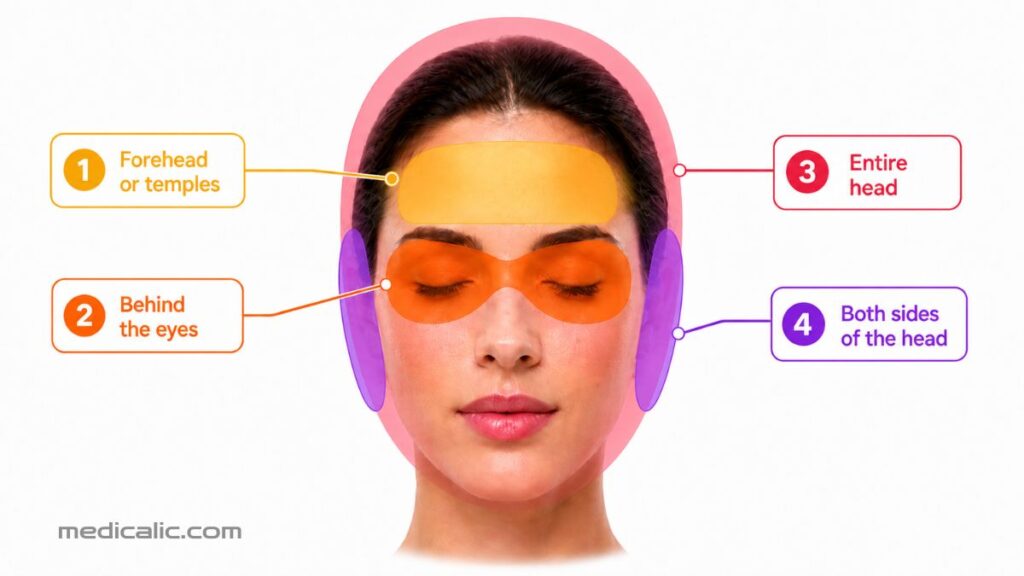
COVID Headache Location
The pain may affect several areas, including:
- The forehead or temples.
- The area behind the eyes.
- Both sides of the head.
- The entire head.
Can a Headache Be the First or Only Symptom?
Yes. A headache may appear before other symptoms or, occasionally, be the only noticeable sign. If your first at-home antigen test is negative, the FDA recommends testing again 48 hours later, for a total of at least two tests when symptoms are present.[2] A molecular test, such as a NAAT, may also be used as an alternative.
How Long Does a COVID Headache Last?
There is no fixed timeline for a COVID-19 headache. It may last a few hours, fluctuate over several days, or persist until the acute infection resolves.
Current definitions describe Long COVID as a chronic condition that develops after SARS-CoV-2 infection and is present for at least three months.[3] Recurring headaches are among the neurological symptoms reported in people with Long COVID, but a lingering headache does not automatically confirm this diagnosis. Stress, sleep disruptions, frequent pain medication use, or existing vision problems can also contribute. Seek medical advice if a headache persists after other symptoms improve, becomes more frequent, or disrupts your daily life.
COVID Headache Relief and Treatment
While waiting for the virus to run its course, your primary goal is symptom management. For relief from a mild COVID-related headache, supportive care at home may help when no warning signs are present:
- Hydration & Nutrition: Fever, sweating, vomiting, diarrhea, and reduced fluid intake can contribute to dehydration, which may worsen a headache. Drink fluids regularly unless a healthcare professional has advised you to limit fluid intake because of a heart, kidney, or other medical condition. Eat small, simple meals to keep energy levels stable.
- Rest & Trigger Reduction: Rest in a quiet, dimly lit room if you are sensitive to light and noise. Avoid strenuous exercise during the acute illness. Return to activity gradually, and stop if exertion worsens headache, fatigue, dizziness, breathing problems, or chest discomfort.
- Over-the-Counter (OTC) Pain Relievers: Medications like acetaminophen (paracetamol) or ibuprofen can help reduce both headache and fever. Always follow label instructions and check active ingredients in combination cold medicines to avoid double-dosing.
At Higher Risk of Severe COVID-19? Act Early
If you are at higher risk of severe COVID-19 due to older age, a weakened immune system, or certain underlying conditions, contact a healthcare professional as soon as symptoms begin. Eligible patients may benefit from antiviral treatment, which generally must start within five to seven days of symptom onset, depending on the medication.[4] A clinician will assess medication interactions and whether kidney or liver problems affect the available treatment options.
Comparing COVID-19 to Other Headaches
Because a COVID headache frequently mimics other common conditions, telling them apart can be tricky. These patterns may offer context, but symptoms often overlap and cannot reliably identify the cause:
| Condition | Common Headache Characteristics & Accompanying Symptoms |
| COVID-19 | Variable pain pattern; may occur with fatigue, cough, sore throat, congestion, fever, or changes in taste or smell. [1,6] |
| Migraine | Pulsating or throbbing pain, often accompanied by nausea and sensitivity to light or sound. |
| Influenza (Flu) | Often sudden in onset, with fever or chills, body aches, fatigue, and respiratory symptoms. |
| Sinus-related pain | Facial pressure with nasal blockage or discharge; however, these symptoms can also occur with viral infections or migraine. |
Warning Signs: When to Seek Emergency Care
Most headaches are not medical emergencies. However, seek immediate emergency care if you experience any of the following “red flag” symptoms:
- A sudden, explosive headache that reaches maximum intensity within seconds, sometimes called a thunderclap headache. [5]
- New weakness, numbness, or difficulty speaking.
- Confusion, fainting, or seizures.
- Sudden or severe changes in vision.
- A severe headache with fever and a stiff neck.
- Trouble breathing or persistent pain or pressure in the chest.
- Difficulty waking or staying awake.
- Pale, gray, or blue-colored lips, skin, or nail beds, depending on skin tone.
Key Takeaway
Because COVID-related headaches can resemble migraine or tension headaches, symptoms alone cannot confirm the cause; testing may be appropriate when COVID-19 is suspected. Manage mild symptoms with rest, hydration, and OTC pain relievers. Contact a clinician promptly if you are at high risk for severe illness, and seek emergency care for sudden severe pain, neurological symptoms, chest pressure, or serious breathing difficulty.
Medical References
Update History
Medically reviewed by Dr. Rahul Kushwaha.
Originally written by Dr. Jubair Islam.
Your answer helps us improve the clarity and usefulness of our health content.