It starts with a tickle at the back of your head. Or a note from school saying a classmate had lice. Suddenly every itch feels like evidence, and you’re wondering whether to panic, scrub the whole house, or just ignore it.
Learning how to check for lice on yourself takes a comb, good light, and a little patience. You don’t need expensive tests or a doctor’s appointment to get started. Along the way, you’ll learn what lice and their eggs look like, so you know what you’re hunting for and what’s just a harmless look-alike.
Signs You Should Check for Lice
Check if your scalp is itchy for no clear reason, you feel a tickling, crawling sensation in your hair, or you’ve noticed small red bumps or scratch sores on your scalp, neck, or shoulders. Check, too, if someone you live with or spend time close to has lice. That last one counts even if you feel perfectly fine: the first time someone gets lice, the itch can take four to six weeks to show up, and some people never itch at all.[1]
What You’ll Need to Check for Lice
Gather a fine-toothed lice comb, hair conditioner, an ordinary comb, a white paper towel, a few hair clips, and a magnifying glass. Your phone’s camera zoom works in a pinch. A hand mirror helps with the part of your head you can’t see.
How to Check for Lice on Yourself: Step by Step
- Set the scene. Sit near a window or under a bright lamp with a white towel over your shoulders, so anything that falls stands out. Face a bathroom mirror and use a hand mirror behind you to see the back of your head. If you can prop the hand mirror up, both hands stay free for combing.
- Wet and condition. Dampen your hair and coat it in conditioner. It slows lice down and helps the comb glide. Detangle with the ordinary comb first.
- Divide. Clip your hair into four sections so nothing gets skipped. Use more sections if your hair is thick or curly.
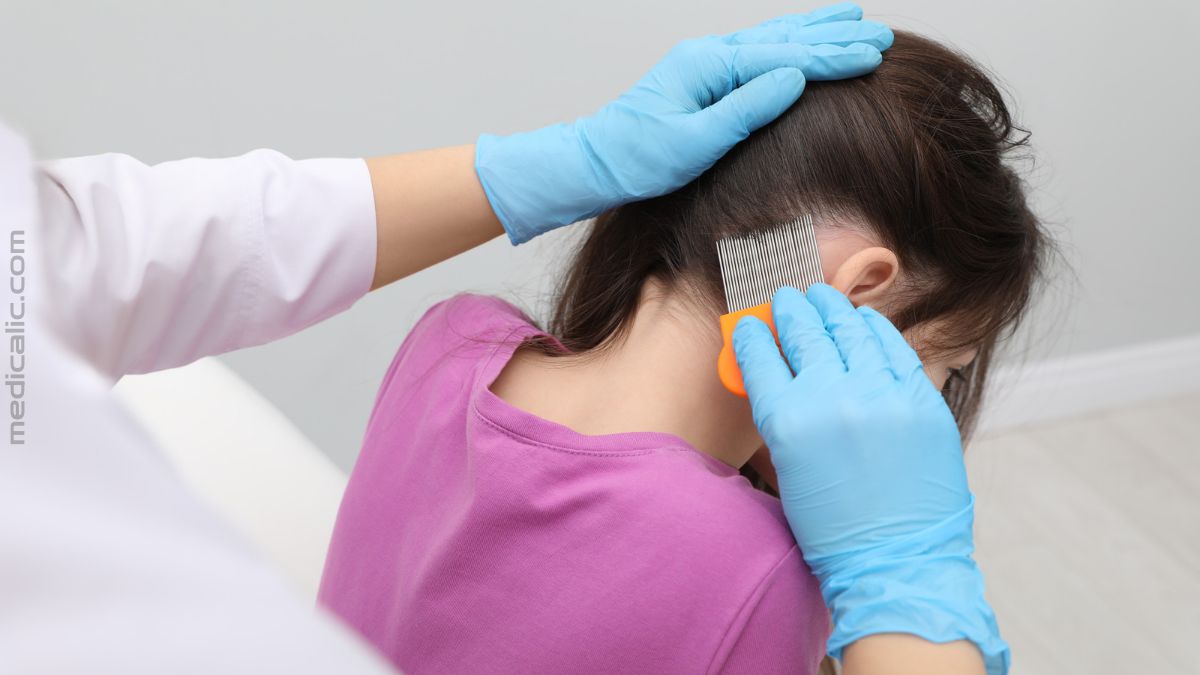
- Comb. Work one section at a time. Press the teeth of the lice comb against your scalp and draw it slowly all the way to the ends. For areas you can’t see clearly, use both mirrors to guide the comb, keeping its teeth close to your scalp on every pass. Spend extra time on the nape of your neck, behind your ears, and the hairline, where lice tend to gather.
- Inspect. After every stroke, wipe the comb on the white paper towel and look closely, magnifier in hand, for anything that moves or any tiny oval specks.
- Make a second pass. Once every section is done, comb through your whole head again to catch anything you missed, wiping or rinsing the comb clean as you go.
Short hair can take about ten minutes. Long or thick hair can take half an hour.[2] Don’t rush it: lice are small and quick, and a slow comb catches far more than a quick look ever will. If someone can help, let them. It’s far easier to comb the back of a head you aren’t trying to see in a mirror.
What Do Lice Look Like?
As you inspect the comb, here’s what to look for. Head lice are small, wingless insects, about the size of a sesame seed, that crawl through hair and feed on blood from the scalp. They look different at each stage:
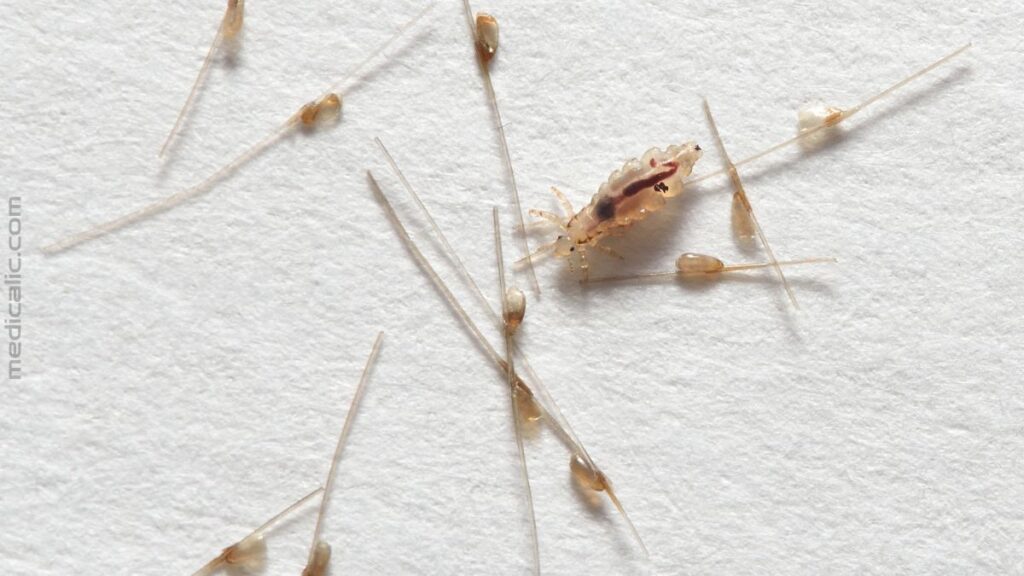
- Adult lice: 2 to 3 millimeters long, with a flat, elongated body, six clawed legs, and no wings. Their color ranges from tan to grayish-white and looks darker in dark hair.[3] After a blood meal, a louse can turn reddish-brown. Females are slightly larger than males.
- Nymphs (young lice): newly hatched lice are about the size of a pinhead, pale and nearly see-through. They darken as they grow, and they’re the easiest to miss.
- How they behave: lice can’t jump or fly. They crawl fast and avoid light, so a louse often vanishes into the hair the moment you part it. That’s why you’ll usually find only a handful, even when the itch is intense.
This guide covers head lice. Body lice and pubic lice are different insects and call for a different approach.
What Do Lice Eggs Look Like?
Lice eggs, called nits, are tiny oval specks, less than a millimeter long, stuck to individual hairs.[4] Nits are often easier to spot than live lice because they stay attached to the hair. But finding nits alone doesn’t always mean you have an active infestation.
- Color: unhatched nits are yellowish-white to tan, sometimes coffee-colored. Empty, hatched shells turn white or clear. Nits stand out against dark hair and can blend into blond or light hair.
- Shape: oval or teardrop, with a slightly capped end where the baby louse emerges.
- Placement: a female louse glues each egg to a hair shaft close to the scalp, usually within a quarter inch (about 6 millimeters), where body warmth helps it develop. The nape of the neck and behind the ears are the most common spots.
- Staying power: the glue is strong. Nits won’t flick, brush, or wash away, and you have to pull them off the strand or comb them out. After hatching, the empty shell stays attached to the hair shaft and moves farther from the scalp as the hair grows.
Lice Eggs vs. Dandruff and Other Look-Alikes
Not every white speck in your hair is a nit. Here’s how to tell the usual suspects apart:
| Look-alike | How it differs from a nit |
|---|---|
| Dandruff | Flakes are irregular in shape and fall off easily when you brush or flick them. Nits are uniform ovals that stay put. |
| Hair product residue | Dried hair spray or gel forms tiny beads or clumps that crumble when rubbed and rinse out with shampoo. |
| Hair casts | White or tan tubes that wrap around a strand like a sleeve and slide up and down it. A nit is glued to one spot.[5] |
| Scabs or dirt | Irregular specks that sit on the skin. Nits attach to the hair, not the scalp. |
If dandruff is your main suspect, our guide to lice vs. dandruff covers the difference in detail. If that’s what it turns out to be, here’s how to get rid of dandruff.
From Egg to Adult: The Lice Life Cycle
Eggs usually hatch within 6 to 9 days, and the young lice take about another week to mature. An adult can live for around a month on a human head and lays several eggs a day. That’s why missed eggs can let an infestation continue, or return after an incomplete treatment.
What Your Results Mean
- A live louse: you have lice, even if it’s just one.
- Nits close to the scalp, but no live lice: first make sure they’re really nits and not dandruff or hair debris, since mix-ups are common. Nits firmly attached within about a quarter inch of the scalp strongly suggest an active infestation, even without a live louse, and treatment is usually recommended.[6] If you’re not sure what you’re seeing, ask a pharmacist or healthcare professional to take a look.
- Nits only farther from the scalp: these are usually empty or nonviable eggs and are unlikely to indicate an active infestation on their own. Recheck if you’re unsure or have ongoing exposure.
- Nothing found: you may not have head lice, but one negative check isn’t conclusive. If you’ve had close contact with someone who has lice, or your symptoms continue, repeat the check over the next couple of weeks.
If You Find Head Lice
Don’t panic, and don’t scrub your whole house. Lice survive only a day or two away from a human head, so your scalp is where the work is. If you find a live louse, or confirmed nits close to the scalp, start treatment promptly. Depending on where you live, that may mean a lice treatment product or a structured wet-combing routine, so go with what’s recommended in your area. If you’re using a medicated product and used conditioner during the check, wash it out thoroughly and follow the product’s instructions before applying it. Let anyone you live with or share close contact with know to check themselves using this same method. If your scalp is sore, oozing, or crusted from scratching, see a doctor, since broken skin can get infected.
Next Steps After Your Check
A careful comb check is the best place to start when you suspect head lice. Finding a live louse gives you a clear answer, while a negative result or a few questionable nits may mean you need to check again. If you’re still unsure, a healthcare professional can help you figure out what you’re seeing before you start treatment.
Medical References
Update History
Originally written by Dr. Neelam Mehta.
Your answer helps us improve the clarity and usefulness of our health content.