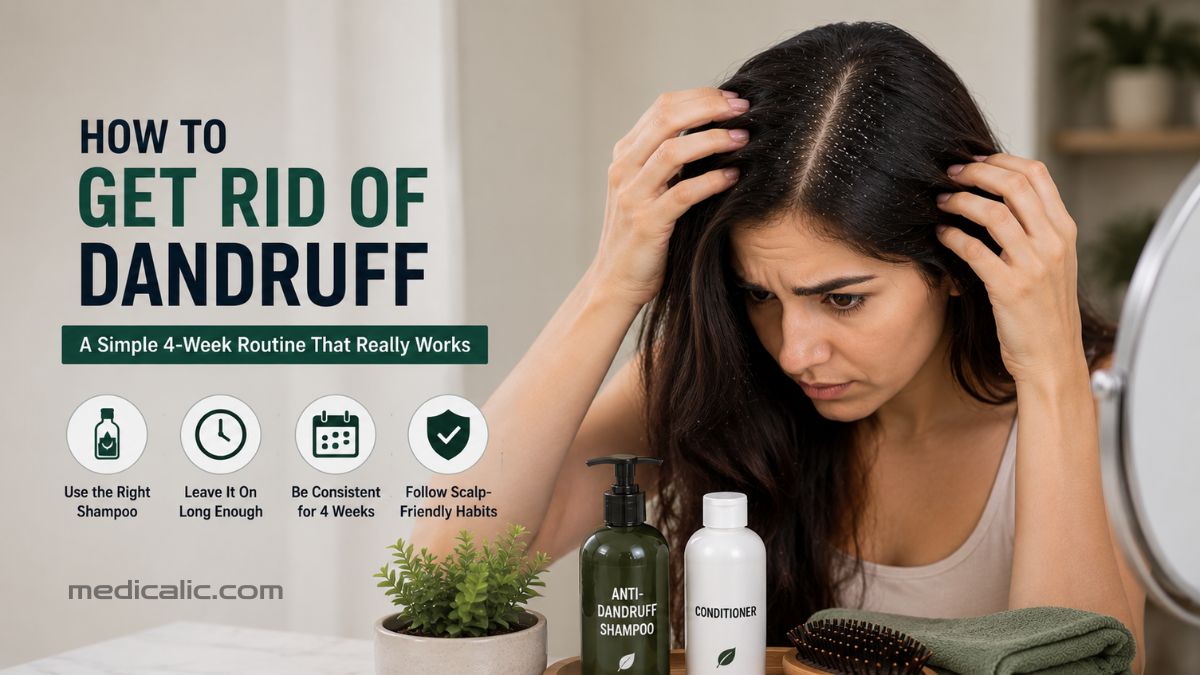
Dandruff is annoying because it shows up exactly where you do not want it: on your shoulders, in your hair, and right when you need to feel confident.
The good news is that most mild dandruff can be managed with a simple, consistent shampoo routine instead of harsh scrubbing, random oils, or viral home remedies.
If you want to know how to get rid of dandruff, start by treating it as a scalp condition, not a hygiene failure. [1] The goal is simple: use an evidence-based anti-dandruff ingredient, leave it on long enough, protect your hair from dryness, and give the routine enough time to work.
Key Takeaways
- Mild dandruff usually improves with the right anti-dandruff shampoo routine.
- Match the active ingredient to your scalp: oily flakes, itching, or stuck-on scale.
- Apply shampoo to the scalp, leave it on as directed, rinse well, and condition hair lengths.
- Give it about four weeks. If it does not improve, try another ingredient or see a doctor.
- Pain, swelling, bleeding, pus, hair loss, or thick plaques are not simple dandruff signs.
What Dandruff Really Is
Dandruff causes flaking from the scalp and may come with itching. It is often linked with oily skin, hair-care habits, irritation, or conditions such as seborrheic dermatitis.[2] In many people, a yeast-like organism called Malassezia, which normally lives on the skin, can contribute to scalp inflammation and flaking when the scalp is sensitive to it. [6]
Dandruff is usually reasonable to treat at home when the flakes are mainly on the scalp and the itching is mild to moderate. [4]
Dandruff vs. Dry Scalp: Know the Difference
Classic dandruff usually causes loose white or yellowish flakes with mild to moderate itching. A dry scalp may also flake, but the flakes are often smaller, and the scalp may feel tight or rough, especially in cold weather or after using harsh products.
Not every flaky scalp is simple dandruff or dryness. Seborrheic dermatitis may look greasier, redder, and more irritated. Psoriasis can cause thicker, silvery scaling that may extend beyond the hairline. A fungal infection such as scalp ringworm may cause patchy hair loss, broken hairs, pain, or swollen lymph nodes.[3] These signs matter because stubborn redness, pain, swelling, hair loss, or thick plaques need medical care, not just another shampoo trial.
How to Get Rid of Dandruff With the Right Shampoo
The most practical first step is an over-the-counter anti-dandruff shampoo. The American Academy of Dermatology lists common active ingredients such as zinc pyrithione, salicylic acid, sulfur, selenium sulfide, ketoconazole, and coal tar. If one active ingredient does not help, alternating with a different type may work better.
For oily, itchy, flaky scalps, ketoconazole, selenium sulfide, or zinc pyrithione are often useful because they help target yeast-related flaking.[5]
If flakes feel stuck, layered, or crusty, salicylic acid may help loosen scale so it rinses away more easily.
Coal tar can help slow excessive skin cell buildup, but it may not suit everyone because it can have a strong smell, may stain, and can make the scalp more sun-sensitive.
For readers in the USA, India, or elsewhere, focus on the active ingredient rather than the brand name. Product names and availability vary by country, but the ingredient label tells you what the shampoo is designed to do.
How to Use Anti-Dandruff Shampoo Correctly
Washing harder is not always the answer. Some people shampoo often and still flake because the shampoo is not targeting the cause, is rinsed off too quickly, or is used inconsistently. Others wash too rarely for their scalp’s oil level, allowing sweat, product buildup, and flakes to collect.
Anti-dandruff shampoo works best when you use it like a treatment, not just a quick hair wash. Apply it directly to the scalp, massage gently with your fingertips, and leave it on for the time recommended on the product label. The AAD notes that some dandruff shampoos may need 5 to 10 minutes of contact time, depending on the product instructions.
Use enough shampoo to cover the scalp, not the full hair length. More shampoo does not mean better dandruff control, and leaving medicated shampoo on longer than directed may cause dryness or irritation. Focus on even scalp coverage, gentle massage, proper contact time, and thorough rinsing.
Use lukewarm water, and avoid scratching, scraping, or using your nails, even if the itch is intense. Aggressive scrubbing can irritate the scalp and make flaking worse.
If your scalp is oily or your hair tolerates frequent washing, you can use medicated shampoo about 3–4 times a week or as directed on the label. If your hair is curly, coily, coarse, dry, or chemically treated, apply the shampoo mainly to the scalp and condition the hair lengths afterward.
Once flakes are controlled, you may be able to use the medicated shampoo less often for maintenance.
Do not mix several medicated dandruff shampoos together or layer multiple active ingredients in the same wash. Ready-made combination shampoos can be used according to the label, but do not create your own mixture at home. More treatment is not always better.
A Simple 4-Week Dandruff Routine
This routine is for mild, likely dandruff without red-flag symptoms. The goal is to treat the scalp consistently, reduce flakes, avoid irritation, and judge progress fairly.
| Time | What to do | Why it helps |
|---|---|---|
| Before Week 1 | Choose one anti-dandruff shampoo based on the active ingredient. For oily, itchy flakes, consider ketoconazole, selenium sulfide, or zinc pyrithione. For stuck-on scale, consider salicylic acid. | The active ingredient matters more than the brand name. Matching the ingredient to the scalp pattern gives the routine a better chance. |
| Week 1 | Use the medicated shampoo according to the label. Apply it mainly to the scalp, massage gently with fingertips, leave it on as directed, and rinse well. | Dandruff shampoo works like a scalp treatment. Rinsing too quickly may reduce its effect. |
| Week 2 | Continue the same routine. Do not scratch, scrape, use nails, or add multiple home remedies at the same time. Use conditioner on the hair lengths if your hair feels dry. | The scalp needs consistency. Too many changes make it hard to know what is helping or irritating your scalp. |
| Week 3 | Check progress: Are flakes lighter? Is itching less frequent? Does the scalp feel calmer after washing? If there is mild improvement, continue. | Dandruff often improves gradually, not after one wash. Week 3 is usually a better time to judge early response. |
| Week 4 | If dandruff is clearly better, keep using the shampoo as maintenance based on your scalp and product directions. If there is no real improvement, switch to a different active ingredient or speak with a healthcare professional. | Four weeks is enough time to know whether the current approach is working for many mild cases. No improvement means the diagnosis or ingredient may be wrong. |
Dandruff usually does not disappear after one wash. Give this routine about four weeks before judging the result. If flakes and itching do not improve after consistent use, try a different active ingredient or see a doctor or dermatologist. Repeating the same failing routine for months only delays the right treatment.
During the routine, keep the rest of your scalp care simple. Avoid heavy oils, harsh scrubs, strong fragrances, lemon juice, vinegar, and baking soda. Wash pillowcases, hats, scarves, combs, and brushes regularly.
Adjust the Routine for Your Hair Type
Straight, fine, or oily hair may need more frequent washing. Curly, coily, textured, or chemically treated hair may need a gentler schedule because dandruff shampoos can dry out the hair shaft.
The best compromise is scalp-first care. Put the medicated shampoo on the scalp, not the full hair length. Rinse well, then use conditioner from mid-length to ends. Avoid heavy oils, pomades, and waxes directly on a flaky scalp if they make itching or buildup worse.
Home Remedies: What to Avoid
Home remedies are less predictable than medicated dandruff shampoos. Some may feel soothing for a short time, but they do not reliably target the main causes of dandruff and may irritate a sensitive scalp.
Avoid harsh or irritating remedies such as lemon juice, baking soda, strong salt water rinses, strong apple cider vinegar rinses, undiluted tea tree oil, and undiluted essential oils. Sea water may make the scalp feel cleaner for a short time, but it is not a reliable dandruff treatment and can dry or irritate sensitive skin.
Burning, stinging, redness, or worsening itch is not a sign that the remedy is “working.” It usually means your scalp is irritated.
Be careful with heavy oils, including coconut oil, olive oil, and thick scalp oil blends. They may soften dryness for some people, but they can also trap scale, increase buildup, and make oily or seborrheic dandruff feel worse.
Aloe vera or a gentle moisturizer may help if your scalp is simply dry or irritated, but they should not replace anti-dandruff shampoo when flakes are clearly dandruff-related.
Keep the routine simple: use one medicated shampoo correctly, avoid scalp irritants, condition the hair lengths, and give the treatment enough time.
Reduce Triggers That Keep Dandruff Coming Back
A good shampoo does the main work, but habits still matter. Rinse shampoo and conditioner thoroughly. Wash after heavy sweating when possible. Clean combs, brushes, pillowcases, hats, scarves, and head coverings regularly.
Pay attention to patterns. If flakes worsen after a new styling cream, hair dye, scalp oil, or fragrance-heavy product, stop using it and watch whether your scalp calms down. Stress, cold weather, hot showers, and product buildup can also trigger seborrheic dermatitis flares in some people.
When to See a Doctor
A dermatologist can check whether you have dandruff, seborrheic dermatitis, psoriasis, eczema, allergic contact dermatitis, or a fungal infection. You may need a prescription-strength shampoo, scalp solution, foam, or a different treatment plan.
Dandruff is manageable for many people, but the right routine matters. Choose the right active ingredient, use it correctly, give it time, and get medical help when symptoms look severe or unusual. That focused approach is the fastest way to move from constant flaking to a calmer, more comfortable scalp.
Medical References
Update History
Originally written by Medicalic.
Your answer helps us improve the clarity and usefulness of our health content.