It’s barely lunchtime, and your socks are already damp. Your feet slide a little inside your shoes, and you’re counting the hours until you can take them off.
You’ve tried the obvious things. Fresh socks, a different pair of shoes, a dusting of foot powder. For a few days it seems to work, and then the dampness creeps back as if nothing had changed.
The sweating itself is annoying, but it’s the planning that wears you down. You choose your shoes around it, pack a spare pair of socks, and hope nobody asks you to take yours off.
Somewhere along the way, you stop asking why this keeps happening and start asking something more practical: how to stop sweaty feet, and what actually works when so much of what you try doesn’t?
How to Stop Sweaty Feet: 6 Practical Ways to Stay Drier
Before you grab the first product on the pharmacy shelf, it helps to know that sweaty-feet solutions don’t all work the same way. Some reduce how much sweat your skin produces. Others help moisture escape, or keep it from collecting around your feet.
Knowing which is which makes it much easier to choose what actually fits your situation.
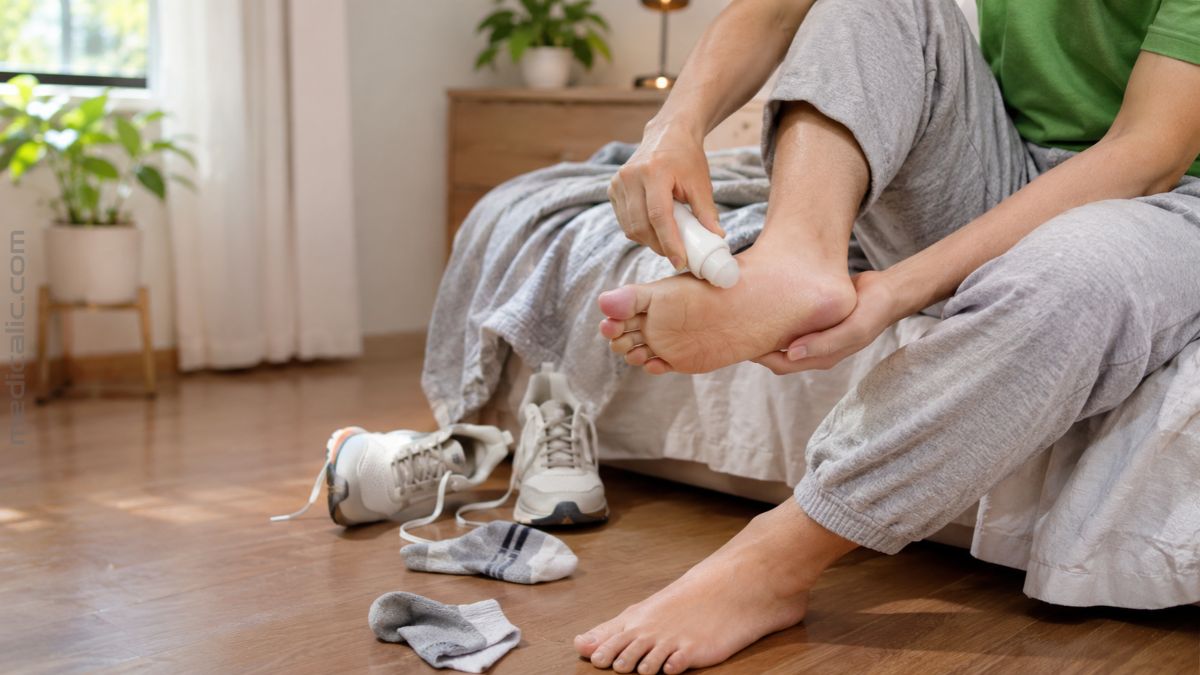
1. Apply an Antiperspirant to Your Feet
If you want to reduce sweating rather than just manage the wetness, an antiperspirant is a sensible place to start.
Antiperspirants containing aluminum salts temporarily reduce the flow of sweat onto your skin. Deodorants mostly control odor, while antiperspirants are designed to deal with moisture production. You can find over-the-counter versions made for the feet, although persistent sweating may call for a stronger product.
With many aluminum chloride treatments, applying the product to completely dry skin before bedtime helps it work while keeping irritation down.[1] Follow the instructions on the label, and avoid using it on broken or irritated skin.
Don’t expect a single application to solve everything. It may take consistent use before you notice a real difference. And if your skin starts to sting, burn, or become irritated, stop using the product and ask a healthcare professional for advice.
Antiperspirant works on the sweat itself. The next two steps deal with where that sweat ends up, starting with the layer closest to your skin.
2. Choose Socks That Move Moisture Away
The wrong socks can make a manageable amount of sweat feel unbearable.
Cotton absorbs moisture, but it can stay wet against your skin. Moisture-wicking materials, including merino wool and certain athletic synthetic blends, are designed to move perspiration away more efficiently. You don’t need expensive socks to try this. Pay attention to how a pair feels after several hours, not just when you first put it on.
If your socks turn damp during the day, changing into a fresh pair can make an immediate difference. A spare pair in your bag is a small habit, but it’s one of the easiest ways to avoid spending an afternoon in wet socks.
3. Give Your Shoes Room to Breathe
Even excellent socks can only do so much inside a shoe that traps heat and moisture.
Look for comfortable, properly fitted footwear made from breathable materials. Ventilated designs can help moisture escape, while tight or heavily enclosed shoes may leave your feet warmer and wetter.[2]
What happens after you take your shoes off matters, too. Shoes can hold on to moisture long after you’ve stopped wearing them, and putting on the same damp pair the next morning means your feet start the day in a humid environment. Try alternating between pairs and letting each one dry thoroughly. Removable insoles and shoe dryers may help when drying takes longer.
Breathable footwear won’t necessarily stop your sweat glands from working, but it can make the moisture far easier to live with.
4. Keep Your Feet Clean and Thoroughly Dry
Sweaty feet don’t need aggressive scrubbing. They need consistent, gentle care.
Wash your feet regularly with a mild cleanser, then dry them carefully, especially between your toes. Those narrow spaces can hold on to moisture even when the rest of your foot feels dry, and skin that stays damp for long periods may become soft, irritated, or more vulnerable to infection. A clean towel and a little extra attention after showering are usually enough.
One thing to watch for: if the skin between your toes is persistently itchy, peeling, or cracked, don’t assume sweat is the only cause. A fungal infection may need separate treatment.
5. Use Foot Powder or Absorbent Insoles
Foot powders are handy when moisture builds up faster than your socks can handle it. They soak up some of the wetness on your skin, and absorbent insoles help keep the inside of your shoes more comfortable.
There’s one limit worth knowing: absorbing sweat isn’t the same as reducing it. If your feet sweat heavily, powder may bring temporary comfort without changing the underlying problem.
Choose products made for feet and follow their instructions. You don’t need an antifungal powder unless you’re treating or preventing a fungal problem it’s meant for.
Everything so far deals with the sweat itself or the things around it. The last step starts with a bit of detective work.
6. Notice What Makes the Sweating Worse
You might notice that your feet get wetter during stressful meetings, after a long commute, or in one particular pair of shoes. For some people, caffeine, alcohol, or spicy foods may also make sweating more noticeable.
Rather than cutting everything at once, watch your own pattern for several days. Once you spot a consistent trigger, you can make a targeted change instead of overhauling your whole routine.
If you’re curious what might be behind your own triggers, our guide to why your feet sweat so much walks through seven possible causes.
Then there are the remedies that promise to dry your feet using things you already have in the kitchen.
Do Home Remedies for Sweaty Feet Really Work?
A quick search turns up everything from black tea soaks to vinegar, baking soda, and Epsom salt. They sound appealing. After all, who wouldn’t prefer a simple fix from the kitchen cupboard?
The problem is that convincing clinical evidence showing these remedies reduce excessive foot sweating is limited.[3] Black tea, for example, contains tannins with astringent properties, but that doesn’t make it a reliable treatment for hyperhidrosis. Vinegar and baking soda mixtures can also irritate sensitive or damaged skin.
A foot soak can feel lovely, and good hygiene does improve comfort. But neither necessarily means your sweat glands are producing less moisture.
If you’ve worked through the basics and the kitchen cupboard and your socks are still soaked, you don’t need to keep experimenting with ever more complicated remedies. There are treatments designed specifically to reduce sweating.
What If Your Feet Still Sweat? Medical Treatments That Can Help
If your socks stay soaked despite the practical changes above, a dermatologist can help work out whether you’re dealing with plantar hyperhidrosis, the medical term for excessive sweating of the soles, and which treatment suits you.
There are more options than most people expect, from stronger versions of what you’ve already tried to treatments that work quite differently.
Prescription-Strength Antiperspirants
When regular antiperspirants aren’t effective enough, a clinician may recommend a stronger aluminum chloride formulation. These work through the same general mechanism as over-the-counter antiperspirants but can offer greater sweat control.
The trade-off is a higher risk of skin irritation, especially if the product is applied to damp or sensitive skin. Your clinician can explain how often to use it and adjust the schedule if needed.
Iontophoresis for Sweaty Feet
Iontophoresis is one of the more established treatments for excessive foot sweating.
You place your feet in shallow trays of water while a medical device passes a mild electrical current through it. This can reduce sweat production in the treated area.[4] It may sound unusual, but iontophoresis has been used for hand and foot sweating for decades.
Treatment usually begins with several sessions each week. Once the sweating improves, less frequent maintenance sessions help preserve the results, and some people use a device at home after proper guidance. Mild tingling, redness, or skin irritation can occur. Iontophoresis isn’t suitable for everyone. It should be avoided during pregnancy and by people with a pacemaker or similar implanted cardiac device, certain heart conditions, epilepsy, or substantial metal implants in the path of the current. Some device manufacturers and hospitals also advise against it for people with an IUD.[5] This isn’t a complete list, so check with a healthcare professional before you start.
Its main drawback usually isn’t the complexity. It’s the commitment to keeping up with the sessions.
Botox Injections for Excessive Foot Sweating
When less invasive treatments don’t provide enough relief, botulinum toxin injections are another option.[6]
The injections temporarily interrupt the nerve signals that tell your sweat glands to produce moisture. For the feet, the effect commonly lasts several months, after which treatment may need to be repeated.
There’s a practical downside. The soles are sensitive, and the multiple injections required may be uncomfortable or painful. Temporary bruising or weakness can also occur. In the United States, using Botox specifically for sweaty feet is generally off-label, even though it is used clinically for this purpose.
A dermatologist experienced in treating plantar hyperhidrosis can help you weigh the expected benefit against the discomfort, the cost, and the need for repeat sessions.
Oral Medications for Severe Sweating
Everything so far acts on the feet directly. For some people, particularly those who sweat in several areas of the body, a medication taken by mouth may be considered instead.
Prescription anticholinergic medicines such as glycopyrrolate or oxybutynin reduce the signals that stimulate sweat glands. Because they act throughout the body, their effects aren’t limited to your feet.
Possible side effects include dry mouth, constipation, blurred vision, and difficulty urinating. By reducing sweating elsewhere, they can also make it harder for your body to cool itself in hot conditions. That’s why these medicines need careful medical supervision.
Is Surgery an Option?
Surgery is rarely an appropriate solution for sweaty feet, because the risks can outweigh the potential benefit.
In particular, endoscopic thoracic sympathectomy (ETS) is not recommended for plantar hyperhidrosis.[7] Nerve surgery can cause serious complications, including excessive sweating in other parts of the body. For most people, non-surgical treatments offer a more reasonable path toward control.
When Should You See a Doctor for Sweaty Feet?
If you’re constantly changing socks, avoiding activities, or feeling uncomfortable despite trying suitable self-care measures, it’s worth speaking with a healthcare professional.
Arrange an evaluation, too, if the sweating begins suddenly, regularly happens during sleep, or comes with other unexplained symptoms. Persistent itching, peeling, painful skin changes, or signs of infection also deserve attention.
A doctor can look at your sweating pattern, review any medications you take, and decide whether further investigation or targeted treatment makes sense.
Finding what works can take some trial and error, and the first thing you try may not be the one that sticks. But you don’t have to keep arranging your day around dry socks.
Medical References
Update History
Clinical guidance updated to reflect current recommendations.
Treatment information updated.
Originally written by Dr. Rahul Kushwaha.
Your answer helps us improve the clarity and usefulness of our health content.