You probably use cornstarch regularly in your cooking. Sometimes in soups, sometimes in desserts. Just a little works like magic, thickening your dishes and giving them a smooth, silky finish.
But somewhere online, you’ve seen a warning that cornstarch is bad for your health. And suddenly, an ingredient you’ve always trusted in your kitchen raises a different kind of concern: Is cornstarch bad for you?
What Is Cornstarch, Really?
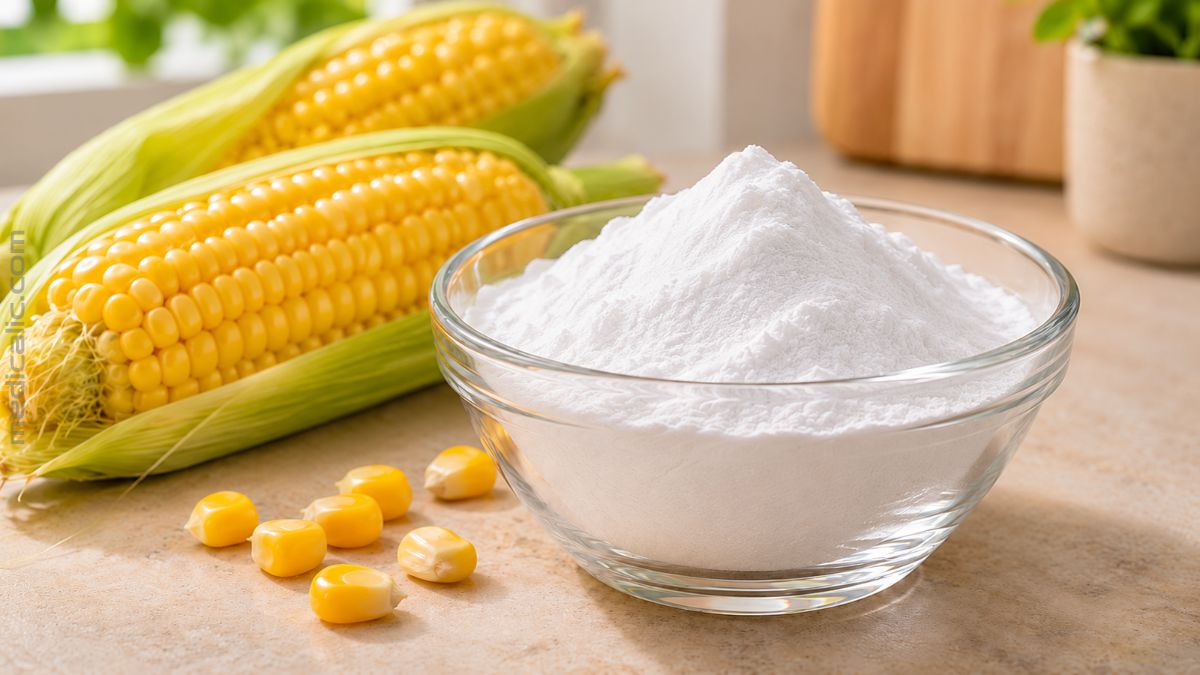
Cornstarch comes from corn, but it isn’t the same thing as corn flour. During processing, the starch is separated from the rest of the kernel, leaving behind a fine, snow-white powder that is almost pure starch.
The process begins with soaking corn kernels in warm water until they soften. The kernels are then ground, which lets the germ, fiber, and protein be separated from the starch. The starch that remains is washed, purified, and dried into the soft powder you keep in your kitchen.
There’s also a small naming difference worth knowing. In the United States, corn flour usually means finely ground corn, while cornstarch is the extracted starch. In the United Kingdom and some other countries, though, cornflour is simply another name for cornstarch. It’s worth a quick check whenever you’re reading a recipe or label from abroad.
So, with most of the corn’s original nutrients stripped away, what does a spoonful of cornstarch actually add to your diet?
What’s Actually in a Spoonful?
Short answer: not a lot. That’s rather the point.
| Nutrient | 1 tablespoon (8 g) | 2 tablespoons (16 g) |
|---|---|---|
| Calories | 30 | 60 |
| Carbohydrates | 7 g | 15 g |
| Protein | 0 g | 0 g |
| Fat | 0 g | 0 g |
| Fiber | 0 g | 0 g |
| Sugar | 0 g | 0 g |
Values are approximate and rounded. Protein, fat, and fiber are present only in trace amounts.
Two zeros in that table deserve a closer look.
The first is sugar. Cornstarch has none, and yet it’s almost entirely carbohydrate.[1] That sounds like a contradiction until you picture what starch really is: long chains of glucose, linked like beads on a necklace. Your digestive enzymes are very good at snipping those chains apart, and the loose beads are what your body absorbs.
The second is fiber. Beans, oats, and whole grains arrive with fiber, which slows down carbohydrate absorption and keeps your digestion happy. Cornstarch brings almost none of that. It’s calories and carbs with hardly any passengers.
A spoonful can thicken a whole pot of soup. It just doesn’t add much nutrition along the way.
And those loose beads of glucose? They don’t just vanish. Next stop: your bloodstream.
Cornstarch and Blood Sugar: What Actually Happens
When you eat cooked cornstarch, digestive enzymes break its starch down into glucose, which is then absorbed into your bloodstream. That’s why cornstarch can raise your blood sugar even though it contains almost no sugar of its own.[2]
How much it rises, though, doesn’t depend on cornstarch alone. The portion you eat, how it’s prepared, and what else is on your plate all play a part. Cornstarch in a meal with vegetables, protein, and healthy fats may affect your blood sugar differently than the same amount of starch eaten alone. Those other foods can influence how quickly carbohydrates are digested and absorbed.
You may have heard cornstarch called a “high-glycemic food,” usually as if the case were closed. It isn’t quite that simple. Cooking changes how starch is digested, and an ingredient tested on its own doesn’t always behave the same way inside a real meal. Anyone who says it hits you exactly like sugar is simplifying.
What If You Have Diabetes?
Having diabetes doesn’t mean you have to avoid every dish with cornstarch. What matters is knowing how many carbohydrates it adds to your meal.
Say you thicken a pot of soup for four with two tablespoons of cornstarch. That’s about 15 grams of carbohydrate in the whole pot, or roughly 4 grams per serving. Not much on its own, but the potatoes, beans, and everything else in the pot still count toward your total.
If you monitor your blood sugar at home, your readings can show how different meals affect you. A registered dietitian or diabetes care professional can also help you work out carbohydrate portions that fit your needs.
But blood sugar isn’t the only concern. What about the claims that cornstarch causes weight gain or harms your heart?
So, Is Cornstarch Bad for You?
For most people, cornstarch isn’t harmful in the small amounts used in everyday cooking. It provides little nutrition beyond carbohydrates, but that doesn’t make a spoonful in your gravy something to worry about.
Take weight gain, for example. Cornstarch adds calories, but it doesn’t make your body store fat in any special way. Weight gain generally happens when you consistently consume more calories than your body uses. A little cornstarch spread across several servings is unlikely to make much difference on its own.
Heart health is a similar story. Some research has linked diets high in refined carbohydrates with poorer cardiovascular outcomes. But that’s a long way from saying an occasional tablespoon of cornstarch causes heart disease, high blood pressure, or unhealthy cholesterol. There’s no strong evidence to support those claims about normal cooking amounts.
The bigger concern is when refined starches regularly take the place of more nutritious foods. Vegetables, beans, whole grains, and protein-rich foods offer fiber and nutrients that cornstarch can’t, while helping you feel fuller for longer.
So the real question isn’t whether one spoonful is bad. It’s what the rest of the plate is doing.
Of course, that’s when cornstarch stays in your dinner. Some people eat it straight from the box, and that raises a different set of questions.
Is Eating Raw Cornstarch Safe?
A small taste of raw cornstarch is unlikely to cause trouble for most people. Eating it straight from the box regularly, though, is a different story.
When cornstarch is cooked with liquid, its tiny starch granules absorb water and swell, a process called gelatinization that makes the starch easier to digest. Raw cornstarch skips that step, so it breaks down more slowly, and eating large amounts may leave you feeling bloated or uncomfortable. A few spoonfuls of raw cornstarch are also no substitute for a proper meal or snack.
But what if someone doesn’t just taste it, but craves it?
Why Do Some People Crave Raw Cornstarch?
Some people feel a persistent urge to eat raw cornstarch, sometimes drawn to its taste or texture. Repeatedly eating raw starch is known as amylophagia, a form of pica-related eating behavior.
It’s been reported during pregnancy and in people with iron deficiency or anemia. But that doesn’t mean every craving points to a nutrient deficiency.
If you frequently find yourself eating raw cornstarch, it’s worth mentioning to a healthcare professional. They can review your symptoms and check for possible causes, including anemia, if needed.
If you’re pregnant, cooked cornstarch in your food is generally not a concern, and there’s no reason to feel embarrassed about mentioning a craving for the raw powder. Persistent cravings for raw starch are worth discussing, even if you otherwise feel fine.
Why Doctors Sometimes Prescribe Uncooked Cornstarch
In some medical conditions, though, uncooked cornstarch is actually part of the treatment. For people with certain metabolic disorders, including glycogen storage disease, doctors may prescribe measured amounts to keep blood sugar from dropping too low. Because it digests slowly, it can provide a steadier supply of glucose between meals.[3]
But this isn’t something to try on your own. The amount and timing are set by healthcare professionals as part of an individualized treatment plan.
What about everyday cooking, though? Does cornstarch offer any benefits beyond making food thicker?
Does Cornstarch Have Any Health Benefits?
Cornstarch may not offer much in the way of nutrients, but it does have a few advantages, especially when you’re cooking for specific dietary needs.
It’s Naturally Gluten-Free
Pure cornstarch is naturally gluten-free, which makes it a useful alternative to wheat flour for thickening sauces, soups, and gravies. For someone with celiac disease or another reason to avoid gluten, that’s a practical benefit.
There’s one thing to watch, though. Cross-contact with gluten is possible during manufacturing or packaging, so checking the label is a sensible precaution. A gluten-free label can offer extra reassurance.
And if you have a confirmed corn allergy, cornstarch may not be suitable for you. Your allergist can help you decide what to avoid.
It Can Lighten Up Creamy Dishes
Sometimes the benefit isn’t in the ingredient itself, but in how you use it. A little cornstarch can give a vegetable-packed soup a creamy texture without relying on lots of butter or heavy cream. Depending on the recipe, that can help you cut back on saturated fat while keeping the texture you enjoy.
Of course, a spoonful of cornstarch doesn’t automatically make a dish healthier. It’s the whole recipe that counts.
But there’s another interesting side to starch. You’ve probably heard that certain types may actually benefit your gut and blood sugar. Is there any truth to that?
Does Cornstarch Contain Resistant Starch?
Resistant starch is a type of starch that escapes digestion in the small intestine. Instead, it travels to the large intestine, where gut bacteria can ferment it. Research suggests it may support gut health and help with blood sugar control, though the evidence is still developing.
Everyday cornstarch is a different story. Some high-amylose corn starches contain substantial amounts of resistant starch. But the cornstarch you use to thicken soups and sauces typically contains much less, and cooking generally makes most of its starch easier to digest. Adding extra ordinary cornstarch to your meals isn’t a reliable way to get those benefits.
So rather than treating cornstarch as a health supplement, the more practical question is how much you actually need in your cooking.
How Much Is Too Much?
There’s no established daily limit for cornstarch that applies to everyone. In real recipes, a tablespoon or two often thickens an entire pot, and once that pot is shared around the table, each person eats only a little.
So instead of hunting for a magic number, think about how you use it. A spoonful in homemade gravy now and then is nothing to fret over. Eating large amounts regularly, or leaning on starch-heavy packaged foods, is the moment to take a closer look.
Two small kitchen habits make it easy:
- Measure it. A level spoon beats pouring straight from the box.
- Make a slurry. It’s the cold-water mix from earlier, and it’s the easiest way to avoid lumps. Add it a little at a time and you can stop the moment the texture is right.
The Bottom Line: Back to the Gravy
So, back to that pot on the stove.
Cornstarch isn’t the villain you might have feared, but it isn’t a health food either. It’s a useful kitchen ingredient that adds texture without much nutritional value. For most people, the small amounts used in everyday cooking are nothing to worry about.
After all, healthy eating is shaped by what you eat most of the time, not by one spoonful of cornstarch.
Medical References
Update History
Originally written by Arooj Ahsan, RDN.
Your answer helps us improve the clarity and usefulness of our health content.