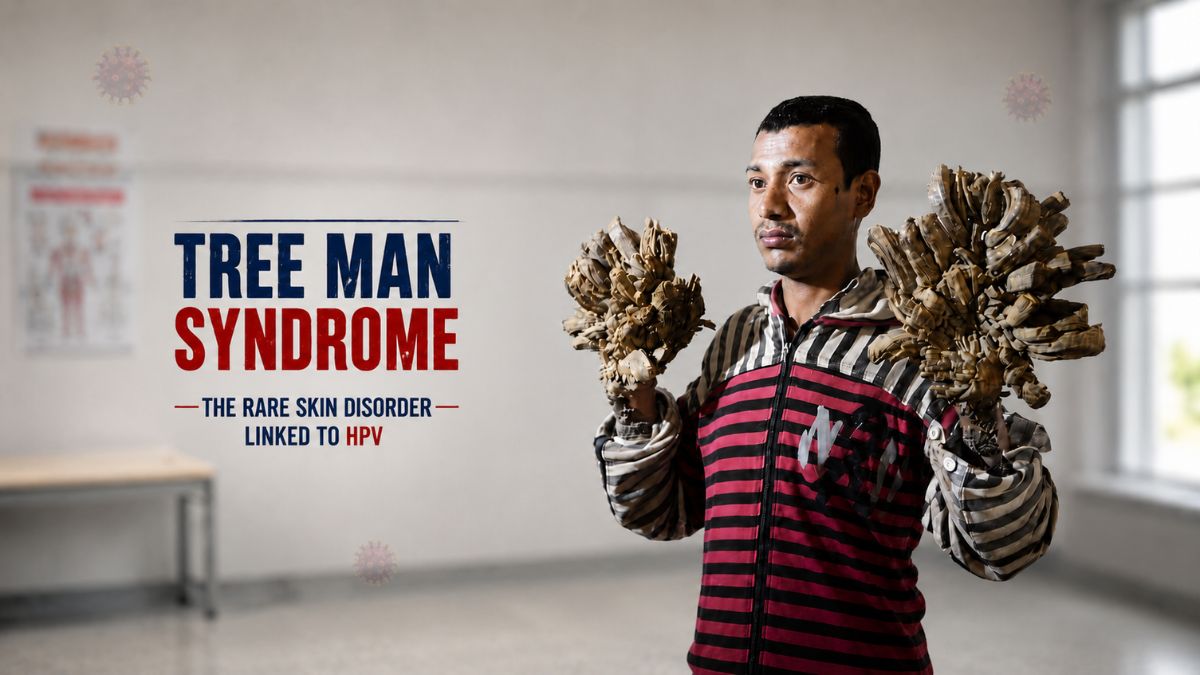
Tree Man Syndrome is the popular name for epidermodysplasia verruciformis, often shortened to EV. The nickname comes from the rough, bark-like look of severe skin growths, especially on the hands and feet. The body does not become tree-like; the term only describes how some advanced lesions can appear.
Medically, EV is a rare skin disorder that makes the skin unusually vulnerable to certain types of human papillomavirus, or HPV. These HPV types can persist in the skin and cause long-lasting flat warts, scaly patches, thick plaques, or large wart-like growths.
Tree Man Syndrome is not only about appearance. Severe cases can affect movement, hygiene, work, social confidence, and quality of life. It also matters because some lesions can become non-melanoma skin cancer over time, especially on sun-exposed skin. [1]
What Is Tree Man Syndrome?
Tree Man Syndrome, or epidermodysplasia verruciformis, is a rare condition in which the skin cannot control certain cutaneous HPV types normally. In most people, these HPV types cause little or no visible problem. In people with EV, the infection can persist and create chronic skin lesions. [2]
EV is usually discussed in two forms. The classic inherited form often begins in childhood or around puberty and may continue throughout life. An acquired or atypical form can appear later in people with weakened immune systems, including some people living with HIV, transplant recipients, or patients using long-term immunosuppressive medication.
Why Is It Called Tree Man Disease?
“Tree man disease” is a popular media term, not a formal medical name. Severe lesions may look rough, layered, horn-like, cauliflower-like, or root-like. That visual resemblance is why the phrase became widely known in news reports and documentaries.
The problem with the nickname is that it can make a medical condition sound like a spectacle. EV is better understood as a rare disorder of HPV susceptibility in the skin. Using the medical name, epidermodysplasia verruciformis, keeps the focus on diagnosis, treatment, function, and respectful care.
What Causes Tree Man Syndrome?
Tree Man Syndrome develops when a person has unusual susceptibility to certain cutaneous HPV types. In classic EV, this susceptibility is usually genetic.
The best-known genes are TMC6, also called EVER1, and TMC8, also called EVER2. These genes are linked to the skin’s ability to control specific HPV infections. Research has also recognized CIB1 as part of EV susceptibility, so not every case is explained by TMC6 and TMC8 alone. [2]
Classic EV is most often inherited in an autosomal recessive pattern. This means a child usually receives a disease-related gene variant from both parents. When the skin’s local defense is impaired, certain beta-HPV types can remain active in keratinocytes, the main cells of the outer skin layer. Over time, this can lead to the warts, patches, and plaques seen in EV. [3]
In acquired EV, the same pattern can appear when immune defenses are weakened later in life, such as after organ transplantation, with HIV infection, or during long-term immunosuppressive treatment.
How HPV Is Linked to Tree Man Syndrome
The phrase “HPV tree man” can be confusing because HPV itself is extremely common. Many people are exposed to HPV during life and never develop Tree Man Syndrome.
In acquired epidermodysplasia verruciformis, a similar pattern can appear when immune defenses are weakened later in life, such as after organ transplantation, with HIV infection, or during long-term immunosuppressive treatment.[4]
More than 30 HPV subtypes have been linked to EV lesions. HPV types 5 and 8 are especially important because they are strongly associated with EV-related skin cancers, particularly squamous cell carcinoma. [1]
This does not mean ordinary HPV exposure automatically causes Tree Man Syndrome. HPV is part of the disease process, but EV usually requires an underlying genetic or immune vulnerability.
Is Tree Man Syndrome Contagious?
Tree Man Syndrome itself is not contagious like the flu, a cold, or a stomach virus.
HPV can spread through skin contact in general, but EV develops because of rare genetic or immune susceptibility. A person will not get Tree Man Syndrome simply by touching, hugging, caring for, or spending time near someone who has it. [2]
This distinction is important because people with visible rare skin conditions often face fear, avoidance, and stigma. EV requires medical understanding, not isolation.
Symptoms of Tree Man Syndrome
Symptoms vary from person to person. Some people develop flat, wart-like papules. Others may have pale, pink, reddish-brown, dark brown, or violet patches that may resemble pityriasis versicolor, a common superficial fungal skin condition. EV can also cause thick, raised plaques that may look similar to seborrheic keratoses or ordinary viral warts. [2]
Common locations include the face, neck, trunk, arms, hands, feet, ears, and other sun-exposed areas. Classic EV often starts in childhood or puberty. Mild skin changes may be mistaken for common warts or a persistent rash, while severe growths may interfere with movement, hygiene, comfort, and daily tasks. [5]
Tree Man Syndrome on the Face, Hands, and Feet
Tree man syndrome face symptoms may include flat papules, reddish or brownish patches, pale scaly areas, or small wart-like clusters. Because these signs can look like acne, fungal rash, flat warts, or sun-related spots, diagnosis should not be based on appearance alone.
The hands and feet are often where severe cases get public attention. Large growths in these areas can make it difficult to grip objects, use tools, wear shoes, walk comfortably, or care for the skin. Pain, cracking, bleeding, odor, limited movement, and embarrassment can also become part of the daily burden.
How Doctors Diagnose Tree Man Syndrome
Doctors diagnose epidermodysplasia verruciformis by combining the appearance of the lesions with medical history and testing. A dermatologist may ask when the lesions first appeared, whether they have spread, whether family members have similar symptoms, and whether the person has HIV, transplant history, or medication-related immune suppression.
A skin biopsy can show characteristic microscopic changes that support EV. HPV typing may help identify involved HPV subtypes. Genetic testing can be useful when available, especially when inherited EV is suspected. [1]
Doctors may also need to distinguish EV from common warts, flat warts, pityriasis versicolor, seborrheic keratosis, psoriasis, lichen planus, Darier disease, Bowen disease, squamous cell carcinoma, and basal cell carcinoma.
Tree Man Syndrome Treatment and Surgery
There is no definitive cure for Tree Man Syndrome. Treatment focuses on reducing lesions, preserving movement, improving comfort, lowering skin cancer risk, and monitoring the skin over time.
Depending on the case, doctors may use surgical excision, debulking, cryotherapy, electrosurgery, laser treatment, or topical treatments for wart-like or precancerous lesions. Medical options may include retinoids such as acitretin, imiquimod, interferon combined with retinoids, topical calcipotriol, and photodynamic therapy. Cimetidine has been discussed in some reports, but evidence for benefit remains debated. [1]
Sun protection is also part of care. Ultraviolet exposure can increase the chance that EV lesions become cancerous. Sunscreen, protective clothing, hats, shade, and regular skin checks are important parts of long-term management.
Can Tree Man Syndrome Be Removed?
Visible growths can often be reduced or removed, especially when they affect movement, hygiene, comfort, or daily work. Surgery can make a major difference for someone who struggles to use their hands, walk, wear shoes, or perform self-care.
But removal treats the growths, not the underlying susceptibility that allowed them to develop. New lesions may appear over time, and treated areas may require further care. This is why surgery is usually part of long-term management rather than a one-time cure.
What Happens After Tree Man Surgery?
After surgery, patients may have better hand or foot movement, less pain, improved appearance, and an easier time with daily tasks. In severe cases, even partial improvement can change quality of life.
The improvement may not be permanent. Some patients need repeat procedures, wound care, rehabilitation, and ongoing dermatology follow-up. Doctors also continue to watch for new or suspicious lesions.
Skin Cancer Risk and Long-Term Monitoring
EV is not just a wart condition. One of the most serious long-term concerns is non-melanoma skin cancer, especially squamous cell carcinoma in sun-exposed areas.
EV-related skin cancers are strongly associated with specific HPV types, especially HPV 5 and HPV 8. Ultraviolet exposure can increase this risk. [1]
Warning signs include a rapidly growing lesion, bleeding, crusting, ulceration, pain, color or shape change, or a wound that does not heal. A suspicious lesion may need biopsy or removal. Regular dermatologist monitoring is important because cancer risk can rise after years of chronic lesions and sun exposure.
Tree Man Before and After Surgery
People often search for “tree man before and after” photos to see how much surgery can change the condition. In real cases, surgery may reduce large growths on the hands or feet and improve function.
However, before-and-after images can be misleading if they suggest a permanent cure. EV is a chronic condition, and recurrence is possible. These images should be used carefully, with permission, respectful captions, and enough medical context.
Real Tree Man Syndrome Cases
Public cases can help readers understand how severe EV can become, but they should be discussed carefully. These examples are not the same as formal medical case studies unless based on clinical records and patient consent.
They are best understood as real-world examples of severe growths, repeated procedures, relapse, disability, stigma, and the need for long-term care.
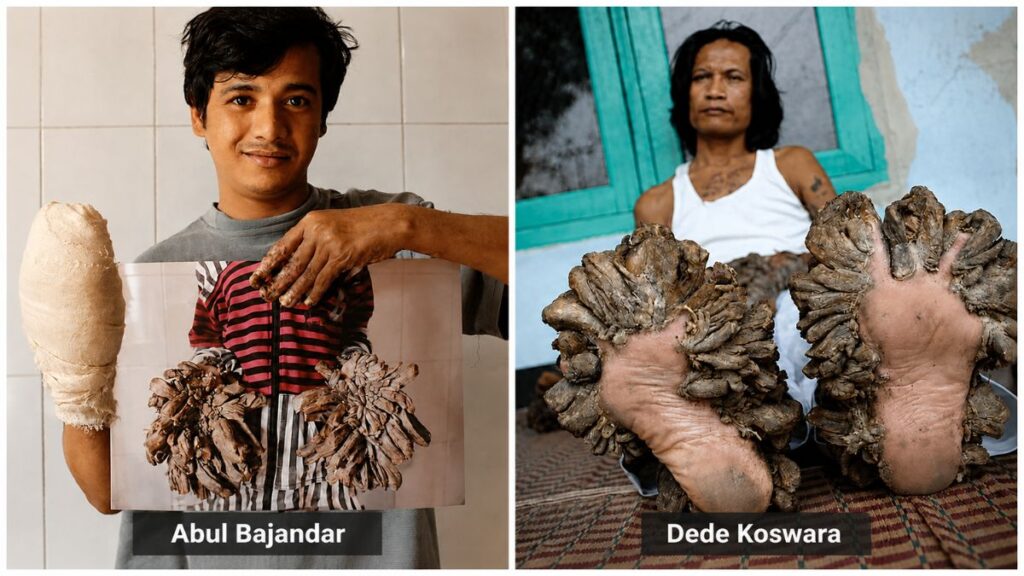
Abul Bajandar: The Bangladeshi Tree Man Case
Abul Bajandar, a Bangladeshi man widely called the “Tree Man,” became known for severe bark-like growths on his hands and feet. Reports described many operations at Dhaka Medical College Hospital, with earlier coverage stating that growths weighing at least 5 kilograms were removed. Later reports said his condition worsened again after doctors had hoped treatment might be successful. [6]
His case shows why EV surgery can be both powerful and limited. Removing large growths can improve movement and daily life, but the disease process can continue.
Dede Koswara: One of the Most Well-Known Tree Man Cases
Dede Koswara, widely known as the “Tree Man of Java,” became one of the most internationally recognized EV patients. News coverage described extensive wart-like growths and major surgical treatment that reduced the size of the lesions for a time. His case also showed how difficult severe EV can be to manage when growths return and repeated care is needed. [7]
Stories like his are often remembered for the dramatic appearance of the disease, but the deeper lesson is about function, dignity, and access to ongoing care.
Conclusion
Tree Man Syndrome, medically known as epidermodysplasia verruciformis, is a rare condition in which the skin cannot properly control certain HPV types. It can cause flat warts, scaly patches, thick plaques, and, in severe cases, bark-like growths that affect daily function.
Treatment can reduce visible growths and improve comfort or movement, but EV usually requires long-term care. The main goals are to keep lesions manageable, protect the skin from ultraviolet exposure, monitor for cancer warning signs, and treat suspicious changes early.
FAQs About Tree Man Syndrome
Tree Man Syndrome is usually caused by inherited genetic susceptibility combined with poor control of specific cutaneous HPV types. Acquired forms can occur in people with significant immune suppression.
EV itself is not cancer, but it increases the risk of skin cancers such as squamous cell carcinoma.
Yes. The inherited form often begins in childhood or around puberty.
No. A person will not get Tree Man Syndrome simply by touching, hugging, caring for, or spending time near someone who has it.
There is currently no definitive cure. Treatment manages lesions, function, complications, and skin cancer risk.
Yes, it can. Surgery can reduce or remove visible growths, but recurrence is possible because the underlying susceptibility remains.
Medical References
Update History
Medically reviewed by Dr. Jubair Islam.
Originally written by Medicalic.
Your answer helps us improve the clarity and usefulness of our health content.