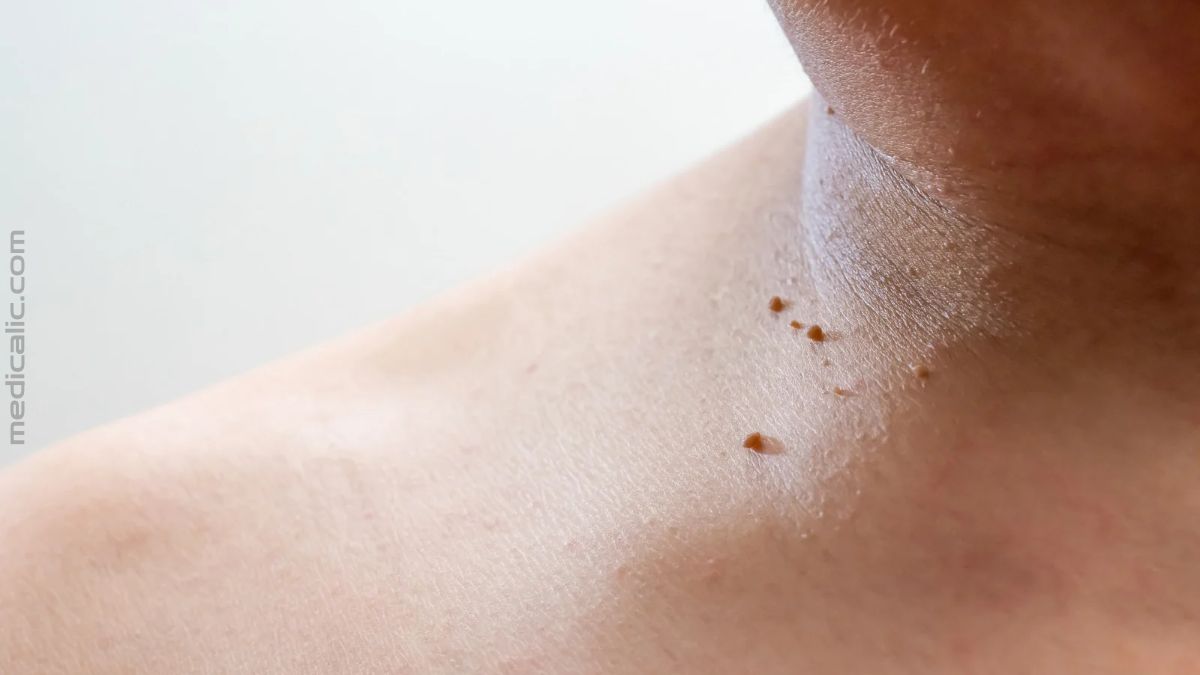
A skin tag may seem like a small cosmetic matter, but when it sits somewhere visible, it can quietly chip away at your confidence.
It might catch on your necklace, get nicked when you shave, or rub against your collar throughout the day. Before long, it becomes something you simply can’t ignore.
Booking a doctor’s appointment for something so small can feel like more trouble than it’s worth, so it’s natural to wonder whether you could deal with it at home. Let’s look at what’s available and what you can realistically expect from each option.
How to Remove a Skin Tag at Home
Home removal methods work in different ways. Some freeze the tissue, others restrict its blood supply, and certain topical products try to break down the growth. The size, shape, and location of your skin tag all matter when choosing among them.
1. Skin Tag Freezing Kits (Cryotherapy)
Over-the-counter freezing kits made for skin tags rely on cryotherapy. The tissue is frozen, so it gradually breaks down and falls away from the skin.[1]
Depending on how the skin tag responds, more than one treatment may be needed, so follow the application instructions and treatment intervals that come with your kit.
2. Skin Tag Removal Bands and Ligation
Ligation works by cutting off a skin tag’s blood supply. Without it, the tissue gradually shrinks, darkens, and eventually falls off.[2]
A specially designed removal band makes the process much easier. Surgical thread is also used, particularly for small skin tags with a narrow stalk, and some people tie a knot around the stalk without a band. But there is no established safe degree of tightness for manual ligation at home.
3. Traditional Hair and Slaked Lime Remedy
This traditional remedy pairs a strand of human hair with slaked lime (calcium hydroxide). The lime weakens the skin tag tissue, while the hair tied around its base may help the weakened tissue detach.
The traditional method goes like this. First, place surgical tape around the base of the skin tag to keep the lime confined to the targeted area. Then, using a cotton swab, apply a small amount of lime around the skin tag. Finally, tie a long, clean strand of hair around its base.
The skin tag may detach within a week. If it doesn’t, do not prolong the treatment.
Mild irritation may occur, but more serious chemical burns are also possible.
4. Salicylic Acid Patches
Salicylic acid is a keratolytic ingredient that helps break down the outer layers of the skin. Patches available at pharmacies are sometimes used on skin tags, although they are more commonly used to remove warts.
Replace the patch every 24–48 hours. Depending on the size and thickness of the skin tag, removal can take anywhere from two to twelve weeks. Petroleum jelly can be applied to the surrounding skin to help protect it from chemical irritation.
Is At-Home Skin Tag Removal Right for You?
Before trying any of these methods, make sure you’re actually dealing with a skin tag. A typical skin tag is soft, flesh-colored or slightly darker than the surrounding skin, and often hangs from a narrow stalk.
Raised moles, warts, and other skin growths can look similar, so if you’re unsure what it is, have it checked first.[3]
Avoid home removal if the growth is on your eyelid, genitals, or around the anus. And if you have diabetes, poor circulation, a weakened immune system, or difficulty healing wounds, seek medical advice before attempting it.
How Long Does It Take to Remove a Skin Tag at Home?
The time it takes for a skin tag to fall off depends on the removal method, the size of the tag, and how the tissue responds to treatment.
| Removal method | Expected timeline |
|---|---|
| Skin tag freezing kits | From about two weeks to several weeks |
| Skin tag removal bands | Several days to two weeks, sometimes longer |
| Traditional hair and slaked lime remedy | May detach within 7 days, with the treated area taking 3–4 weeks to heal |
| Salicylic acid patches | Roughly 2 to 12 weeks |
Whichever method you choose, the skin tag changes gradually before it eventually falls off. If you’re hoping to remove one overnight, there is no reliable home method that can do so. Avoid pulling the skin tag off prematurely.
And if a commercial removal kit hasn’t worked within its recommended period, don’t continue beyond its treatment limits or switch to a stronger product.
Skin Tag Removal Methods to Avoid
Apple cider vinegar, tea tree oil, garlic, banana peel, and vitamin E are often recommended online for skin tag removal. However, none has convincing evidence of effectiveness, and some may irritate your skin, leaving you with more discomfort and prolonging the problem.[4]
Avoid cutting off a skin tag with razor blades, scissors, or nail clippers, as this can cause bleeding and infection. At-home cauterization, other harsh chemicals, stronger medicated wart removers, and unapproved removal creams or serums can also damage the surrounding skin and leave permanent scars.
What if Your Skin Tag Doesn’t Go Away?
Sometimes a skin tag simply doesn’t respond to home treatment, and that doesn’t mean you’re stuck with it. A different approach may be all you need.
A dermatologist can usually remove a small skin tag during a short office visit. Depending on its size and location, your options may include:
- Snip excision: Removal with surgical instruments, using local anesthesia when needed.
- Cryotherapy: Freezing the skin tag, as with home kits, but done in a clinical setting.
- Electrodesiccation: Electrical energy is used to destroy the skin tag tissue.[5]
Your dermatologist may also send a tissue sample for laboratory examination when the diagnosis is uncertain.
The procedure may be much simpler than you imagine, and in many cases a single appointment is all it takes.
How to Ease Irritation While You Wait
While you’re waiting for the skin tag to fall off, a little extra care can reduce irritation and keep you more comfortable.
- Wear soft, loose-fitting clothing to minimize friction.
- Avoid jewelry that catches on or pulls at the skin tag.
- Shave carefully around the growth.
- Cover the irritated area with a clean, nonstick dressing to prevent rubbing.
- Keep the area clean and avoid harsh soaps or skincare products.
Should you accidentally nick the skin tag, apply firm, continuous pressure with clean gauze. Once the bleeding stops, gently clean the area and cover it with a fresh dressing. Seek urgent medical care if the bleeding is heavy or doesn’t stop after 10 minutes of continuous pressure.[6]
When Should You See a Dermatologist?
Most skin tags are harmless and need no treatment unless they cause discomfort. Still, certain changes in how they look or behave deserve medical attention.
Have the growth checked if it:
- Changes noticeably in size, shape, or color.
- Bleeds without an obvious injury.
- Becomes persistently painful or tender.
- Develops an open sore that doesn’t heal.
- Looks different from your other skin tags.
After a removal attempt, watch for signs of infection, such as spreading redness, increasing warmth, swelling, pus, or fever, and seek prompt medical attention if any of them appear.
Home removal may seem more convenient, but when something doesn’t look or feel right, getting it checked can save you unnecessary discomfort and complications.
Medical References
Update History
Originally written by Dr. Rahul Kushwaha.
Your answer helps us improve the clarity and usefulness of our health content.