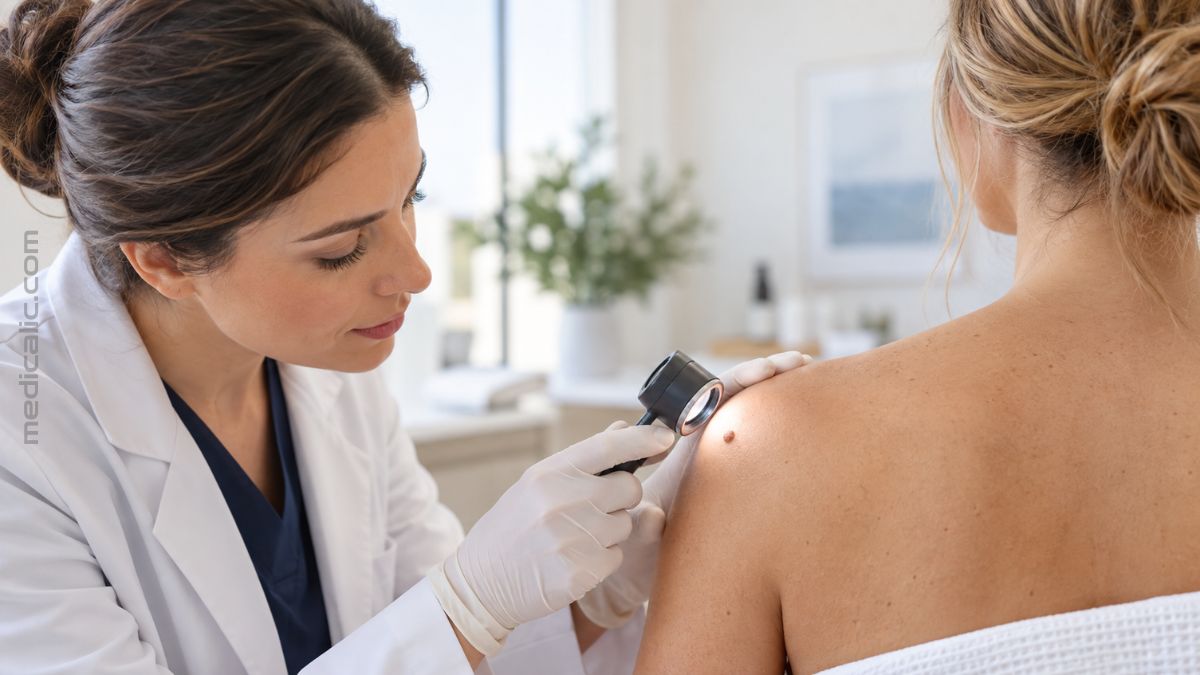
A mole can be easy to ignore—until it catches on your clothing, gets nicked while shaving, or becomes the spot you keep noticing in photos and mirrors. If it starts affecting your comfort or confidence, wanting it gone is completely understandable—and so is the temptation to look for a quick fix.
The reassuring part is that many unwanted moles can be removed safely, often during a simple office procedure. But good mole removal is not just about making the visible spot disappear. It is also about knowing exactly what the growth is, choosing a method that lowers the chance of recurrence, and thinking ahead about scarring and the final cosmetic result.
That matters because not every brown, red, raised, flat, or hanging spot is actually a harmless mole. Before reaching for a DIY acid, removal serum, or viral home remedy, the safest first step is to have the lesion properly identified. Once it is confirmed to be benign, removal can be planned around its type, depth, location, scar risk, and your cosmetic goals.
Can You Actually Get Rid of Moles?
Yes. Dermatologists commonly remove moles in an office setting using surgical shave removal or surgical excision.[1] For many benign moles, the removal procedure itself can be completed in a single office visit.
Removing the visible spot is only part of the decision. A good treatment plan also considers whether tissue should be examined under a microscope, how likely the mole is to recur, and what kind of scar may remain.
If a mole is harmless and does not bother you, leaving it alone is also reasonable.
Check a Mole Before Trying to Remove It
Before focusing on appearance, pay attention to whether the mole is changing. A useful screening guide is the ABCDE rule for melanoma:
- A — Asymmetry: One half does not match the other.
- B — Border: The edges are irregular, blurred, ragged, or poorly defined.
- C — Color: The spot has uneven color or several colors.
- D — Diameter: Melanomas are often larger than 6 mm, although they can be smaller.
- E — Evolving: The mole changes in size, shape, color, texture, or overall appearance.
Also get a spot checked if it is new or growing, bleeding, oozing, itching, becoming hard or lumpy, or developing a dry, scaly, or crusted surface. A lesion that looks noticeably different from your other moles—the “ugly duckling” sign—also deserves attention.[2]
These changes do not automatically mean cancer, but a suspicious lesion should be assessed before cosmetic removal because destroying it first can interfere with diagnosis. Once the lesion has been assessed and no concerning features are identified, its shape, size, and location can help guide the next step.
How to Get Rid of Flat, Raised, Big, or Facial Moles
What a mole looks like can guide the discussion, but appearance alone does not determine how it should be removed.[3]
Flat moles: Flat pigmented lesions should be assessed before removal. Depending on the diagnosis and depth, biopsy or excision may be more appropriate than a destructive cosmetic technique.
Raised moles: Some clearly benign raised moles are suitable for shave removal. Others may be better removed by excision if complete removal or pathology is a priority.
Big moles: Larger moles need individualized planning because their depth, location, expected scar, and whether they were present from birth can affect management. A large or changing mole should not be treated at home.
Facial or skin-colored moles: On the face, a dermatologist can help balance flattening or removing the lesion against the risk of a visible scar and recurrence.
What About Red, Brown, or “Hanging” Moles?
Not every spot people call a mole is a melanocytic nevus.
A brown mole may be an ordinary mole, but a new or changing brown or multicolored lesion should be evaluated. A small bright red “mole” may instead be a cherry angioma, a benign blood-vessel growth. A hanging mole may actually be a skin tag, especially if it is soft and attached by a narrow stalk.
These growths are treated differently. Dermatologists may remove skin tags, for example, with snipping, electrodesiccation, or cryosurgery.
Because these spots can represent different types of skin growths, identifying what you are dealing with comes first. Once that is clear, the dermatologist can choose a removal method that fits the lesion, its location, and your goals.
How Dermatologists Remove Moles
Once the lesion has been identified and assessed, the next question is which removal method makes the most sense. The answer depends on its shape and depth, where it is located, whether tissue needs to be examined, and how much scarring or recurrence matters to you.
Shave removal and surgical excision can both remove benign moles, but they involve different trade-offs. Shaving may produce a smaller scar in selected raised moles, while excision generally offers more complete removal and a lower chance of recurrence.
| Feature | Shave Removal | Surgical Excision |
|---|---|---|
| Often used for | Selected raised benign moles | When complete removal or histopathology is a priority |
| Stitches | Often not needed | Usually needed |
| Scar | Often smaller; may be flat or slightly depressed | Usually a linear scar |
| Recurrence | More likely if deeper mole cells remain | Generally lower |
| Tissue testing | Usually possible if tissue is preserved | Yes; provides a deeper specimen for histopathology |
Surgical Shave Removal
A surgical shave is often used for selected raised or intradermal benign moles. After numbing the area, the clinician uses a surgical blade to remove the raised portion near the level of the surrounding skin. Stitches are often unnecessary.
Shave removal may leave a smaller scar than full excision in some cases, but deeper mole cells can remain, making recurrence more likely. In one study of 145 intradermal nevi, about 12% returned after shave removal, while none recurred after elliptical excision. Shaving, however, produced smaller scars and higher patient satisfaction.[4]
Surgical Excision
With surgical excision, the clinician removes the mole through an incision, including its deeper component when appropriate, and the wound is usually closed with stitches. This method is useful when complete removal or histopathologic examination is important.
Surgical excision appears to offer a high rate of complete removal with relatively low recurrence. A 2026 analysis covering 4,201 benign melanocytic lesions found a clinical clearance rate of about 96% and a recurrence rate of roughly 2%.[5] These numbers are averages, not guarantees. The result can vary with the type and location of the mole, the technique used, and how long patients are followed.
Can You Get Rid of Moles Without Surgery?
Sometimes. But whether a non-surgical option makes sense depends first on knowing exactly what the lesion is.
Lasers have been studied for selected confirmed-benign melanocytic nevi, especially when cosmetic outcome is a priority.[6] Laser treatment can produce good cosmetic results in selected benign moles, but recurrence appears to be more common than after surgical excision.
Diagnosis still comes first. Laser treatment destroys tissue, which means there may be little or nothing left to examine under a microscope afterward. If a pigmented lesion is suspicious or uncertain, establishing the diagnosis can matter more than avoiding stitches. That same caution matters even more when considering DIY treatments.
Can You Get Rid of Moles at Home or Naturally?
There is no proven home remedy that safely and reliably removes a true melanocytic mole, and DIY treatment cannot confirm what the lesion actually is.
Online recommendations often include apple cider vinegar, garlic, iodine, tea tree oil, castor oil, baking soda, acids, or mole-removal serums. These approaches can irritate or burn the skin, cause scarring, or partially destroy a lesion without confirming what it was.
In the United States, there are no legally marketed over-the-counter drug products for removing moles or skin tags.[7] Corrosive preparations containing ingredients such as bloodroot and zinc chloride can damage healthy skin as well as abnormal tissue.
So, if you are searching for how to get rid of moles on skin naturally, the evidence-based answer is that there is currently no established natural treatment that replaces proper identification and clinician-performed removal.
Do not cut, shave, burn, freeze, tie off, or chemically treat a suspected mole yourself. At-home removal can lead to infection, scarring, incomplete removal, and delayed diagnosis of skin cancer. And if a product promises to make the mole disappear overnight, that is even more reason to be cautious.
Can You Get Rid of a Mole Overnight or Fast?
A suitable benign mole may sometimes be removed in a single office visit, but removal is not the same as healing. The skin still needs time to repair itself.
Products promising to make a mole “fall off overnight” are not a safe substitute for proper diagnosis and treatment. Fast destruction at home does not provide a diagnosis, does not guarantee complete removal, and can leave a burn or scar.
If speed matters, start with a professional assessment—it is the fastest way to determine which removal option is appropriate and safe.
Will Mole Removal Leave a Scar?
Any procedure that removes skin can leave a scar. Its appearance depends on the mole’s size and depth, the removal method, body location, wound care, infection, sun exposure, and your tendency to form raised or keloid scars.
Shave removal may produce a smaller scar in selected raised moles, but recurrence may be more likely. Complete excision usually leaves a linear scar but generally offers more complete removal and tissue for pathology.
If appearance is your main concern, ask what the expected scar is likely to look like before choosing a procedure. A good cosmetic result is not just about removing the mole; the scar and final appearance after healing matter too. What happens after the procedure can influence that result.
What to Expect After Mole Removal
Follow the aftercare instructions given by the clinician who performed the procedure. For many minor dermatologic wounds, general care includes gentle daily cleansing, a thin layer of plain petroleum jelly, and a clean bandage to keep the area moist and protected.[8]
Routine topical antibiotic ointment is usually unnecessary for a clean minor wound unless your clinician recommends it. After healing, sun protection may help reduce persistent discoloration and make the scar less noticeable.
Contact your clinician if you develop worsening pain, increasing warmth or swelling, pus, spreading redness or discoloration, fever, or persistent bleeding.
If a removed mole grows back, have it checked again rather than repeatedly treating or removing it yourself.
Frequently Asked Questions About Mole Removal
Usually not much. The area is numbed first, so you may feel a quick sting from the injection and mild soreness afterward.
Usually, yes. When a mole is surgically removed and tissue is available, it is typically sent to a lab for examination under a microscope. This helps confirm the diagnosis and detect any unexpected abnormal changes.
Usually, no. Most common moles do not become melanoma. Removal is generally considered when a mole is changing, suspicious, irritated, or unwanted.
The Bottom Line
If you want to know how to get rid of moles safely, start with identification rather than a home-removal product.
Most harmless moles can be left alone. When removal is appropriate, surgical shave and surgical excision are the main dermatologist-performed options, with different trade-offs for scarring, recurrence, and pathology. Laser treatment may have a role for carefully selected benign lesions, but it should not be used as a shortcut around diagnosis.
If a mole is changing, bleeding, itching, crusting, or looks different from your other spots, prioritize getting it checked over getting it gone. The safest result is not just clearer skin—it is knowing you treated the right thing in the right way.
Medical References
Update History
New information added to improve completeness.
Originally written by Medicalic.
Your answer helps us improve the clarity and usefulness of our health content.