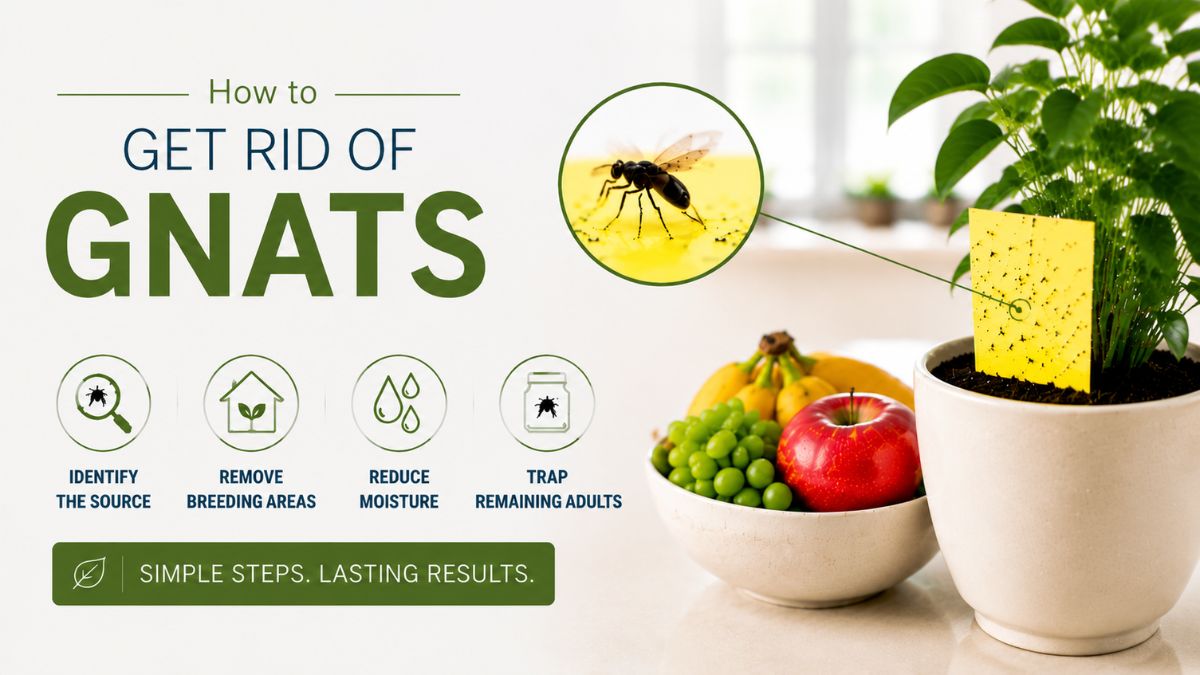
Have you noticed tiny flies appearing around your home even though your kitchen and living spaces look perfectly clean? Whether they are circling a fruit bowl, hovering over a sink, or rising from a houseplant, these small pests can make any space feel uncomfortable.
They often seem to appear out of nowhere, leaving homeowners wondering where they came from and why they keep returning. While many people turn to harsh chemical sprays first, effective control requires more than simply eliminating the flies you can see.
Because several different insects are commonly called “gnats,” correctly identifying the type of fly is the first step toward solving the problem.[1] This guide explains the common types of indoor gnats, why they appear, and the safest, most effective ways to achieve long-lasting control.
How to Identify Gnats: Signs and Common Types
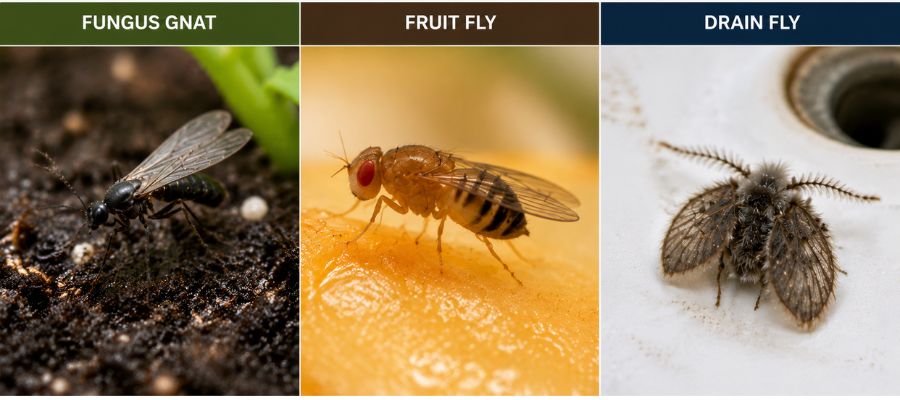
“Gnat” is a casual term for several types of small flies. The three most common indoor groups have different habits:
| Type | Appearance | Location | Breeding Source |
|---|---|---|---|
| Fungus gnat | Black, mosquito-like | Hovering near damp potting soil of houseplants | Moist growing medium, decaying plant roots |
| Fruit fly | Brown, tiny | Kitchens, around ripe produce, recycling bins, and trash | Fermenting food residue, spilled juice, rotting fruit |
| Drain fly | Fuzzy wings | Resting near sinks, bathtubs, and floor drains | Organic, slimy buildup inside plumbing and pipes |
Common signs you may have gnats include:
- Small flies repeatedly appearing in the same area
- Tiny black flies around houseplants
- Small flies around fruit, food, or recycling bins:
- Fuzzy flies near sinks, showers, or drains
- Larvae or unusual moisture around breeding areas
- An increase in flying activity after watering plants or using the kitchen
A few flying insects around a home do not always mean there is a serious infestation. However, repeated sightings in the same location usually indicate that eggs or larvae are developing nearby. Identifying the source before choosing a treatment is the most effective way to stop the life cycle.
How to Get Rid of Gnats in the House
When people search for ways to get rid of gnats quickly, they often focus on the flies they can see. A more effective approach is to identify where the insects are developing before choosing a treatment.
- Trace the activity: Watch where the flies gather after a room has been undisturbed.
- Remove breeding material: Discard rotting produce, rinse containers, clean trash cans, remove dead leaves, and scrub buildup from drains.
- Correct excess moisture: Adjust plant watering, repair leaks, empty standing water, and ventilate damp rooms.
- Trap the adults: Use a trap suited to the pest while continuing to control the source.
This approach helps stop the infestation from continuing. Spraying visible adults may reduce the number of flies temporarily, but eggs and larvae can still develop if the underlying cause remains.
How to Get Rid of Fungus Gnats in Houseplants
Learning how to get rid of fungus gnats means focusing on the potting mix, not the air above it. Adult fungus gnats are mainly a nuisance, while the eggs and larvae continue developing in moist growing media.
Let the Soil Surface Dry
Allow the top 1 to 2 inches of potting mix to dry before watering again, as long as that schedule is suitable for the plant. Drier surface soil is less attractive to egg-laying females and reduces the survival of eggs and larvae.
Do not force plants that require consistently moist conditions to become severely dry. Instead, aim to avoid constantly soggy soil.
Empty drainage saucers, remove decaying leaves, and make sure pots drain freely. If old potting mix stays wet for days or has become dense and compacted, repotting in fresh, well-draining mix may help.
Add Yellow Sticky Traps
Place yellow sticky cards just above the soil. They catch adult fungus gnats, reduce egg-laying, and help you see whether the population is declining.
Sticky traps do not kill larvae, so pair them with moisture control or an appropriate larval treatment.
Consider a Labeled Larval Control
For persistent plant gnats, a product containing Bacillus thuringiensis israelensis, usually shortened to Bti, may help control the larvae. [2]
Choose a product labeled for fungus gnats and the intended plant or growing medium. Follow its mixing, application, and repeat-treatment directions exactly. Beneficial nematodes containing Steinernema feltiae are another biological option used against fungus gnat larvae. [3]
Avoid homemade pesticide mixtures unless you understand the risks. Hydrogen peroxide soil drenches are commonly suggested online, but household concentrations and plant sensitivity vary, so they may not be suitable for every plant.
How to Get Rid of Gnats in the Kitchen
For fruit flies, the breeding source may be smaller than expected. Possibilities include residue beneath a trash liner, a sticky recycling bin, an old onion in a cabinet, juice under an appliance, or a damp mop head.
To get rid of gnats in the kitchen:
- Refrigerate ripe produce or keep it in covered containers.
- Discard damaged or fermenting fruits and vegetables.
- Rinse bottles and cans before recycling.
- Clean garbage, compost, and recycling containers, not just the bags inside them.
- Wipe spills beneath appliances and along baseboards.
- Wash damp cloths, sponges, and mop heads, then let them dry.
Fruit flies can breed in small amounts of moist, fermenting material, so careful sanitation matters more than the number of traps you set. [4]
After removing the source, an apple cider vinegar trap can reduce the remaining adults. Pour a small amount of vinegar into a jar, add one or two drops of dish soap, and place it near the activity. Keep the trap where children and pets cannot spill or drink it.
Vinegar traps are most useful for fruit flies. They are not a dependable way to eliminate fungus gnat larvae in plant soil or drain flies breeding inside pipes.
How to Get Rid of Drain Gnats
If fuzzy flies repeatedly appear near a sink or shower, confirm the source before treating it. At night, place clear tape over part of the drain with the sticky side facing down. Leave enough space for airflow. Flies caught while emerging suggest that the drain is active.
Next, remove the breeding film:
- Take off the drain cover and remove visible debris.
- Scrub the drain and accessible trap area with a stiff, long-handled brush.
- Clean the overflow opening and garbage-disposal splash guard, if present.
- Use a biological or enzymatic drain cleaner labeled for removing organic buildup, if needed.
- Repeat until the slimy film is gone and fly activity stops.
Drain flies develop in moist organic film. Boiling water, bleach, and chemical drain openers are unreliable because they may not remove the material where the larvae live. [5]
Never mix bleach with vinegar, ammonia, drain cleaner, or another cleaning product. Mixing household cleaners can release dangerous vapors. [6]
Recurring drain flies may point to a plumbing leak, damaged sewer line, or contaminated area that ordinary cleaning cannot reach. In that situation, contact a plumber or pest-management professional.
How to Get Rid of Gnats Outside
Outdoor gnats may be associated with wet mulch, decaying vegetation, compost, fallen fruit, clogged gutters, poorly drained containers, or overwatered garden beds.
Remove rotting material, correct irrigation and drainage problems, clean gutters, and keep compost away from doors and windows. Repair damaged screens and door seals to keep outdoor flies from moving inside.
If the insects swarm and bite, fruit-fly and fungus-gnat remedies are unlikely to help. Wear clothing that covers exposed skin and use an EPA-registered insect repellent according to its label.[7] Some biting-fly breeding areas may be located beyond your property.
How to Get Rid of Gnats Without Apple Cider Vinegar
Apple cider vinegar is optional. To get rid of gnats without apple cider vinegar, match the alternative to the insect:
- Fruit flies: Use commercial traps or vacuum visible adults after eliminating food-based breeding sources.
- Fungus gnats: Let the soil surface dry appropriately, use yellow sticky cards, and consider a labeled Bti or beneficial-nematode treatment.
- Drain flies: Scrub away the organic drain film and correct leaks.
- Unidentified flying insects: Repair screens, seal gaps, and use a vacuum while locating the breeding source.
Switching between different traps will not solve the problem if the place where gnats are developing is still present.
How Long Does It Take to Get Rid of Gnats?
You may catch adult flies within hours, but complete control is rarely possible overnight.
Fruit-fly numbers should begin declining over the next several days once every breeding source has been removed. Fungus gnats often take several weeks because eggs, larvae, and pupae remain in the potting mix while adults continue to emerge.
Drain flies should decline after the organic film inside the pipe is thoroughly removed. Incomplete cleaning allows the breeding cycle to continue.
A better sign of progress is seeing fewer flies appear over time rather than simply counting how many adults a trap catches in one day.
Continue monitoring the area after visible adults disappear because newly emerged flies may appear until the complete life cycle is interrupted.
If gnats continue appearing after two to three weeks of consistent source control, recheck for hidden breeding areas such as drains, leaking pipes, forgotten food residue, or overwatered plants.
How to Prevent Gnats From Coming Back
Prevention depends largely on moisture and sanitation control:
- Water houseplants according to their needs rather than a fixed calendar.
- Use pots with drainage holes and empty saucers after watering.
- Inspect new plants before placing them near established ones.
- Store produce properly and rinse recycling containers.
- Keep garbage and compost containers closed and clean.
- Repair leaks and dry damp areas promptly.
- Scrub drains when residue begins to build.
- Maintain window screens, door sweeps, and seals around pipes.
These simple habits reduce the conditions that allow different types of small flies to return.
When to Call a Professional
Consider professional help when large numbers continue after two to three weeks of consistent source control, you cannot find the breeding area, flies appear to emerge from walls or floors, or you suspect a plumbing or sewer problem.
If you use an insecticide, choose only a product labeled for the specific pest and location. Follow every direction, protect food and food-contact surfaces, and avoid whole-room spraying or fogging unless the product label and situation specifically require it.
The U.S. Environmental Protection Agency recommends targeted pest control and strict compliance with pesticide labels. [8]
Frequently Asked Questions
Remove the breeding source immediately, then trap or vacuum the adults. This can reduce visible flies quickly, but eggs or larvae may continue developing for several days or weeks.
A vacuum, fly swatter, or correctly labeled contact insecticide can kill individual adults. None of these methods eliminates hidden eggs or larvae.
Common triggers include ripening produce, a forgotten spill, overwatered plants, damp organic matter, or buildup inside a drain. The source may have been present for several days before the adult flies became noticeable.
Adult fungus gnats do not bite or damage plants. Their larvae mainly eat fungi and decaying material, but heavy infestations can injure roots, especially in seedlings, cuttings, or already stressed plants.
Common indoor fungus gnats and drain flies are primarily nuisance pests and do not bite. Biting “gnats” belong to different groups of insects and require different prevention methods.
The Bottom Line
The most effective way to control gnats is to identify the insect correctly and address the conditions that allow it to develop.
Find where the insects reproduce, remove food and damp organic material, correct moisture problems, and use targeted traps or labeled larval controls when appropriate. With a focused, consistent approach, most household gnat infestations can be brought under control and kept from returning.
Medical References
Update History
Medically reviewed by Dr. Neelam Mehta.
Originally written by Medicalic.
Your answer helps us improve the clarity and usefulness of our health content.