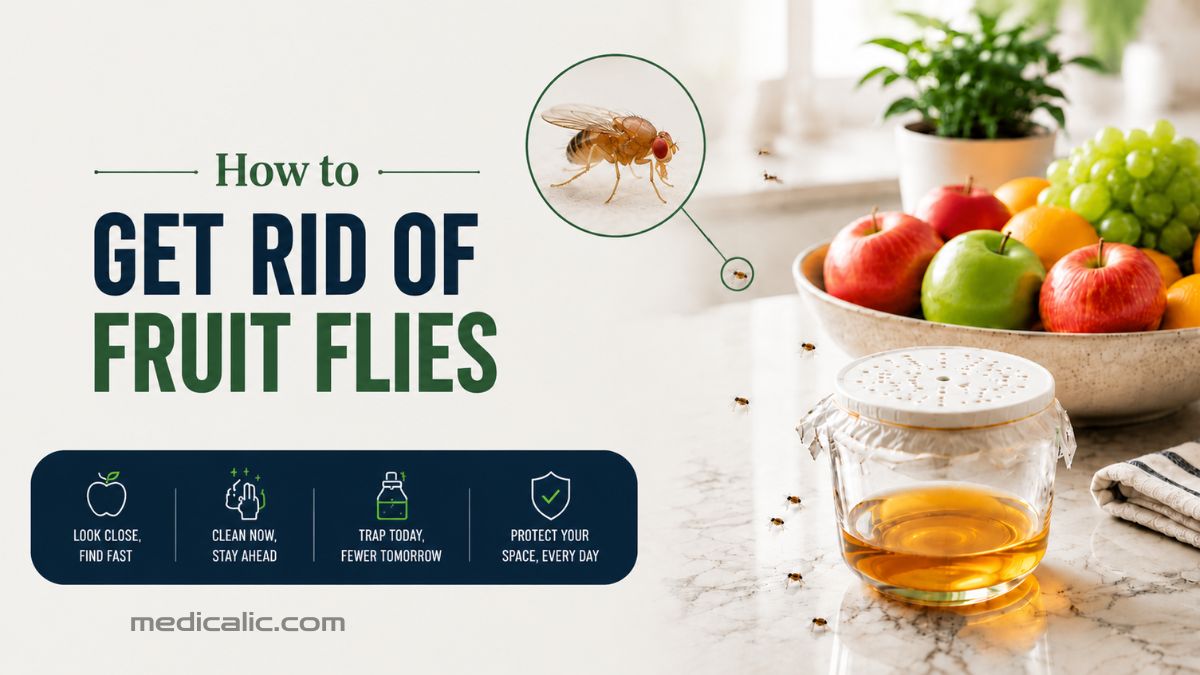
You wipe the counters, swat a few flies, and somehow they are back by dinner. Fruit flies can make even a tidy kitchen feel unpleasant, but their presence does not necessarily mean your home is dirty. One overripe banana, a sticky spill, or residue in a recycling bin may be enough to keep them around.
Getting rid of fruit flies starts with breaking their breeding cycle. Removing food sources and hidden residue is the most important step, while traps help control the adults that remain.
Quick Steps to Get Rid of Fruit Flies
Start with these five actions:
- Throw away or refrigerate overripe produce.
- Empty and wash trash, compost, and recycling containers.
- Clean sugary spills, damp cleaning tools, drains, and garbage disposals.
- Set an apple cider vinegar trap near the busiest area.
- Continue checking and cleaning for at least 8 to 10 days.
Because fruit flies develop quickly, early action helps prevent a small problem from becoming a larger infestation. University of Maryland Extension identifies sanitation, especially eliminating larval food and development sites, as the primary control method. [1]
Why Fruit Flies Suddenly Appear
Fruit flies seem to appear overnight because they reproduce quickly and need only a small amount of fermenting food or residue to establish a breeding site. A hidden food source that seems insignificant to you can support a growing population within days.
Fruit flies are attracted to ripening, decaying, and fermenting organic material. [2] Common sources include:
- Overripe bananas, tomatoes, onions, potatoes, and other produce
- Wine, beer, fruit juice, vinegar, and soda residue
- Trash cans, recycling bins, and indoor compost containers
- Food buildup in or around a garbage disposal
- Damp mops, dishcloths, sponges, and towels
- Syrup, juice, or food residue beneath appliances
- Forgotten produce in a pantry or storage bin
The fruit bowl is not always the true source. A nearly empty bottle, sticky recycling container, or spill under an appliance can support ongoing activity.
How to Identify Fruit Flies vs Drain Flies vs Fungus Gnats
| Insect | How it looks | Common location | Main clue |
|---|---|---|---|
| Fruit flies | Small (about 1/8 inch), tan to brown, often with red eyes | Fruit, food waste, recycling bins, compost, fermenting liquids | Usually hover around ripening or fermenting food |
| Drain flies | Darker, fuzzy appearance with moth-like hairy wings | Sinks, showers, floor drains, wet organic buildup | Usually found near drains and moist areas |
| Fungus gnats | Small, dark, slender, mosquito-like insects | Houseplants and moist potting soil | Often seen flying around plant pots |
Where they gather is often the easiest way to identify the problem. Fruit flies usually point to food sources, while drain flies are linked to wet pipes.
Bugs hovering near your houseplants? Those aren’t fruit flies; they’re fungus gnats. [5] Vinegar traps won’t catch them, so here is exactly how to get rid of gnats.
How to Get Rid of Fruit Flies in the Kitchen
1. Remove the Breeding Source
Inspect every piece of produce. Discard anything leaking, split, moldy, or heavily overripe. Refrigerate suitable fruits and vegetables while the infestation is active. Wash the fruit bowl or storage basket because juice may have collected beneath the produce.
Next, empty the trash and compost. Wash the inside, rim, lid, and surrounding floor rather than only changing the liner. Rinse bottles and cans before recycling them, and check the pantry for forgotten produce.
2. Clean Hidden Moist Areas
Wipe counters, cabinet edges, pantry shelves, and the floor around appliances. Wash or replace damp sponges and cloths. Rinse mop heads and let them dry fully. University of Maryland Extension notes that damp mops or towels may provide enough food and moisture for fruit fly development.
Also inspect coffee-machine and refrigerator drip trays, blender seals, reusable grocery bags, pet-feeding areas, and the underside of the garbage-disposal splash guard. These overlooked areas are often responsible when fruit flies continue appearing despite regular kitchen cleaning.
3. Trap the Remaining Adults
After removing competing food sources, make a simple vinegar trap.
You will need:
- About 1/4 cup apple cider vinegar
- Two or three drops of liquid dish soap
- A small glass or jar
- Plastic wrap and a rubber band, optional
Pour the vinegar into the container and add the dish soap. Leave the jar uncovered, or cover it with plastic wrap and poke a few small holes in the top. The vinegar attracts adult flies, while the dish soap reduces surface tension so flies that land in the liquid are more likely to sink. [6] University of Maryland Extension recommends a similar apple cider vinegar trap for capturing adults.
Place traps near the sink, recycling bin, compost container, or former produce-storage area. Refresh the bait when it becomes dirty or stops attracting flies.
How to Get Rid of Fruit Flies in 2 Minutes
A two-minute cleanup will not solve an established infestation, but it can reduce the number of active flies and slow the problem from getting worse.
For a fast two-minute reset:
- Remove the most obvious spoiled or overripe produce.
- Put the remaining produce in the refrigerator when appropriate.
- Set an apple cider vinegar-and-soap trap beside the busiest area.
- Take out the trash or compost if it contains food waste.
These steps may reduce adult activity quickly, but complete removal still depends on finding hidden breeding material.
How to Get Rid of Fruit Flies in a Drain
Fruit flies may gather around a kitchen sink when food or drink residue has collected in the drain, garbage disposal, or splash guard. However, fuzzy insects emerging directly from the drain are more likely to be drain flies.
To test a suspected drain, lightly coat the inside of a clear cup or jar with petroleum jelly or vegetable oil, invert it over the drain, and leave it in place for about 24 hours. Emerging drain flies may stick to the inside. UC Integrated Pest Management recommends this type of inspection because more than one drain may be involved. [3]
If the drain is the source:
- Remove the drain cover if it can be done safely.
- Scrub the sides of the drain and accessible pipe surfaces with a stiff brush.
- Clean the disposal opening and underside of the rubber splash guard.
- Clear slow-draining blockages when appropriate.
- Consider a label-directed enzymatic drain cleaner to help reduce future organic buildup.
Do not mix drain cleaners or household chemicals. In particular, the EPA notes that combining bleach and ammonia generates toxic chloramine gas. [4] Follow product labels and use only one cleaning product at a time.
Bleach or boiling water may kill some insects temporarily, but they do not remove the organic buildup where larvae develop. Scrubbing away that buildup is usually more effective.
Persistent activity may indicate a leak, blockage, sewer issue, or inaccessible buildup.
How Long Does It Take to Get Rid of Fruit Flies?
After thorough source removal, you may see a steady decline over the next several days. Continue cleaning and trapping for at least 8 to 10 days, which covers the approximate fruit fly life cycle under favorable conditions.
A stubborn infestation may take one to two weeks to settle. If many flies remain after a week, assume a source has been missed rather than simply adding more traps.
Recheck:
- Recycling and compost containers
- Drains and garbage disposals
- Damp towels, mops, and sponges
- Pantry produce
- Spills beneath appliances
- Empty bottles and cans
- Plant soil, if the insects may be fungus gnats
What Not to Do
Do not rely on a single trap while leaving food sources available. The trash can, fruit bowl, or recycling residue may continue supporting reproduction and may compete with the trap.
Avoid spraying insecticides casually around food-preparation areas. The U.S. Environmental Protection Agency recommends nonchemical pest-control methods when possible. When a pesticide is used, follow the product label exactly, apply only the recommended amount, and ventilate as directed.
Do not pour several cleaning products down a drain in an attempt to create a stronger treatment. Chemical combinations can be hazardous and still may not remove the physical buildup where flies develop.
If vinegar traps catch little or nothing, reconsider the insect’s identity before escalating treatment.
How to Prevent Fruit Flies From Returning
Once the flies are gone, a few habits can help prevent another cycle:
- Refrigerate ripe produce when practical.
- Inspect bananas, tomatoes, onions, and potatoes regularly.
- Empty compost and food waste before it begins fermenting.
- Rinse recycling, especially alcohol, juice, and soda containers.
- Keep drains and garbage disposals free of food buildup.
- Wash fruit bowls and produce-storage bins.
- Let mops, towels, and sponges dry fully.
- Clean spills promptly, including those beneath appliances.
- Repair torn screens and reduce unnecessary open-door time.
Late summer and fall often bring higher indoor fruit fly activity, so prevention becomes especially useful during warmer, produce-rich months.
Are Fruit Flies Dangerous?
Treat a household fruit fly infestation mainly as a sanitation and food-quality concern. Discard spoiled food and clean food-contact surfaces carefully.
Keep traps and cleaning products out of the reach of children and pets. Never place an open trap where it could be mistaken for a drink.
When to Call a Pest-Control or Plumbing Professional
Professional help is reasonable when:
- Flies continue appearing after 10 to 14 days of thorough source removal
- Several drains appear to be producing flies
- You suspect a plumbing leak, sewer problem, or hidden organic buildup
- The infestation is widespread in a restaurant, care facility, or other sensitive setting
- You cannot confidently identify the insect
A professional can identify the insect and locate breeding material that may be inaccessible.
Frequently Asked Questions
A clean-looking home can still contain a small hidden breeding source, such as residue in a recycling bin, an overripe onion in a pantry, a damp mop, or a spill beneath an appliance. Finding that source is usually more important than cleaning already spotless counters again.
Apple cider vinegar traps can capture adults, but they do not remove eggs, larvae, or breeding material. Use traps as a supporting step after cleaning and source removal.
Remove overripe produce and food waste first, wash trash and recycling containers, clean hidden spills and moist residue, then trap the remaining adults. This combined approach is faster and more reliable than traps or sprays alone.
Fruit flies can appear suddenly because they reproduce quickly and may come from a small hidden food source, such as overripe produce, recycling residue, or spilled liquids.
Adult fruit flies typically live for about 25 to 30 days under favorable conditions, while their life cycle from egg to adult can be completed in around 8 to 10 days.
Bottom Line
Fruit fly control works best when you stop the breeding cycle. Remove fermenting food, clean hidden residue, and use traps to catch the remaining adults. With consistent cleanup and source removal, most household infestations gradually disappear without relying on heavy chemical treatments.
Medical References
Update History
Originally written by Dr. Neelam Mehta.
Your answer helps us improve the clarity and usefulness of our health content.