You finally lie down after a long day, expecting your body to relax. Instead, your lower back tightens, your reflux flares, or your legs feel heavy against the mattress. If lying flat makes sleep harder, the zero gravity sleep position offers a gentler way to rest.
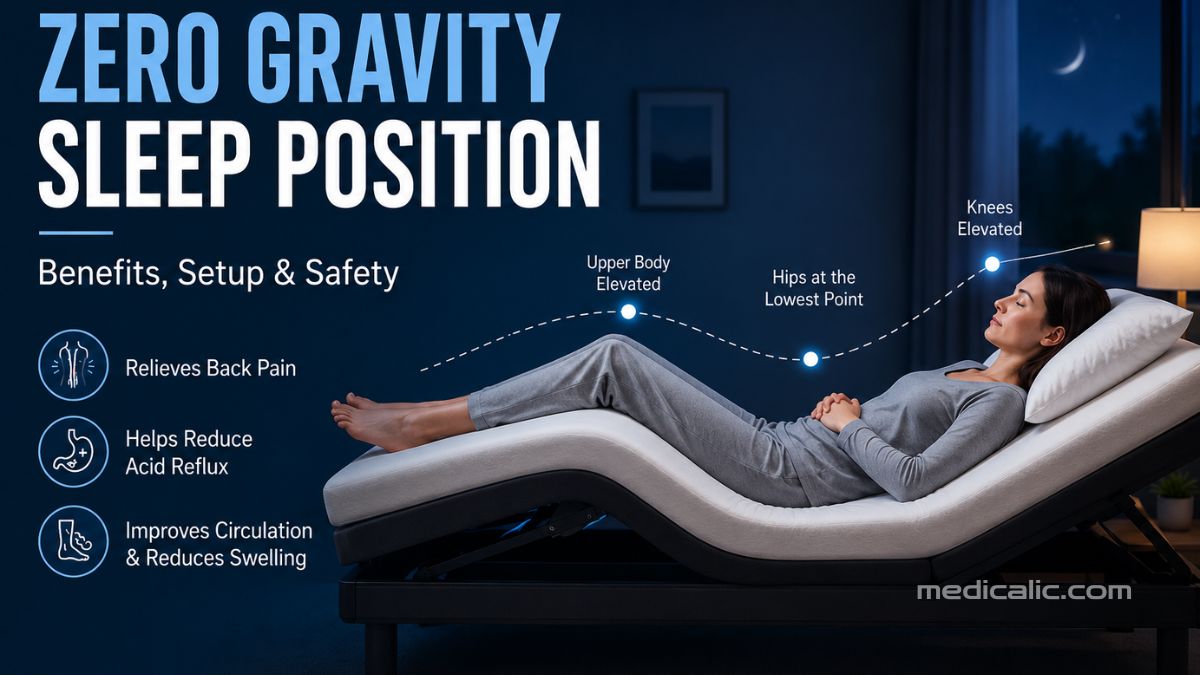
This position raises both the upper body and the legs, creating a relaxed V-shape. Your chest is lifted, knees are slightly bent, and hips rest near the lowest point of the body. For many people, this supported recline feels easier on the lower back, more comfortable for nighttime reflux, and more soothing for tired or mildly swollen legs.
Zero gravity sleeping is not a cure for back pain, acid reflux, sleep apnea, poor circulation, or swelling. It is a supportive sleep posture. When it fits your body and health needs, it can make lying down feel calmer, more stable, and less strained.
What Is the Zero Gravity Sleep Position?
If you are wondering, “What is the zero gravity sleep position?” the simple answer is this: it is a reclined back-sleeping position where the upper body and legs are elevated at the same time.
Most people create it with an adjustable bed. The upper section lifts the head, shoulders, and torso, while the lower section lifts the knees and legs. Many adjustable bases include a preset labeled “zero gravity.” That preset is a useful starting point, but the best angle depends on your body, mattress, and comfort level.
You can also create a zero gravity sleep position without an adjustable bed by using pillows. A wedge pillow supports the upper back and shoulders, while another pillow or bolster supports the knees. This setup is not as stable as an adjustable base, but it is a practical way to test the position before buying new equipment.
The goal is not to remove gravity. The goal is to reduce pressure and improve support. When the knees are raised, the pelvis shifts slightly and the lower back rests in a more relaxed curve. When the upper body is raised, the incline supports reflux control and breathing comfort for some people, depending on the cause of their symptoms.
What Does the Zero Gravity Sleep Position Look Like?
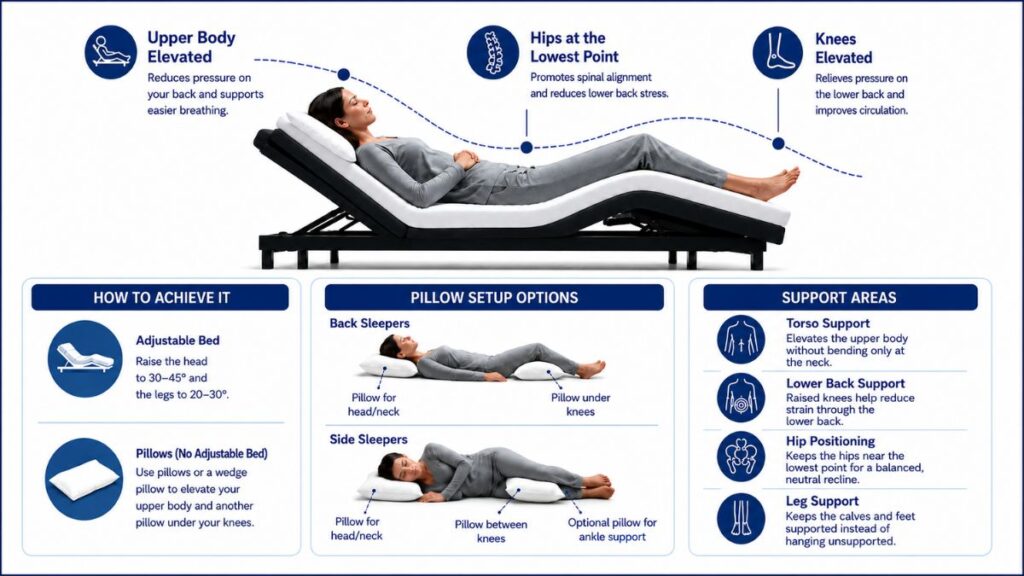
If you are trying to picture what the zero gravity sleep position looks like, imagine a shallow V-shape. Your head, shoulders, and upper back are gently lifted. Your hips stay lower than your chest and knees. Your knees are bent, and your calves are supported.
A helpful zero gravity sleep position diagram should show the body resting in a gentle recline, not folded at the neck or sharply bent at the waist. The upper-body incline should start from the torso rather than lifting only the head. Legs should be supported from the knees through the calves so they do not dangle or rest without support.
A good setup feels settled, not forced. Your neck stays in line with your chest and upper back. Your shoulders feel loose. Your lower back feels supported rather than arched. Your heels rest comfortably instead of hanging in the air.
Zero Gravity Sleep Position Benefits
The most realistic zero gravity sleep position benefits come from three positioning principles: raising the knees for lower-back support, elevating the upper body for reflux comfort, and lifting the legs for mild swelling.
These benefits are supported by related sleep-position guidance. Mayo Clinic recommends placing a pillow under the knees when sleeping on the back because it helps relax the back muscles and maintain the natural curve of the lower back.[2] For reflux, the National Institute of Diabetes and Digestive and Kidney Diseases recommends elevating the head during sleep by placing support under the head and upper back to incline the body and raise the head of the bed about 6 to 8 inches.[3] For edema, Cleveland Clinic recommends elevating affected areas, especially the legs and feet, to help fluid drain.[4]
This does not mean zero gravity sleeping is a guaranteed solution for pain, circulation, sleep apnea, or heart health. It is best used as a comfort-focused sleep posture that supports the body more evenly than lying completely flat.
Zero Gravity Sleep Position for Back Pain
Many people try zero gravity sleeping because flat back sleeping makes the lower back feel tight or unsupported. When the knees are elevated, the hips bend slightly and the pelvis settles into a more relaxed position. This reduces tension through the lower back and makes it easier to stay comfortable through the night.
This position is especially useful for back sleepers who already feel better with a pillow under the knees. The support can reduce lower-back strain during sleep without forcing the spine into an extreme position.
Back pain is different for every person. Some people feel better sleeping on their side with a pillow between the knees. Others need a different mattress, physical therapy, medication guidance, or evaluation for nerve irritation, arthritis, disc problems, spinal stenosis, muscle strain, or another cause.
Start with a gentle trial. Use a modest upper-body incline and slight knee elevation. If your back feels calmer in the morning, the position suits your body. If pain spreads, tingling develops, numbness appears, or stiffness gets worse, return to your most comfortable sleep position and speak with a healthcare professional if symptoms continue.
Zero Gravity Sleep Position for Acid Reflux and GERD
The zero gravity sleep position is often helpful for people whose reflux gets worse when they lie flat. Elevating the upper body uses gravity to keep stomach contents lower in the stomach during sleep. For reflux support, the head, shoulders, and upper back should be elevated together. [3]
This detail matters. Stacking pillows only under the head can bend the neck forward and create a slumped posture. It can also increase pressure around the abdomen, which is not ideal for reflux. A wedge pillow, adjustable bed, or raised upper-body section creates a smoother incline.
The incline should feel gentle and stable. If the angle is too steep, you can slide down during the night or wake with hip and lower-back discomfort. If the angle is too low, reflux symptoms can continue.
Zero gravity sleeping does not replace GERD care. Frequent heartburn, trouble swallowing, vomiting blood, black stools, unexplained weight loss, or chest pain needs medical evaluation. Sleep positioning works best as one part of a broader reflux plan.
Zero Gravity, Snoring, and Sleep Apnea
Upper-body elevation can make breathing feel easier for some snorers, especially when snoring is mild and position-related. A gentle incline changes how gravity affects the soft tissues at the back of the throat.
Sleep apnea needs more caution. Zero gravity sleeping is still mainly a back-sleeping position, and back sleeping can worsen obstructive sleep apnea in some people. Mayo Clinic notes that snoring can be loudest and apneas can be more common when sleeping on the back because the tongue and soft palate can rest against the back of the throat and block the airway. [5]
For that reason, zero gravity sleeping should never replace CPAP, an oral appliance, weight-management support, or medical treatment for diagnosed obstructive sleep apnea. Anyone with loud snoring, witnessed breathing pauses, morning headaches, daytime sleepiness, or high blood pressure should ask about a sleep evaluation.
How to Do Zero Gravity Sleep Position
To get into the zero gravity sleep position, start by raising your upper body first. Lift the head and torso until your chest feels gently elevated, not upright like a chair. Then raise your knees until your lower back feels supported and your hips rest near the lowest point of the curve.
For a zero gravity sleep position adjustable bed setup, use the preset as a starting point, then fine-tune it. The preset is helpful, but it is not a rule. If your neck feels bent, lower the head section or use a thinner pillow. If your hips feel cramped, reduce the leg elevation. If your lower back still feels arched, add slightly more knee support.
The best setup should feel relaxed and balanced. Your neck should stay neutral, your shoulders should rest comfortably, and your legs should feel supported from the knees through the calves. Avoid pressure behind the knees, tightness in the hips, or strain in the neck.
Zero Gravity Sleep Position With Pillows
A zero gravity sleep position with pillows works well if you do not have an adjustable bed. Place a firm wedge pillow under your upper back and shoulders. Avoid placing it only under your head. Then place a pillow or bolster under your knees so the legs bend slightly and the lower back feels relaxed.
This method is budget-friendly, but it has limits. Pillows can compress, slide, or lose shape during the night. If the setup collapses, your body can end up twisted or unsupported. A firm wedge and knee bolster usually work better than several soft pillows stacked together.
A pillow setup is best for testing the position. If it noticeably improves comfort but keeps shifting, an adjustable base or firmer support system is worth considering.
Zero Gravity Sleep Position for Side Sleepers
The zero gravity sleep position for side sleepers is more complicated because true zero gravity sleeping is mainly designed for back sleeping. Most adjustable beds create the V-shape while you are lying on your back.
So, can you sleep on your side in zero gravity position? Some people can rest partly on their side with a mild incline, but it often feels awkward when both the head and knees are elevated. Side sleepers usually do better with a supportive neck pillow, a pillow between the knees, and a mattress that keeps the spine aligned.
If you are a natural side sleeper, you can still use zero gravity for reading, relaxing, reflux relief, or easing back tension before sleep. Then, if your body wants to roll onto the side, use pillows to keep your hips and spine comfortable.
Who Should Be Careful?
Zero gravity sleeping is not ideal for everyone. Pregnant people, especially in the third trimester, should be cautious with back-sleeping positions. Tommy’s pregnancy guidance recommends going to sleep on the side after 28 weeks because going to sleep on the back in the third trimester is linked with a higher risk of stillbirth. [6]
So, can you sleep in zero gravity position while pregnant? In early pregnancy, some people find reclined positions comfortable. In the third trimester, ask your OB/GYN before using a back-sleeping zero gravity setup.
People with diagnosed sleep apnea should not replace prescribed therapy with a reclined sleeping position. People with severe heart, kidney, liver, or vascular disease should ask a clinician about leg swelling rather than treating it as a simple positioning issue. Edema can be linked with medical conditions that need proper diagnosis and care. [7]
People with glaucoma or eye-pressure concerns should ask their eye doctor about sleep angle and head elevation. Anyone recovering from surgery or injury should follow their clinician’s positioning instructions instead of experimenting with a new sleep posture.
Is Zero Gravity Sleep Position Good for You?
The answer depends on your body and your health needs. Is zero gravity sleep position good for you if you have mild lower-back discomfort, nighttime reflux, or tired legs after long periods of standing? It can be a comfortable option to try.
Is it safe to sleep in zero gravity position every night? For many healthy adults, yes, as long as the angle feels comfortable and does not cause stiffness, numbness, breathing problems, or pain. The setup should support your body, not lock it into an uncomfortable shape.
How long can you sleep in zero gravity position? You can use it for as long as it remains comfortable. Some people use it all night. Others use it for the first part of the night, then shift to their side. Comfort, breathing, and morning symptoms are the best guides.
The best zero gravity setup is not the steepest or most expensive one. It is the one that keeps your neck relaxed, your lower back supported, and your breathing comfortable.
When to See a Doctor
Get medical advice if back pain, reflux, snoring, breathing problems, or swelling is severe, persistent, or getting worse. Sleep position can improve comfort, but it should not delay proper diagnosis.
Seek urgent care for back or leg pain with loss of bladder or bowel control, numbness around the groin or saddle area, rapidly worsening leg weakness, or severe unrelenting night pain. NICE lists bowel or bladder dysfunction, progressive neurological weakness, saddle anesthesia, and unrelenting night pain as red flags in people struggling to sleep with sciatica or lumbar radiculopathy. [8]
For swelling, seek urgent medical help if leg swelling occurs with chest pain, difficulty breathing, shortness of breath, fainting, dizziness, or coughing blood. These can be signs of a blood clot in the lungs or a serious heart condition. [9]
FAQs
The zero gravity sleep position is a reclined back-sleeping posture where the upper body and legs are both elevated. The body forms a gentle V-shape, with the hips lower than the chest and knees.
The main benefits include better lower-back support, upper-body elevation for nighttime reflux, and leg elevation for mild foot or ankle swelling.
Yes. Use a wedge pillow under the upper back and shoulders, then place a pillow or bolster under the knees. This can approximate the position without an adjustable bed.
Some people can rest partly on their side with a mild incline, but true zero gravity sleeping works best on the back. Side sleepers often need a pillow between the knees for better hip and spine support.
You can sleep in the zero gravity position as long as it remains comfortable and does not cause pain, numbness, stiffness, or breathing problems.
Zero gravity sleeping supports nighttime reflux control because the upper body is elevated. For reflux, the head, shoulders, and upper back should be raised together rather than using extra pillows only under the head. [3]
Zero gravity sleeping is not a treatment for sleep apnea. It can feel more comfortable for some snorers, but people with diagnosed or suspected sleep apnea should follow medical advice and use prescribed treatment. [5]
Medical References
Update History
Medically reviewed by Dr. Jubair Islam.
Originally written by Medicalic.
Your answer helps us improve the clarity and usefulness of our health content.