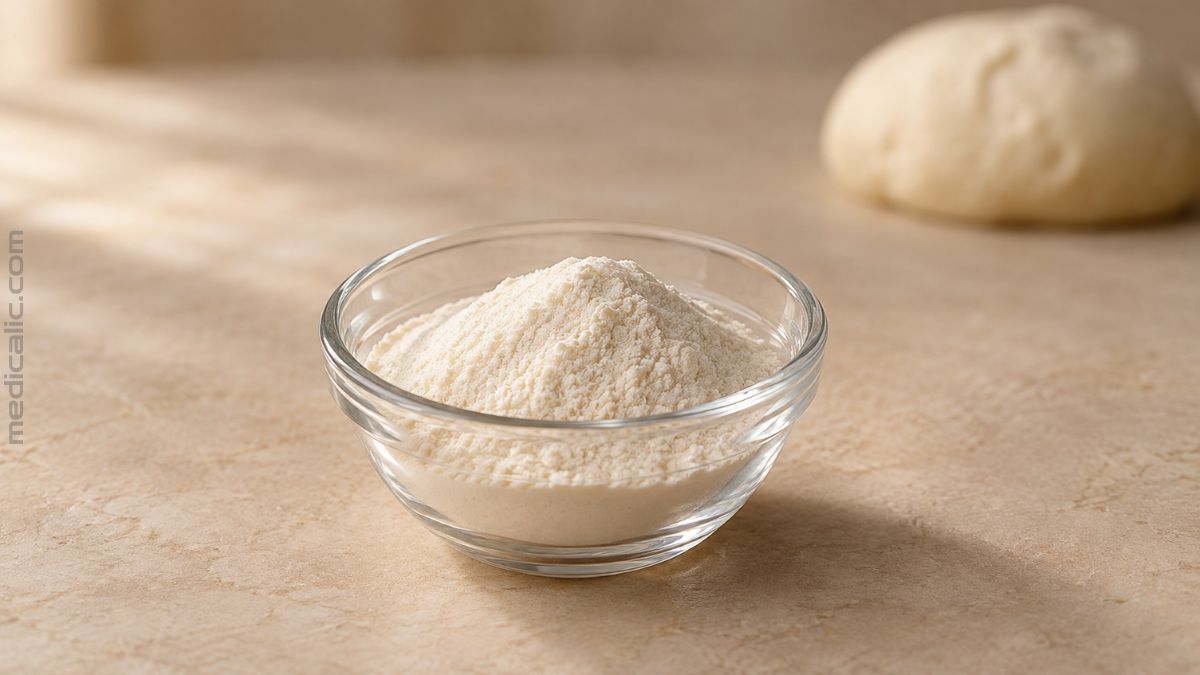
The dough is mixed, the oven is heating up, and you reach for the xanthan gum, only to find a jar with a few sad specks at the bottom. (Or maybe you’d never even heard of xanthan gum until you spotted it on the recipe’s ingredient list.)
So you grab your phone and type “xanthan gum substitute.” Luckily, you’ve got options.
Gluten-free bakers, gravy makers, and homemade ice cream fans have been working around this for years. The catch is that no single substitute works everywhere. Once you know what xanthan gum was supposed to do in your recipe, picking the right stand-in gets a lot easier. And your batch might still turn out just fine.
Why Is Xanthan Gum Used in Food?
Xanthan gum is a fine powder made by fermenting sugar with bacteria. Food makers add it in very small amounts.[1]
In gluten-free baking, though, it carries more weight than most people realize. Wheat flour contains gluten, the stretchy protein that traps air and gives bread its chew. Take gluten away and something has to step in, or your loaf becomes a pile of expensive crumbs. In many gluten-free recipes, that something is xanthan gum.
Binding is only one of three jobs it does:
- Binding: It helps gluten-free dough and batter hold together.
- Thickening: It gives sauces, soups, and dressings body, even without heat.
- Stabilizing: It keeps mixtures from separating.
A xanthan gum substitute is really a stand-in for one or more of those three jobs. Cornstarch thickens gravy beautifully but can’t hold a loaf together. Psyllium husk can give bread real structure, but stir it into salad dressing and you’ll get something closer to wallpaper paste.
What Is the Best Substitute for Xanthan Gum?
Once you know the job, the options shrink fast. Here’s a quick map of the best substitute for xanthan gum, recipe by recipe.
| What you’re making | Start with | Why |
|---|---|---|
| Gluten-free sandwich bread, pizza dough | Psyllium husk | Builds structure and holds moisture |
| Cakes and cookies | Guar gum | Binds and thickens |
| Muffins, pancakes, quick breads | Chia or flax gel | Gentle, natural binding |
| Gravy, soups, stir-fry sauces | Cornstarch | Thickens when heated |
| Fruit sauces and glazes | Arrowroot | Glossy, clear finish |
| Cold dressings, ice cream base | Guar gum | Thickens without heat |
| Jellies and set desserts | Agar-agar or gelatin | Sets into a gel |
8 Best Xanthan Gum Substitutes and How to Use Them
1. Psyllium Husk: Best for Gluten-Free Bread
If you’ve ever sliced a gluten-free loaf and watched it fall apart like damp sand, psyllium deserves your attention.
It comes from the seeds of Plantago ovata, and its fiber soaks up a surprising amount of water. That turns into a gel that gives dough some stretch and keeps the crumb moist. Food scientists who have tested psyllium in gluten-free loaves report a softer crumb and bread that stays soft longer.[2] In flatbread trials, it has even replaced xanthan gum entirely, though results shift with the flour blend.
A few things make or break it. Know which form you have. Whole husks and fine powder both work in gluten-free baking, but the powder absorbs more water per gram, so you need less of it. The amounts in this guide are for powder, so if you only have whole husks, use roughly 15–25% more by weight. Stir it into part of the recipe’s liquid first and let it thicken for a few minutes before mixing the dough. And don’t overdo it, because too much turns bread dense and gummy.
2. Guar Gum: Best for Cakes, Cookies, and Dressings
Guar gum is made from guar beans and acts a lot like xanthan gum. It thickens and stabilizes, and it works without heat, which makes it handy for cold mixtures like dressings and ice cream bases. It also does well in cakes and cookies.
Whisk it into your dry ingredients, or blend it into liquid slowly, so it doesn’t clump. Go easy, because too much creates a slimy, overly thick texture.
Baking brands don’t fully agree on how much to use. Bob’s Red Mill suggests about one and a half times the xanthan gum amount, while King Arthur Baking suggests starting with a 1:1 swap. That disagreement is why the amounts below are organized by recipe type instead of one universal conversion.
3. Chia Seeds: Best for Muffins and Pancakes
Think of chia as a gentle binder, not a heavy lifter. Stir ground chia into water, wait a few minutes, and you get a thick gel that helps hold together muffins, pancakes, and quick breads. A common starting point is 1 tablespoon of ground chia with 3 tablespoons of water, the gel bakers use to replace one egg. It’s a binder for the batter, not a xanthan gum conversion, so there’s no universal ratio to follow.
Use ground chia, since whole seeds leave visible specks. The gel is wet, so trim the other liquid a little if your batter looks loose. It doesn’t have the muscle to carry a yeasted gluten-free loaf on its own.
4. Ground Flaxseed: Best for Cookies and Quick Breads
Ground flaxseed works the same way. Stir it into water, let it thicken, then fold it into the batter. It brings a mild nutty flavor and a darker color, which suits oatmeal cookies, banana bread, and hearty muffins better than a delicate vanilla cake. The usual starting point is 1 tablespoon of ground flaxseed with 3 tablespoons of water, which replaces one egg. That’s a batter binder, not a xanthan gum conversion.
Stick to ground flax rather than whole seeds, and account for the extra moisture. Like chia, it can’t be the only structure in a yeasted gluten-free bread.
5. Cornstarch: Best for Gravy, Soups, and Sauces
Cornstarch is probably already in your pantry, and for anything cooked and saucy it’s hard to beat. It needs heat to work. Mix it with a little cold water into a smooth slurry, stir that into your hot liquid, and simmer gently until it thickens. If the sauce gets too thick, a splash of liquid fixes it. What it can’t do is give gluten-free bread the structure xanthan gum provides.
6. Arrowroot Powder: Best for Glossy Sauces
Arrowroot is the pick when looks matter. It cooks up clear and glossy, which makes fruit fillings and glazes look polished. Use it the same way, slurry first, and keep the heat brief, because long cooking weakens its thickening power. It can also give an off texture in some dairy-based sauces.
7. Agar-Agar: Best for Vegan Set Desserts
Agar-agar won’t replace xanthan gum in bread or dressing. It’s a gelling agent, and the pick when a dessert needs to hold its shape without anything animal-derived. It comes from red algae, has to be heated until dissolved, and sets as it cools into a firm, slightly brittle gel.[3]
8. Unflavored Gelatin: Best for Chilled Desserts
Gelatin does a similar job with a softer, wobblier set. It comes from animal collagen, so bloom it in cool liquid first, then dissolve it as the recipe directs. It suits mousses and chilled fillings, but the gel melts with heat. Because it isn’t vegetarian or vegan, agar is the better choice for plant-based recipes.
How Much Xanthan Gum Substitute Should You Use?
There’s no single conversion that works for every xanthan gum substitute. The amounts below are starting points based on how much flour or liquid you’re using, not a conversion from the xanthan gum amount in your recipe. The right amount depends on your flour blend, the recipe, and the texture you want. The guar gum numbers follow Bob’s Red Mill’s guidelines by recipe type.[4] Begin at the lower end, see how the batch turns out, and adjust next time.
Gluten-free baking, per 1 cup (120–140 g) of flour
| Substitute | Starting amount | Best for |
|---|---|---|
| Psyllium husk powder | 5–6 g | Bread, pizza dough |
| Guar gum | ¼–½ tsp | Cookies |
| Guar gum | ¾ tsp | Cakes, pancakes |
| Guar gum | 1 tsp | Muffins, quick breads |
| Guar gum | 1½–2 tsp | Yeast bread |
Weigh the psyllium if you can. This amount is for powder; whole husks may require roughly 15–25% more by weight.
Sauces, gravy, and dressings, per 1 US cup (237 mL) of liquid
| Substitute | Starting amount | Best for |
|---|---|---|
| Guar gum | ¼–½ tsp | Cold dressings, ice cream base |
| Guar gum | ¼–¾ tsp | Hot gravy, stew |
| Cornstarch | 1–2 tbsp | Medium-to-thick gravy or sauce |
| Arrowroot powder | 1–1⅓ tbsp | Fruit glaze, gravy, sauce |
Cornstarch and arrowroot go in as a cold-water slurry. Guar gum can thicken cold liquids without heating, but add it gradually while whisking or blending to prevent clumps.
For set desserts: agar-agar and gelatin
| Substitute | Amount | Basis |
|---|---|---|
| Agar-agar powder | ½–¾ tsp | Per 1 cup liquid, soft to firm set |
| Unflavored gelatin | 1½ tsp | Per 1 cup liquid, chilled set |
Gel strength varies by brand, and agar powder, flakes, and bars aren’t interchangeable, so check the package and treat these as starting points.
How to Replace Xanthan Gum Successfully
Water is the hidden variable. Psyllium, chia, and flax all soak up liquid. Researchers comparing psyllium and xanthan gum in gluten-free dough keep finding that small changes in hydration noticeably change how the dough handles and how the bread turns out.[5]
Your flour blend may already have a binder. Many gluten-free mixes include xanthan gum, guar gum, or psyllium. Check the label before adding more, because doubling up is a fast way to get a gummy loaf.
Gels need a few minutes. Chia, flax, and psyllium thicken as they hydrate. Letting them rest before they go into the batter makes it much easier to judge the texture.
Dough too stiff? Add water a little at a time, checking the texture after each addition.
Dough too sticky? Let the binder finish hydrating before you change anything. Psyllium keeps thickening as it rests, so don’t reach for extra flour right away.
Bread too gummy? Too much binder or liquid, an extra binder in your flour blend, or underbaking could be responsible.
Bread too crumbly? The dough may be too dry or lack enough binding support. Check the binder amount and hydration before your next bake.
Change one thing at a time. If you swap the binder, the flour blend, and the liquid in one go, you won’t know which change ruined the bake. A small test batch is cheap insurance.
Are Xanthan Gum Substitutes Actually Better?
Sometimes. The right substitute can do more than rescue a recipe. It might even improve the result.
Psyllium husk can give certain gluten-free breads a softer crumb and help them stay moist longer. Arrowroot creates a clear, glossy finish in fruit sauces, while cornstarch gives gravy that familiar, smooth thickness.
But xanthan gum has its strengths, too. It thickens cold liquids in tiny amounts, keeps mixtures stable, and usually needs less extra water than psyllium does.
What about health? Psyllium, chia, and flaxseed provide fiber, which may offer nutritional benefits. But that doesn’t automatically make them healthier substitutes, especially in the small amounts used in recipes. Xanthan gum itself is permitted for use in food by the FDA[6], and fiber-rich alternatives can also cause bloating in some people.
If a recipe already works well with xanthan gum, switching won’t necessarily improve it. So, better isn’t always about replacing one ingredient with another. It’s about getting the texture you want with an ingredient that suits your needs.
Frequently Asked Questions
Sometimes. In recipes made with regular wheat flour, gluten usually provides enough structure, so the xanthan gum can often go. In gluten-free baking, leaving it out without replacing its job tends to give crumbly, fragile results.
Yes, xanthan gum itself doesn’t contain gluten. If you have celiac disease, choose a product labeled gluten-free, because cross-contact can happen in shared facilities. If you have a food allergy, check the product’s allergen information or ask the manufacturer, since the sugar used in fermentation can come from corn, soy, or wheat.
Often a little. Flaxseed adds a nutty flavor and darker color, whole chia leaves specks, and psyllium powder can give bread a slightly darker, sometimes purplish tint depending on the brand. Guar gum, cornstarch, and arrowroot are nearly invisible in most recipes.
Guar gum and psyllium are the usual choices for low-carb baking and thickening. Cornstarch and arrowroot are relatively high in carbohydrates, so they may not be practical for strict keto recipes.
The Bottom Line
A missing ingredient rarely ruins dinner. Work out what the xanthan gum was doing, pick the stand-in that can do the same job, start small, and jot down what worked. The next time the jar runs empty, you’ll already know what to reach for.
Medical References
Update History
Originally written by Arooj Ahsan, RDN.
Your answer helps us improve the clarity and usefulness of our health content.