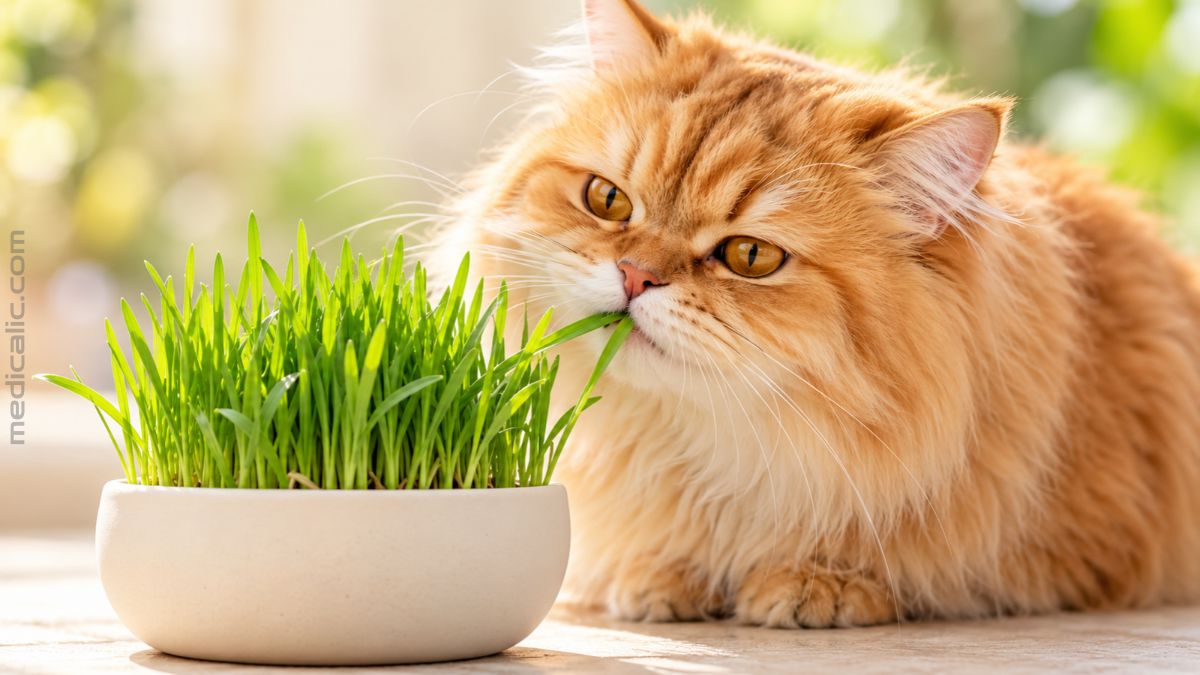
It might surprise you to see your cat munching on grass like a tiny cow! Are they actually hungry, or is something else going on?
There’s usually no need to worry—eating grass now and then is normal for most healthy cats.
So, why do cats eat grass? Let’s explore the possible reasons behind this curious habit!
Why Do Cats Eat Grass? Four Possible Reasons
1. A Habit From Wild Ancestors
Over time, cats adapted to life with humans and became household pets. Some habits from their wild ancestors may have stayed with them.
Wild cats were exposed to intestinal parasites. Eating grass and leaves helped them pass some of those parasites in their stool.
That could explain why a house cat still feels the urge to nibble grass, even when there are no parasites to clear.[1]
2. A Possible Link to Swallowed Fur
When your cat grooms, they swallow loose fur. Most passes out in their stool, but some can collect in the stomach and form hairballs.[2]
In some cats, eating grass may help bring that fur back up. Certain grass blades and leaves have tiny hairs or rough edges that catch strands of fur. If your cat throws up the plant material, the fur caught on it can come out too.
3. A Source of Fiber
Eating grass doesn’t necessarily mean your cat is missing nutrients. A complete, balanced diet already provides what they need.
Grass contains fiber, the part of a plant that cats don’t fully digest. The right types and amounts of dietary fiber can help swallowed fur pass through the gut and out in the stool, while also supporting regular bowel movements.[3] That’s why certain fiber sources are included in diets designed for hairball control or constipation.
4. They May Simply Enjoy It
Fresh grass has its own smell and texture, and its blades bend and move when touched. For a curious cat, that gives them something interesting to investigate.
You may see your cat sniff the grass, tap a blade with a paw, then take a small bite. The chewing itself may be part of the appeal. Even a well-fed cat can be curious about a plant, so a few nibbles could simply be part of exploring it.
Why Do Cats Eat Grass and Then Throw Up?
If your cat throws up after eating grass, it’s easy to think they ate it to make themselves vomit. But swallowed blades may irritate the stomach and trigger vomiting in some cats.
Most cats appear well before eating plants. About 27% of surveyed cats were reported to vomit frequently afterward.[4]
Vomiting afterward alone doesn’t tell us why they ate the grass.
Is Grass Safe for Cats?
A few nibbles of clean, untreated cat grass are generally safe for a healthy cat. Before letting your cat graze outdoors, check whether pesticides, weed killers, or fertilizers have been used. Identify any nearby plants they might chew, too. If you’re unsure about the plants or lawn treatments, avoid that area.
Keep true lilies (Lilium) and daylilies (Hemerocallis) out of your home and any garden your cat can access. Eating even a small piece, licking pollen from their fur, or drinking water from a vase containing these flowers can cause kidney failure.[5]
If you suspect exposure to a toxic plant or harmful lawn product, contact your vet or an emergency veterinary clinic immediately. Don’t wait for symptoms or try to make your cat vomit.
Give Your Cat a Safer Place to Graze
Cat grass can be an occasional treat alongside your cat’s usual food. Your big, furry bug may nibble on houseplant leaves too, so a pot of cat grass gives them another place to munch.
Cat grass is usually young wheat, oat, barley, or rye.[6] These shoots contain vitamins and minerals, but it’s unclear how much nutrition a cat gets from a few nibbles.
You can grow it from a kit or buy a pot intended for pets. If you grow your own:
- Choose suitable seeds. Use untreated seeds sold for cat grass, and keep pesticides and lawn sprays away.
- Keep the setup clean. Use clean containers and water, provide drainage, and follow the watering instructions. Replace any moldy or spoiled growth.
- Watch your cat’s response. If they repeatedly vomit or seem uncomfortable after nibbling, remove the pot and speak with your vet.
Place the pot where your cat can reach it comfortably. If they show no interest, there’s no need to encourage them.
Medical References
Update History
Reference accuracy and source links verified.
Originally written by Medicalic.
Your answer helps us improve the clarity and usefulness of our health content.