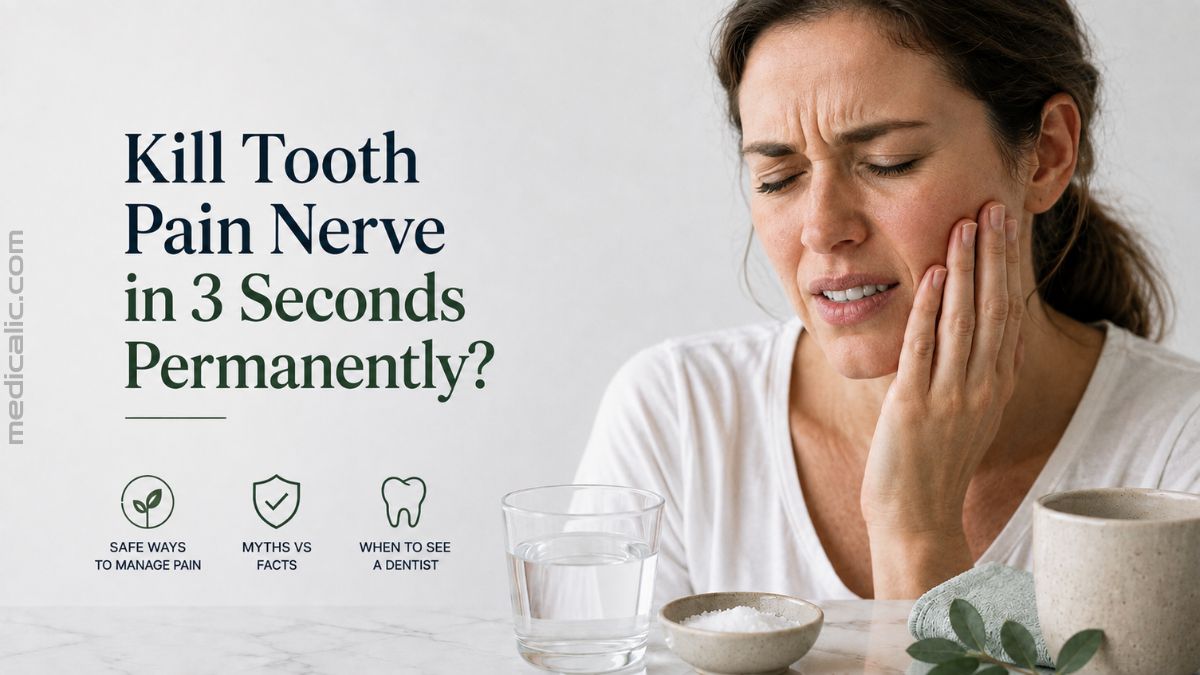
A throbbing toothache can shrink your whole world down to one thought: make it stop. Eating hurts. Sleep becomes difficult. Even concentrating on a simple task can feel impossible.
So if you searched for “kill tooth pain nerve in 3 seconds permanently,” you are probably not looking for a lecture—you want fast relief.
Here is the important answer: there is no safe home method that can kill a tooth nerve in three seconds and permanently cure tooth pain. A remedy may numb the area or reduce pain for a while, but that is very different from treating the problem inside the tooth.
The encouraging part? You can often make the pain more manageable while arranging dental care. And once the cause is identified, treatments such as a filling, root canal, drainage, or extraction can provide lasting relief.
Can You Kill a Tooth Pain Nerve in 3 Seconds Permanently?
No, not safely at home.
What people call the “tooth nerve” is actually part of the dental pulp, the soft tissue inside a tooth that contains nerves, blood vessels, and connective tissue. The pulp sits beneath the hard enamel and dentin layers.
A mouthwash, oil, paste, or household chemical cannot safely reach the pulp, remove diseased tissue, disinfect the root canal system, and repair the tooth. Even if something briefly numbs the area, the cavity, crack, inflammation, or infection causing the pain may still be there.
A dentist can numb a painful tooth with local anesthesia, but anesthesia only blocks pain signals temporarily.[1] The tooth may still need dental treatment to address whatever is causing the pain.
That is the key distinction: numbness can quiet the pain; treatment addresses why the tooth hurts.
What to Do Right Now for Tooth Pain
When a tooth is pounding, you need practical steps, not a dozen complicated remedies.
Use an appropriate over-the-counter pain reliever
If these medicines are normally safe for you, an over-the-counter pain reliever may reduce toothache while you arrange dental care.
Current American Dental Association guidance supports nonsteroidal anti-inflammatory drugs (NSAIDs), such as ibuprofen or naproxen, alone or in combination with acetaminophen, for temporary management of toothache in adults and adolescents aged 12 or older when immediate dental treatment is unavailable.[2] The ADA living guideline lists its latest evidence search as February 2026.
Follow the label carefully and never take more than recommended. Check with a clinician or pharmacist first if you are pregnant, have kidney or liver disease, a history of stomach ulcers or gastrointestinal bleeding, take a blood thinner, have had a reaction to NSAIDs, or are unsure how the medicine may interact with your other medications. Also check cold, flu, and combination pain products so you do not accidentally take extra acetaminophen. For children younger than 12, ask a pediatric dentist, clinician, or pharmacist which medicine and dose are appropriate.
Try a warm saltwater rinse
A gentle warm saltwater rinse can help clean the mouth and may soothe irritated gum tissue. Spit it out instead of swallowing it.
It may make you more comfortable, but it does not kill the nerve, remove decay, or cure an abscess. The NHS includes saltwater rinsing among temporary self-care measures for toothache while waiting for dental treatment.
Make eating easier on the tooth
For now, choose soft foods and avoid chewing on the painful side. Very hot, cold, or sugary foods can trigger some types of tooth pain, so giving the area a break may help.
If the pain started after an injury to the tooth, a cold compress against the outside of the cheek may also provide temporary comfort.
Do Home Remedies Actually Kill a Tooth Nerve?
Searches for “kill tooth pain nerve in 3 seconds permanently at home” or “kill tooth pain nerve in 3 seconds permanently home remedies” often bring up suggestions that range from ineffective to genuinely risky.
The problem is simple: a painful pulp is sealed inside the tooth. A home remedy cannot safely perform the work of dental treatment.
Some methods may temporarily change how pain feels. That does not mean they have fixed the tooth.
Avoid putting aspirin directly on the tooth or gum
Swallowing an appropriate pain reliever and placing the medication directly against your gum are not the same thing.
Mayo Clinic specifically advises against placing aspirin or another painkiller against the gums because it can burn gum tissue.
Do not experiment with corrosive chemicals
Bleach, household cleaners, concentrated peroxide, acids, or similar substances do not provide safe dental treatment. Trying to chemically “burn out” a nerve can injure the mouth without fixing the source of the pain.
The same logic applies to DIY drilling, cutting the gum, inserting needles into the tooth, or attempting your own extraction. Severe pain can make extreme shortcuts sound reasonable, but creating a second injury only makes the situation harder to treat.
Be cautious with numbing products
A topical numbing gel may temporarily reduce surface discomfort, but it cannot repair deep decay or remove infected pulp.
Benzocaine-containing oral products also carry a rare but serious risk of methemoglobinemia, a condition that reduces the blood’s ability to carry oxygen. The FDA advises against oral benzocaine products in children younger than two and requires safety warnings for products intended for older children and adults.
When used appropriately, a numbing product may buy you a little temporary comfort. But it does not treat the tooth itself; relief and a cure are not the same thing.
If temporary remedies do not fix the problem, the next question is obvious: what is actually making the tooth hurt?
What Causes “Tooth Nerve Pain”?
Toothache is a symptom, not a diagnosis and not every toothache comes directly from the pulp.
Common causes include:
- Tooth decay
- A cracked or damaged tooth
- A loose or broken filling
- Inflamed or infected dental pulp
- A dental abscess
- Gum disease
- Tooth sensitivity
- Teeth grinding or clenching
- Dental injury
The NHS identifies decay, dental abscesses, cracked teeth, damaged fillings, gum disease, grinding, and sensitivity among common causes of toothache.
How the pain behaves can offer useful clues, although symptoms alone cannot tell you exactly what is wrong.
Brief sensitivity to cold or sweets may come from exposed dentin, early decay, or a loose restoration. Pain that lingers after something hot or cold can suggest deeper pulp inflammation, while a sharp pain when biting may occur with a crack or inflammation around the tooth’s root. Constant, severe pain with swelling or tenderness raises more concern for infection.
These patterns are clues, not a diagnosis. A dental exam is usually needed to identify the cause and decide what treatment makes sense.
What Actually Stops Tooth Pain Permanently?
Lasting relief depends on what is causing the tooth to hurt and whether the tooth can be restored.
Filling or crown
If decay has not caused irreversible damage inside the tooth, removing the decay and restoring the tooth may solve the problem. A cracked or structurally weakened tooth may sometimes need additional protection with a crown.
Pulp-preserving treatment
In some mature permanent teeth, removing all of the pulp is not the only option. Vital pulp therapy can remove inflamed pulp while preserving healthy, living tissue deeper inside the tooth.
Recent evidence is encouraging. A 2026 systematic review of 23 studies found pooled 12-month success rates of about 92% for full pulpotomy and 89% for partial pulpotomy in mature permanent posterior teeth with irreversible pulpitis.[3] However, the certainty of the evidence was rated low to very low, and longer-term outcomes were less certain.
Short-term results also show why case selection matters. In the 2026 PROVE trial, both full pulpotomy and root canal treatment reduced pain within seven days, but early treatment failure within four weeks occurred in 5.2% of pulpotomy cases compared with 0.5% of root canal cases.[4] Root canal treatment also produced greater early pain relief.
So pulpotomy can be a valuable tooth-preserving option for carefully selected teeth, but it is not automatically appropriate for every painful tooth or superior to root canal treatment.
Root canal treatment
When preserving the pulp is no longer appropriate, root canal treatment may still allow the tooth itself to be saved.
During treatment, the inflamed or infected pulp is removed. The root canals are then cleaned, disinfected, shaped, filled, and sealed. The tooth is subsequently restored to protect it.
Notice what is happening here: the treatment is not merely “killing a nerve.” It is removing diseased tissue, controlling infection, sealing the space, and preserving a tooth when possible.
Drainage of an abscess
If an infection has produced a collection of pus, the abscess may need to be drained and its dental source treated.
A dental abscess requires urgent dental care and does not simply disappear because the pain briefly improves.
Tooth extraction
Sometimes a tooth is too badly damaged to restore predictably. In that situation, extraction may be recommended.
But extraction is not automatically the fastest or best answer for every severe toothache. A dentist first needs to determine whether the tooth can reasonably be saved.
That raises another common question: where do antibiotics fit in?
Do Antibiotics Help Tooth Nerve Pain?
Not usually by themselves.
This is another common misconception: toothache does not automatically mean you need antibiotics.
For most pulpal and localized periapical dental problems in otherwise healthy adults, the ADA recommends prioritising dental procedures—such as pulp treatment, root canal treatment, or drainage—rather than routinely prescribing systemic antibiotics.[5] Antibiotics become more appropriate when infection shows signs of systemic involvement, such as fever or malaise.
Why? Because an antibiotic cannot remove a cavity, repair a crack, take diseased pulp out of a tooth, or physically drain trapped pus.
So even when a dentist decides antibiotics are necessary, you may still need definitive dental treatment.
Never take leftover antibiotics or medication prescribed for someone else.
Since the right treatment depends on the cause, the next step is figuring out exactly which tooth and tissue are involved.
What Will the Dentist Check?
Tooth pain can be surprisingly difficult to pinpoint. Your dentist may ask what triggers the pain and how long it lasts, then examine the tooth and gums, check how the tooth responds to pressure or temperature, and take an X-ray if needed.
Those clues help distinguish a problem that may need a filling or crown from one that requires pulp treatment, root canal therapy, drainage, or extraction.
When Tooth Pain Needs Urgent or Emergency Care
Do not let a home remedy delay care when the symptoms are escalating.
Arrange urgent dental care if the pain is severe, keeps returning, lasts more than about two days, does not respond to appropriate pain relief, or comes with fever, pain when biting, a bad taste in the mouth, or swelling of the cheek or jaw.
Seek emergency medical care immediately if swelling in the mouth or neck is making it difficult to breathe, swallow, or speak; if you develop significant mouth swelling; if the area around an eye becomes swollen or painful or your vision changes; or if you are having major difficulty opening your mouth. These can be warning signs of a dental infection spreading beyond the tooth.
Frequently Asked Questions
An appropriate over-the-counter pain reliever may reduce pain temporarily if it is safe for you. However, the fastest route to lasting relief is dental diagnosis followed by treatment of the cause.
No. Warm salt water may soothe irritated tissues and help keep the mouth clean, but it cannot reach inside a tooth and permanently destroy or treat its pulp.
No. Clove oil contains eugenol, which may briefly dull surface discomfort, but it cannot permanently kill a tooth nerve or treat the decay, pulp inflammation, or infection causing the pain. Concentrated clove oil can also irritate or burn oral tissue, especially when it is repeatedly held against the gum.
Not in most cases. Antibiotics do not repair cavities, cracks, or damaged pulp. When antibiotics are needed for a spreading or systemic infection, treatment of the affected tooth is still usually necessary.
Not necessarily. A severe toothache can fade because pain medicine is working, pressure has eased after an abscess drains, or badly damaged pulp tissue inside the tooth has died. In the latter situations, bacteria and damaged tissue may still remain even though the tooth feels strangely quiet.
If the pain was severe or persistent, do not cancel your dental appointment simply because it suddenly feels better.
The Bottom Line
There is no safe way to kill tooth pain nerve in 3 seconds permanently at home, and trying to destroy the nerve yourself can create a much bigger problem than the original toothache.
For now, focus on safe temporary relief: use an appropriate pain reliever if you can take it safely, avoid foods that trigger the tooth, try a gentle warm saltwater rinse, and arrange dental care.
You do not need a miracle remedy. You need the cause identified and treated. That is what turns short-term pain control into lasting relief.
Medical References
Update History
Originally written by Dr. Rahul Kushwaha.
Your answer helps us improve the clarity and usefulness of our health content.