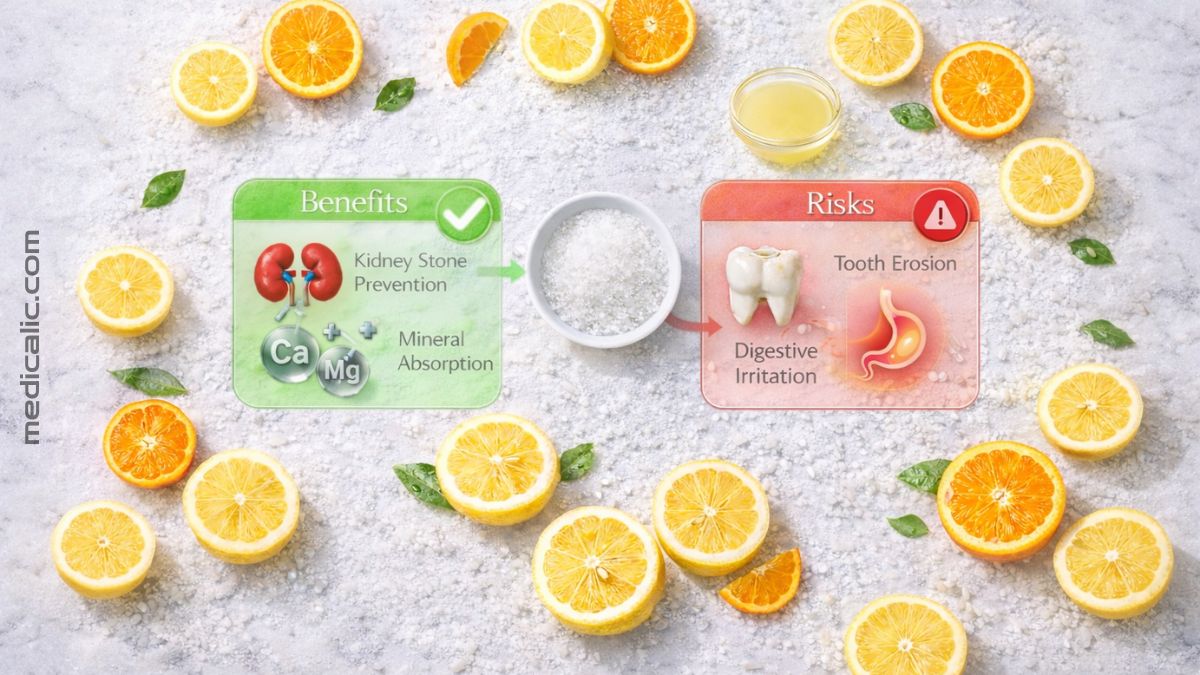
If you look closely at ingredient lists in recent times, you will notice that citric acid is one of the most common ingredients in modern foods. It is found in soft drinks, candies, canned foods, sauces, supplements, and almost all packaged products. Because it appears so frequently on ingredient labels, many people ask: Is this acid harmful to health?
In short, the amount typically found in everyday foods is considered safe for most people. Health authorities such as the U.S. FDA, WHO, and EFSA classify it as a safe food additive. However, as with many things, the amount consumed and the source are important factors.
If you clearly understand how this compound works in the body, where it comes from, and how much is considered safe, you can make informed decisions yourself. That’s why this guide will discuss in detail the benefits of citric acid, possible risks, recommended intake levels, and what scientific research says about it.
What Is Citric Acid?
Citric acid (C₆H₈O₇) is a naturally occurring weak organic acid. It was first discovered in 1784 by the Swedish chemist Carl Wilhelm Scheele, who isolated it from lemon juice.
Biologically, it plays an important role in the citric acid cycle (Krebs cycle) in the human body. This is a metabolic process through which cells convert nutrients from food into usable energy.
The tangy and refreshing taste of citrus fruits mainly comes from this organic acid. In nature, it also functions as a preservative and antioxidant.
Natural vs. Manufactured Citric Acid
The natural form comes directly from fruits such as lemons, limes, oranges, pineapples, and various berries. However, to meet the massive demand from the food, pharmaceutical, and beauty industries, most of it today is produced artificially through a fermentation process.
In this industrial process, the production of Manufactured Citric Acid (MCA) generally involves the following steps:
The liquid is neutralized, crystallized, washed, and purified to obtain the pure food-grade additive.
Chemically, the compound produced through this process and the one naturally found in lemons or oranges have the exact same molecular structure.
The only difference lies in the production method. Some people raise concerns about potential trace residues from the fermentation process. In reality, when manufactured following good production practices, these levels are negligible and well within safety limits. According to the U.S. FDA, this form of the additive is classified as GRAS (Generally Recognized as Safe).
Why Citric Acid Is Added to Foods
Food manufacturers widely use citric acid because it is a safe, versatile, and highly effective ingredient. It enhances flavor, extends shelf life, and improves overall product quality without adding calories.
Flavor Enhancement
It provides a sharp, tangy, and refreshing sour taste. The substance helps balance sweetness in beverages, making them taste fresher and more vibrant. It also enhances and rounds out flavors in fruit-based products.
Natural Preservative
By lowering the pH, this additive creates an environment that inhibits the growth of bacteria, mold, and yeast—including dangerous pathogens such as Clostridium botulinum in canned goods. This significantly slows spoilage and helps extend shelf life.
Antioxidant Function
The compound acts as an antioxidant and chelating agent. It binds to metal ions that can trigger oxidation, helping prevent rancidity in fats and oils, discoloration, nutrient loss, and flavor degradation in processed foods, frozen products, and beverages.
Texture and Stability Improvement
In products like processed cheese, ice cream, and sauces, it helps stabilize emulsions and maintain a smooth, consistent texture. It also prevents ingredient separation and can improve the absorption of certain minerals in fortified foods.
Health Benefits of Citric Acid
This is not just a common food ingredient. Scientific research suggests it may offer several potential health benefits, particularly when obtained from natural sources.
Kidney Stone Prevention
One of the most well-documented benefits of citrate is its role in helping prevent kidney stones. Citrate (a derivative of the acid) can bind with calcium in urine, which may reduce the formation of calcium stones. Research has shown that citrate therapy can lower the risk of recurrent kidney stones.
Antioxidant and Anti-Inflammatory Effects
It may help combat free radicals and oxidative stress, which are linked to various health problems. By reducing oxidative stress, it may support the health of the brain, liver, and immune system.
Boosts Mineral Absorption
The acid can improve the body’s ability to absorb important minerals such as iron, calcium, and magnesium. Forming soluble complexes with these minerals, it helps increase their bioavailability, which may support bone health and reduce the risk of anemia.
Gut and Immune Support
Emerging research suggests that this compound may also support gut and immune health. For example, a 2024 mouse study found that it may help promote beneficial gut bacteria, strengthen the intestinal barrier, and potentially provide antimicrobial effects against certain infections.
Foods High in This Acid
It occurs naturally in many foods and is added to many others.
Natural Sources
Some fruits naturally contain high levels of citric acid:
| Food | Natural Content |
| Lemon juice | 4–7% |
| Lime juice | 4–7% |
| Grapefruit | 1–2% |
| Pineapple | ~1% |
| Orange juice | 0.6–1% |
Processed Foods
Checking ingredient labels can help you identify products containing the added substance, which often include:
- Soft drinks and sports drinks
- Candy and packaged fruit snacks
- Canned vegetables and tomato sauces
- Flavored chips and ice cream
- Vitamin C supplements
Possible Risks and Side Effects
While generally safe for most people, excessive intake or high exposure may cause side effects.
Tooth Enamel Erosion
This is the most common concern. Citric acid has a low pH, which can soften tooth enamel, especially when acidic beverages are consumed frequently or over long periods.
Ways to reduce the risk:
- Drink acidic beverages with meals
- Use a straw when possible
- Rinse your mouth with water afterward
- Wait at least 30 minutes before brushing your teeth
Digestive Irritation
High amounts may irritate the digestive system in sensitive individuals, potentially causing stomach discomfort, heartburn, or acid reflux.
Rare Sensitivity Reactions
A small number of case reports have described possible reactions to the manufactured version (such as joint pain, muscle pain, fatigue, and shortness of breath). These reactions may occur in individuals sensitive to trace residues from the fermentation mold. However, current scientific research has not found evidence of a widespread risk or confirmed allergy.
Who Should Limit Intake
People with acid reflux, GERD, sensitive digestive systems, or enamel sensitivity should limit their intake. For most people, there is no need to completely avoid it. Consuming it in moderate amounts is generally sufficient and safe.
How Much Citric Acid Is Safe?
Unlike many additives, no specific Acceptable Daily Intake (ADI) has been set by major health authorities because the compound has very low toxicity and is rapidly metabolized. The Joint FAO/WHO Expert Committee on Food Additives (JECFA) concluded that it does not require a strict daily intake limit.
Final Verdict: Is Citric Acid Bad for You?
For the vast majority of people, citric acid is not harmful. When consumed in typical dietary amounts, it is safe and may even support certain aspects of health. However, excessive consumption of acidic drinks or highly processed foods may contribute to dental enamel erosion or digestive discomfort, especially in sensitive individuals.
Update History
Originally written by Medicalic.
Your answer helps us improve the clarity and usefulness of our health content.