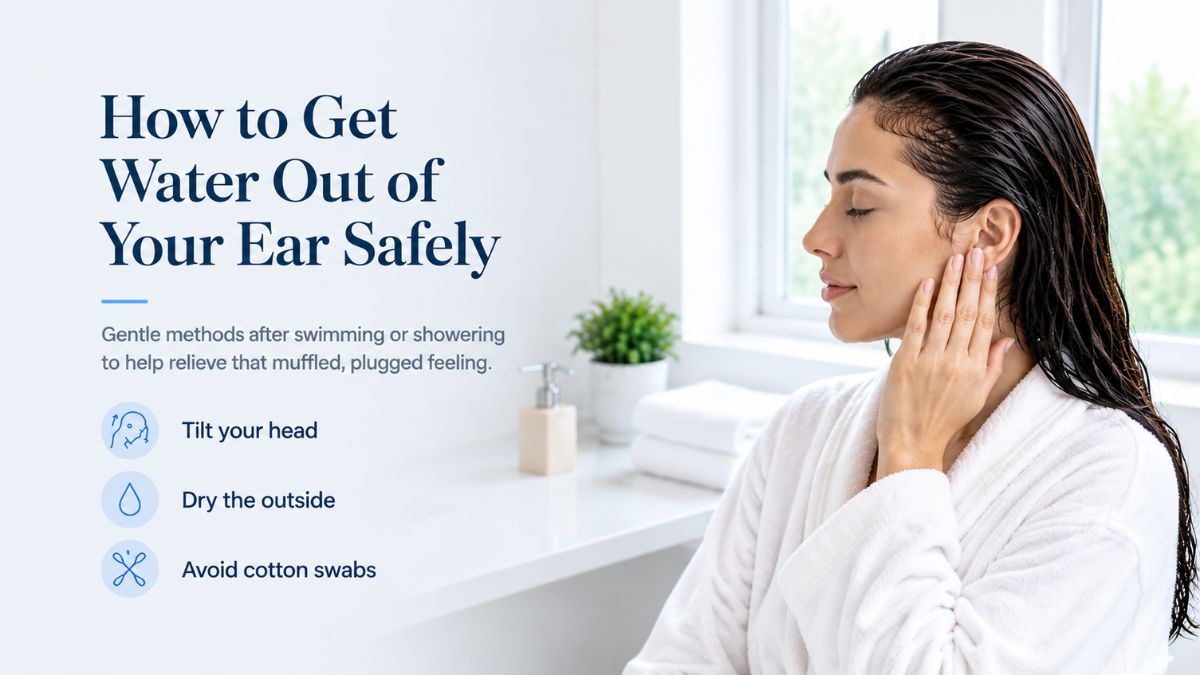
That muffled, sloshing feeling after a swim or shower can be distracting. Your ear may feel plugged, sounds seem distant, or water shifts whenever you move your head.
The good news: Water trapped in the outer ear canal is usually harmless and often drains naturally on its own. However, prolonged moisture can irritate the delicate skin of the ear canal and increase the risk of bacterial or fungal infection. [1]
Wondering how to get water out of your ear safely? Start with gentle methods and never insert cotton swabs, fingers, or other objects into the canal. [2]
Quick Answer: How to Get Water Out of Your Ear
Tilt your head so the affected ear faces the floor. Gently pull the earlobe in different directions, then dry the outside with a soft towel. If needed, lie with the ear facing down or use a hair dryer on its coolest, lowest setting from about 12 inches away. [3]
Seek medical care if you develop pain, drainage, fever, dizziness, swelling, or worsening hearing loss.
Why Does Water Get Stuck?
The ear canal is narrow and curved. Water may collect behind earwax, ear-canal hair, or a bend in the canal. Earbuds, hearing aids, eczema, and naturally narrow canals may increase the likelihood.
Typical signs include fullness, muffled hearing, mild tickling, or bubbling after swimming, bathing, or showering. Severe pain, pus, fever, or marked swelling are not typical of simple trapped water.
How to Get Water Out of Your Ear at Home
Start with the simplest options. Most trapped water clears within a minute or two using one of these gentle techniques.
1. Tilt Your Head
Start with gravity. Tilt your head sideways so the affected ear points toward the floor. Hold the position for several seconds and gently move your head from side to side.
Avoid violent shaking. A slow position change is often enough to break the seal between the water and the ear canal.
2. Gently Pull the Earlobe
Keep the ear pointed downward and gently pull the earlobe down, back, and slightly upward. This can straighten the curved canal and give the water a clearer path out.
Stop if moving the outer ear causes pain. Tenderness when pulling the ear or pressing the small flap in front of the canal can signal swimmer’s ear.
3. Lie on the Affected Side
If the water remains, lie on your side with the blocked ear over a clean towel. Stay there for five to 10 minutes.
Giving gravity more time may work better than repeatedly shaking your head.
4. Create Gentle Palm Suction
Place your palm flat over the ear to form a light seal. Press gently, release, and repeat a few times while the ear faces downward.
The small pressure change may loosen the water. Do not slap the ear, push hard, or create forceful suction. Stop if you feel pain, dizziness, or uncomfortable pressure.
5. Dry the Outer Ear
Use a soft, clean towel to dry the outer ear and the area around the opening.
Do not twist the towel or tissue into the canal. Cotton swabs can scratch the skin, push wax deeper, and injure the eardrum. The ear canal is designed to clean itself, and earwax helps protect it by trapping debris and reducing irritation. [5]
6. Use a Hair Dryer Carefully
Gentle airflow may help the remaining moisture evaporate.
Choose the lowest fan speed and coolest or lowest heat setting. Hold the dryer about 12 inches from the ear and move it back and forth. Gently pulling the earlobe may improve airflow.
Use short intervals and stop if the air feels hot. Never use high heat or place the dryer close to the ear.
Should You Use Ear-Drying Drops?
Over-the-counter drying drops may help frequent swimmers, but they are not safe for everyone.
Do not use drops if you have:
- Ear tubes
- A known or possible ruptured eardrum [4]
- Recent ear surgery
- Significant ear pain
- A suspected infection
- Fluid, pus, or blood coming from the ear
Ask a healthcare professional if you are unsure whether your eardrum is intact.
Some home remedies combine rubbing alcohol and vinegar. These ingredients may help dry and acidify the canal, but homemade mixtures can irritate inflamed skin, and direct evidence supporting them is limited. Commercial ear-drying drops designed for this purpose may be a safer option when they are appropriate for your situation.
Hydrogen peroxide is mainly used to soften earwax. It is not a first treatment for simple trapped water and should be avoided if there is a possibility of eardrum damage.
What Not to Do
Avoid:
- Cotton swabs, fingers, pins, or keys
- Ear candles
- Forcefully flushing the ear with more water
- Hot or high-pressure airflow
- Repeated drops without knowing the eardrum is intact
- Aggressive earwax removal
These actions can damage the canal, pack wax more tightly, introduce germs, or injure the eardrum.
Is It Really Trapped Water?
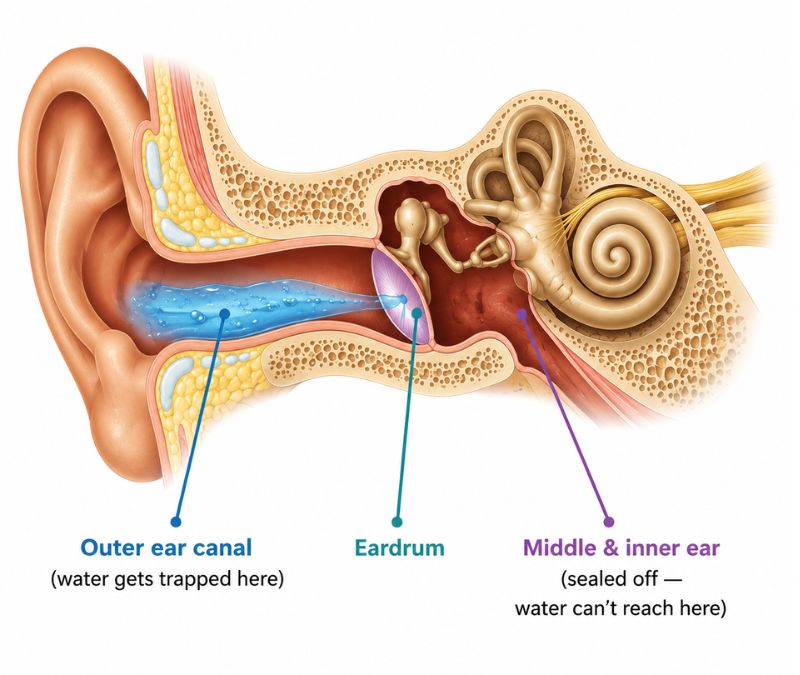
Not every clogged ear after swimming contains water. The infographic above helps visualize where water usually sits safely within the outer canal, not in the sensitive middle ear.
Earwax buildup can cause persistent fullness, muffled hearing, and a plugged sensation. Moisture may make earwax swell and worsen the blockage. Swimmer’s ear is an infection of the outer ear canal. It commonly causes itching, increasing pain, redness, drainage, and tenderness when the outer ear is moved. [6]
Pressure or fullness after a cold, allergies, or air travel may be caused by Eustachian tube dysfunction, which affects pressure regulation behind the eardrum. [7] Water-removal methods will not fix this type of blockage.
If the sloshing stops but the blocked feeling remains, another cause may need evaluation.
When to See a Doctor
Get medical care if you experience:
- Moderate or severe pain
- Pain when touching or pulling the outer ear
- Pus, blood, or foul-smelling drainage
- Fever, redness, or swelling
- Dizziness or balance problems
- Sudden or worsening hearing loss
- Symptoms lasting more than one or two days
Seek help sooner if you have diabetes, a weakened immune system, ear tubes, previous ear surgery, or a known eardrum problem.
A healthcare professional can examine the ear canal and eardrum, identify the cause of the blockage, safely remove impacted wax if needed, and provide treatment for infections.
How to Prevent It Next Time
After swimming or showering, tilt each ear downward, gently pull the earlobe, and dry only the outside. Frequent swimmers may benefit from properly fitted swim plugs or an ear-covering swim cap.
Keep earbuds and hearing aids clean and dry. If water becomes trapped repeatedly, an ear examination may help identify problems such as excess earwax buildup, skin irritation, or a naturally narrow ear canal.
Frequently Asked Questions
Often, yes. Many minor cases drain naturally within a short time. Gentle gravity-based methods may speed up the process.
It may increase the risk. Moisture can irritate the canal’s protective skin, allowing germs to multiply and potentially causing swimmer’s ear.
Most trapped water in the ear canal can be removed using gravity, gentle ear movement, and careful drying. Avoid inserting cotton swabs, tissues, or other objects into the ear canal because they can cause irritation or injury.
Point the affected ear downward and gently pull the earlobe. If that does not work, lie on the affected side, followed by cool, low airflow from a hair dryer held at a safe distance.
No. Water from swimming or showering usually stays in the outer ear canal. The eardrum protects the middle and inner ear. A blocked feeling that seems like “inner ear water” may actually be caused by earwax, irritation, or pressure changes.
The Bottom Line
Learning how to get water out of your ear does not require aggressive tricks. Start with gravity, gentle ear movement, towel drying, and cool airflow. Keep objects out of the canal and use drops only when appropriate.
Most cases settle quickly. Pain, drainage, fever, swelling, or persistent hearing changes mean it is time to stop home treatment and have the ear examined.
Medical References
Update History
Medically reviewed by Dr. Rahul Kushwaha.
Originally written by Dr. Jubair Islam.
Your answer helps us improve the clarity and usefulness of our health content.