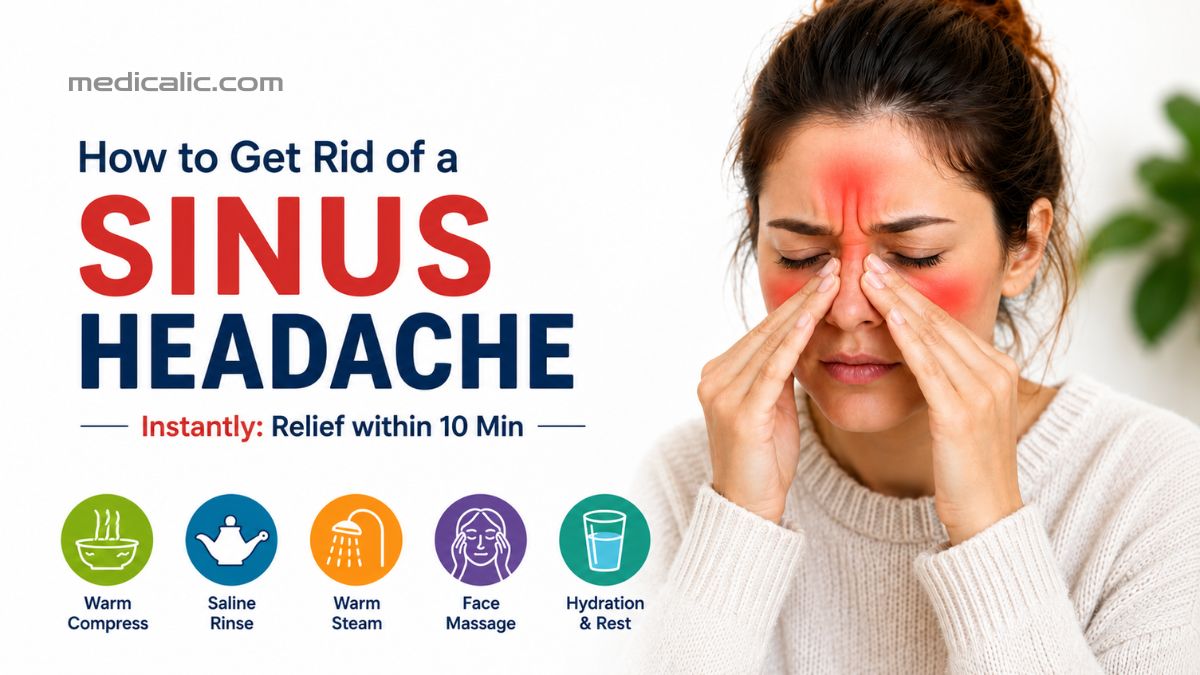
A sinus headache is not just “a headache.” It feels like pressure building inside your face. Your forehead may feel heavy, your cheeks may ache, and the bridge of your nose may feel tight. Sometimes the pain spreads behind your eyes or into your upper teeth.
When it feels that intense, you naturally want fast relief. So, how do you get rid of a sinus headache instantly?
The honest answer is simple: you may not be able to cure a sinus headache in minutes, but you can often reduce the pressure quickly. The smartest approach is to help mucus drain, calm swollen nasal passages, and manage pain safely.
The 10-Minute At-Home Routine for Fast Sinus Relief
For immediate comfort, start with a simple 10-minute routine that targets the swelling, thick mucus, and poor drainage causing your pain.
First, make sure you sit upright instead of lying flat, as lying down can increase facial pressure. Place a warm (not hot) compress over your forehead, nose, and cheeks for 10 to 15 minutes. This gentle warmth eases facial tightness and helps loosen stubborn mucus. While you relax with the compress, sip on water, warm broth, or caffeine-free tea. Thick mucus is incredibly hard to drain, and staying hydrated is one of the best ways to make it thinner and easier to clear.
Next, focus on clearing your nasal passages. A simple over-the-counter saline spray can moisten dry areas and clear out minor irritants. If you are comfortable with it, a nasal rinse using a neti pot or squeeze bottle can be even more effective at flushing out mucus, pollen, and dust. Just remember that water safety is crucial. Always use distilled, sterile, or previously boiled and cooled water, and never use plain tap water. [1]
A warm shower can also work wonders. The moist air helps calm irritated nasal passages and naturally loosens mucus. While a steaming bowl of hot water offers similar benefits, a shower is generally safer as it eliminates the risk of accidental burns to your skin or airway.
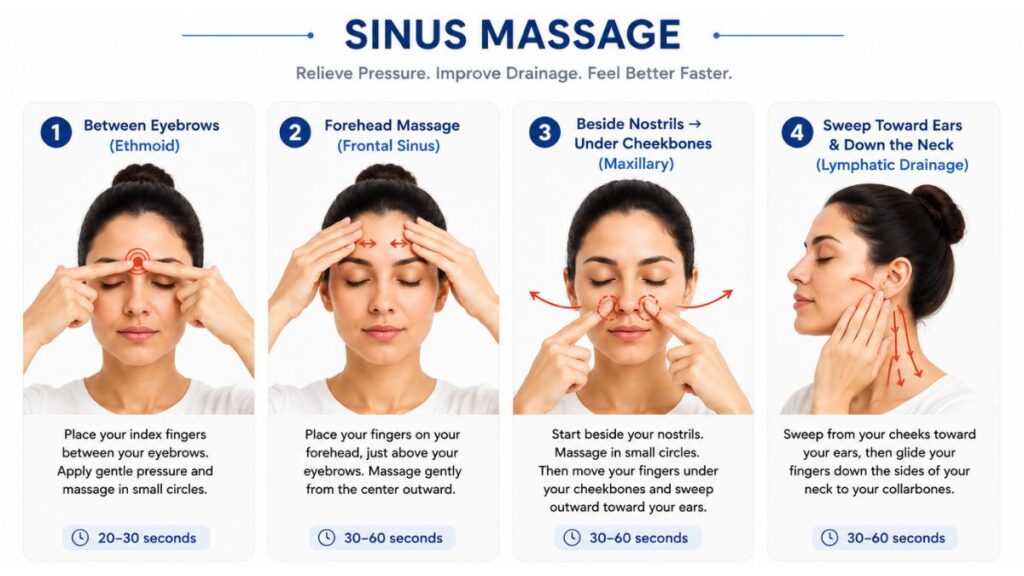
Finally, try a gentle sinus massage to manually relieve the pressure. Start by pressing lightly between your eyebrows for 30 to 60 seconds. Then, massage beside your nostrils in small, gentle circles. Slowly move your fingers under your cheekbones and sweep outward toward your ears. Remember to use only light pressure and avoid pressing on any swollen or painful skin.
This routine will not instantly cure an underlying infection, but for many adults, it is a highly effective, low-cost first step for short-term relief.
Make Your Environment Sinus Friendly
Your room’s environment plays a surprisingly big role in how sinus pressure feels. Try to keep the air clean and comfortable. Not too cold, hot, dry, or damp.
Aim to keep your indoor humidity around 30% to 50%. If the air feels particularly dry, staying closer to the 40% to 50% range is usually the most comfortable. Very dry air irritates the nose and thickens mucus, while humidity levels above 50% can encourage mold and dust mites, which might trigger further issues. [2]
Temperature matters, too. Maintain a comfortable room temperature between 68°F to 75°F (20°C to 24°C). Avoid the temptation to make the room ice-cold just for headache relief. Additionally, make sure you aren’t sitting directly in strong heater airflow, as this can quickly dry out your nose and throat and worsen your symptoms.
What a Sinus Headache Really Feels Like (And Why It Happens)
Your sinuses are small air-filled spaces around your nose, cheeks, forehead, and eyes. When the lining inside them becomes inflamed or swollen, mucus cannot drain properly. That trapped mucus and swelling create the intense, deep pressure known as a sinus headache.
You are more likely dealing with a true sinus headache when the head pain is accompanied by nasal or facial symptoms. This often includes a stuffy or runny nose, deep facial pain, post-nasal drip, a sore throat, coughing, bad breath, or a reduced sense of smell. The pain usually worsens when you bend forward, move your head quickly, lie down, or wake up in the morning.
Common triggers for this kind of inflammation include colds, allergies, smoke, dust, pollution, dry indoor air, and structural sinus issues like nasal polyps. If you have severe head pain without much congestion or facial pressure, you might not be dealing with a sinus issue at all.
Medicine Options That May Help Quickly
When home care isn’t quite enough, medication can provide the extra relief you need. Choosing the right medicine depends entirely on what is causing your sinus pressure.
For general pain and inflammation, over-the-counter relievers like acetaminophen, ibuprofen, or naproxen can be very helpful. Always follow the label instructions carefully. It is important to note that ibuprofen and naproxen may not be safe if you have conditions like stomach ulcers, kidney disease, uncontrolled high blood pressure, or if you are pregnant. Furthermore, aspirin should never be given to children or teenagers recovering from chickenpox or flu-like illnesses due to the risk of Reye’s syndrome, a rare but serious condition. [3]
If nasal blockage is your main problem, a decongestant might be the answer. Oral decongestants reduce swelling effectively, but they aren’t right for everyone, especially those with high blood pressure, heart disease, glaucoma, insomnia, or severe anxiety. Decongestant nasal sprays work very quickly, but they should only be used for a few days. Overusing them can cause a rebound effect, making your stuffiness much worse than before. [4]
Allergies might be driving your symptoms, often indicated by sneezing, itchy eyes, and a clear runny nose. If so, an antihistamine or steroid nasal spray will likely be much more useful than a decongestant.
A quick note on antibiotics: they are rarely the first answer. Many sinus infections start from viruses, which antibiotics simply cannot treat. Never take leftover antibiotics or self-medicate. If your symptoms are severe, last more than 10 days, or worsen after improving, consult a healthcare professional. [5]
Is It Really a Sinus Headache or Migraine?
Many people who think they suffer from chronic sinus headaches actually have migraines. This is a very common confusion because migraines can also cause facial pressure, watery eyes, and a stuffy nose. [6]
The distinction matters because the treatment is entirely different. A sinus headache is closely linked to congestion, thick drainage, and symptoms that often follow a cold. A migraine, on the other hand, is more likely when the pain is throbbing, severe, recurring, mostly on one side of the head, and linked with nausea, vomiting, or sensitivity to light and sound.
If you keep treating a migraine like sinus pressure, you will not get the relief you need. If your “sinus headaches” keep coming back but you rarely have actual mucus, fever, or congestion, it’s time to ask a healthcare professional about migraine or another headache disorder.
Quick Relief Myths to Avoid
When you are in pain, you might be tempted to try anything, but some popular “cures” are best avoided.
Menthol might make your nose feel open temporarily, but it does not cure sinus pressure. Avoid putting menthol oil, strong essential oils, vapor rub, or garlic inside your nose, as these can severely irritate your already swollen nasal passages.
Similarly, strong coffee is not a cure-all. While caffeine may make you feel more alert and can sometimes help with general headaches, too much of it can disturb your sleep, increase anxiety, and make you feel overall worse. Keep your coffee intake moderate and don’t let it replace essential fluids like water and broth.
How to Prevent Sinus Headaches From Returning
Fast relief is helpful, but lasting relief comes from addressing the root cause. Prevention depends heavily on knowing your triggers.
If allergies cause your sinus pressure, focus on reducing your exposure to pollen, dust, mold, and pet dander. Keep your windows closed on high-pollen days, wash your bedding frequently, and consider using a high-quality air filter. If dry air is the culprit, a clean humidifier can help keep your indoor air comfortable—just be sure to clean it regularly so it doesn’t spread mold and bacteria.
During cold and flu season, practice good hygiene by washing your hands often, staying hydrated, and avoiding close contact with people who have respiratory infections. When you do need to clear your nose, blow gently to avoid forcing mucus deeper into your sinus cavities.
When to Seek Medical Help
Most sinus issues are safe to treat at home. But you should seek urgent medical care for certain warning signs. These include a severe or unusual headache, stiff neck, or confusion. High fever, vision changes, eye swelling, repeated vomiting, or trouble breathing also need immediate help.
Schedule a doctor’s visit if your symptoms last over 10 days. You should also see a professional if symptoms return or worsen after improving. Pregnant individuals, children, older adults, and those with weakened immune systems should always seek medical advice earlier.
Medical References
Update History
Originally written by Medicalic.
Your answer helps us improve the clarity and usefulness of our health content.