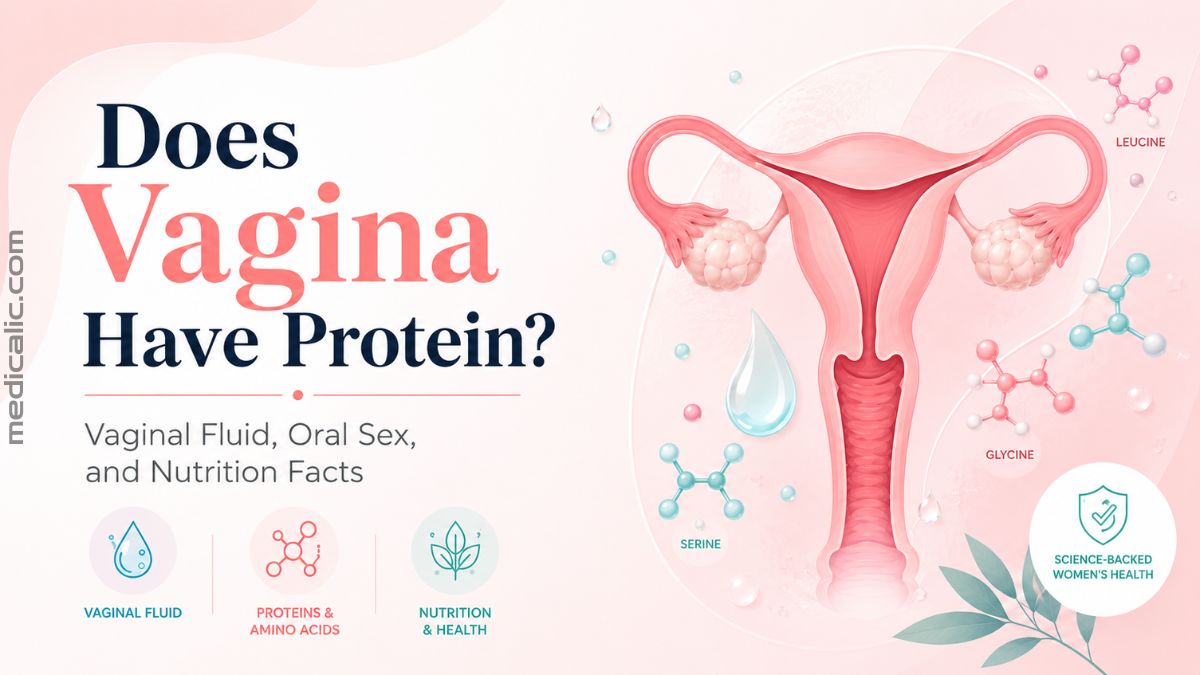
Yes, the vagina contains proteins, and so does vaginal fluid. Researchers have even measured protein in vaginal secretions. But finding protein in a laboratory sample is very different from getting a useful amount through food.
So how much protein is actually present, and does that amount matter nutritionally? And when vaginal fluid comes into contact with the mouth during oral sex, what are the real health risks worth knowing about?
What Is Vaginal Fluid Made Of?
Vaginal fluid isn’t a single substance. It’s a changing mixture of water, cervical mucus, cells shed from the vaginal lining, beneficial microorganisms, salts, and substances involved in the body’s natural immune defenses.
One reason vaginal fluid looks and feels different throughout the month is cervical mucus. Around ovulation, it often becomes clearer, wetter, and stretchier.[1]At other times, it may be thicker, creamier, or less noticeable. Sexual arousal can also increase moisture, although arousal-related lubrication isn’t exactly the same as everyday vaginal discharge.
In many people, Lactobacillus bacteria help maintain an acidic vaginal environment.[2] Proteins in cervicovaginal secretions have their own protective roles, contributing to mucus structure and local immune defenses. Some help maintain protective barriers, while others participate in the body’s response to microorganisms.
How Much Protein Is in Vaginal Fluid?
Researchers can measure protein in vaginal secretions, but there isn’t one fixed amount that applies to everyone. The results depend partly on how samples are collected and whether they include secretions from the cervix as well as the vagina.
In one study using menstrual cups to collect vaginal secretions, researchers reported average total protein concentrations of approximately 3.0–3.6 milligrams per milliliter across different menstrual cycle phases. These were measurements from a specific study, not a universal reference range for vaginal fluid.[3]
Other laboratory research has identified hundreds of different proteins in cervicovaginal fluid, including proteins involved in immune defense. That finding reveals how biologically complex the fluid is, but it doesn’t tell us how much protein someone would actually ingest.
Protein concentration is only part of the equation; the amount of fluid matters too. Because the volume involved during oral sex varies and isn’t measured as a nutritional serving, there’s no reliable figure for how much protein someone would consume through that activity.
Does Eating a Vagina Provide Any Protein?
The phrase “eating a vagina” usually refers to cunnilingus, a form of oral sex involving the vulva, or external genital area. Although people commonly use the word “vagina” for the entire genital region, the vagina and vulva are anatomically different.
Oral sex may involve contact with protein-containing vaginal secretions, but it doesn’t provide a meaningful amount of dietary protein or help meet daily protein requirements.
For consenting adults, oral sex can be part of intimacy and pleasure. Whether to participate is a personal choice, and both partners should feel comfortable discussing boundaries. It also brings up a separate question: what health risks might come with that contact?
Is It Safe to Swallow Vaginal Fluid?
Swallowing a small amount of vaginal fluid is generally unlikely to cause harm by itself, but that doesn’t make oral sex risk-free. If a sexually transmitted infection (STI) is present, it may spread through contact with genital skin, sores, mucous membranes, or secretions—even when no fluid is swallowed.
Oral sex can transmit infections such as gonorrhea, syphilis, herpes, and HPV. Some infections cause no noticeable symptoms, so a partner can appear healthy and still have an STI.[4]
The risks aren’t identical for every infection. For example, HIV transmission through oral sex is considered extremely low compared with vaginal or anal sex. Other infections, including gonorrhea and herpes, remain relevant concerns.
Using a dental dam creates a barrier between the mouth and vulva. A condom cut into a flat sheet can serve a similar purpose. These barriers can reduce STI exposure, although they cannot eliminate every risk. Talking openly about STI testing, protection, and personal boundaries is another important part of safer sexual contact.
When to Avoid Oral Sex or Seek Medical Advice
Vaginal discharge naturally changes throughout the menstrual cycle. Clear or white discharge, variations in texture, and a mild natural odor can all be normal. What matters more is a noticeable change from someone’s usual pattern.[5]
A new strong or fishy vaginal odor, green or gray discharge, itching, burning, genital sores, pelvic pain, or unexplained bleeding deserves medical attention. These symptoms can have different causes, and appearance alone isn’t enough to make a reliable diagnosis.
If either partner has unexplained genital or oral sores, concerning symptoms, or a known or suspected STI, it’s best to avoid oral contact until they receive appropriate medical advice. Because many infections have no symptoms, barrier protection and appropriate testing still matter when everything appears normal.
If you’re concerned about an STI after oral sex, tell a healthcare professional what kind of contact occurred. They may recommend a throat swab for certain infections, since genital testing cannot detect an infection located in the throat.[6] That conversation is more useful than trying to judge STI risk from appearance or symptoms alone.
Medical References
Update History
Outdated content removed.
New information added to improve completeness.
Editorial correction made.
Medically reviewed by Dr. Jubair Islam.
Medically reviewed by Haikal Rayyan.
Originally written by Dr. Rahul Kushwaha.
Your answer helps us improve the clarity and usefulness of our health content.