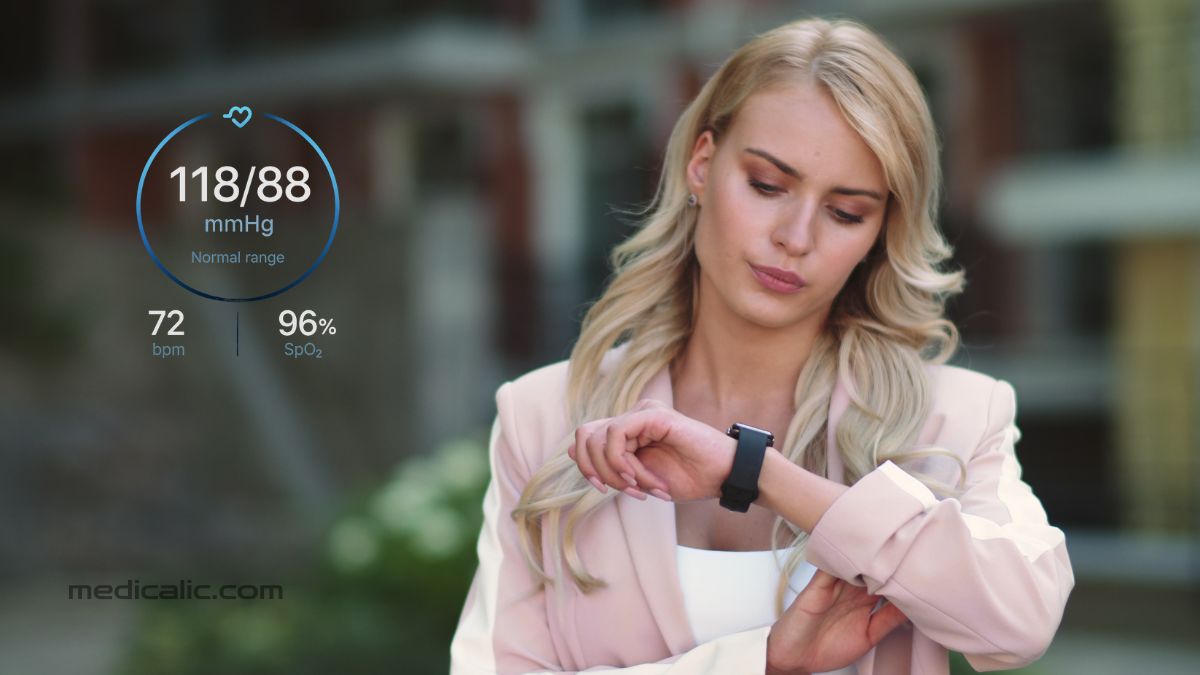
Modern smart watches are far more than step counters or heart rate trackers. Many of them now claim to measure blood pressure, a vital health metric that was once possible only in clinical settings. But how exactly can a tiny device on your wrist do what a medical cuff does on your arm? The secret lies in optical sensors, pulse wave analysis, and mathematical algorithms that translate your blood flow into numbers.
Some advanced smart watches take it further by integrating ECG (electrocardiogram) sensors alongside PPG (photoplethysmography). While PPG tracks the optical flow of blood, ECG records the electrical activity of your heart through electrodes built into the watch’s case or crown. When these two signals are combined, the device provides a more stable and accurate cardiovascular assessment, especially when properly calibrated.
Some of the latest smartwatches equipped with dual-sensor technology combine optical and electrical signals to enhance measurement accuracy. The ECG feature also helps detect irregular heart rhythms (such as atrial fibrillation), making these devices valuable not only for continuous monitoring but also for early awareness and prevention.
How Do Wearable Blood Pressure Monitors Work?
Wearable blood pressure monitors (most commonly smart watches and smart bands) primarily use photoplethysmography (PPG). Here’s how it works:
When your heart pumps blood, the volume of blood under the skin changes slightly with each beat. A green or infrared light on your watch detects these changes. The reflected light signal is then processed by built-in algorithms to estimate blood flow strength and timing.
Some professional grade smart watches go a step further by integrating ECG (electrocardiography) sensors alongside PPG for higher accuracy. While PPG captures the optical flow of blood, ECG records the electrical activity of your heart through electrodes on the watch’s surface. When these two signals work together, the device analyzes cardiovascular activity with greater precision, particularly after calibration with a standard cuff-based monitor.
This fusion of optical and electrical data enhances pulse-wave detection and delivers more stable readings, particularly when you’re resting or in a controlled environment.
Although not perfect in absolute values, these readings are highly useful for identifying trends; such as whether your blood pressure spikes during stress, exercise, or recovery.
The Difference Between a Smart Watch and a Traditional Cuff Monitor
Both devices serve the same purpose; measuring blood pressure. But they operate on entirely different scientific principles.
A traditional blood pressure machine uses the oscillometric method. The cuff inflates and temporarily stops blood flow through your arm. As the air is released, sensors detect the vibrations caused by your pulse and calculate systolic and diastolic pressures with high precision. This is a direct measurement of arterial pressure and that’s why it remains the clinical gold standard.
A smart watch, in contrast, performs an indirect estimation. It depends on optical data, mathematical modeling, and prior calibration. Motion, wrist position, tightness, and even skin temperature can affect readings.
In short:
- Digital cuff monitors = direct and medical-grade accuracy
- Smart watches = convenient but dependent on calibration and conditions
Both have their value: one for diagnosis, the other for daily insight.
How Accurate Are Smart Watch Blood Pressure Readings?
Smart watches are improving rapidly, but they’re not yet ready to replace medical devices. Clinical studies show that most smart watches can provide trend accuracy, not diagnostic accuracy.
That means your readings may not match a hospital-grade monitor, but they will usually reflect whether your pressure is going up or down. For fitness tracking, that’s often enough to make informed lifestyle choices.
Factors That Affect Smart Watch Blood Pressure Accuracy
How accurately your smartwatch measures blood pressure depends on several factors. Understanding them helps you make sense of your readings.
- Calibration errors are the most common issue. If your smartwatch isn’t regularly paired with a validated cuff-based monitor, over time, the system’s baseline can shift, leading to readings that are either too high or too low.
- Movement during measurement also creates distortion. Even small motions like flexing your wrist or typing can disrupt optical signals. For best results, take readings while seated, relaxed, and keeping your wrist steady at heart level.
- Wrist fit and position matter too. A band that’s too loose lets light leak out; too tight restricts blood flow. The ideal fit is snug but comfortable, with the watch face sitting one finger above the wrist bone.
- Skin tone also affects accuracy. Smart watches use light-based sensors (usually green or infrared LEDs) to detect blood flow changes. However, darker skin contains more melanin, which absorbs more visible light, especially green wavelengths. This can reduce reflected light and slightly affect the reading. Modern watches use infrared or multi-wavelength LEDs, which penetrate deeper into the skin and minimize this effect. For instance, Apple and Samsung watches automatically adjust light intensity based on skin tone. However, research suggests that a minor error margin (±5–10%) may remain among users with darker skin tones
- Temperature and environment also play roles. Cold weather constricts blood vessels and weakens signals; extreme heat can cause variability.
In short, while smart watches are marvels of technology, they remain sensitive to biological and environmental factors. Recognizing these helps you focus on long-term trends, not single readings.
Medical Experts’ Opinion on Smart Watch Blood Pressure Monitoring
Most cardiologists and biomedical engineers agree that smart watches are an exciting step forward but not replacements for validated medical devices.
Dr. Nancy Brown, a cardiovascular researcher at Johns Hopkins, explains:
“These devices are great for spotting trends and encouraging awareness, but clinical decisions should still rely on validated monitors.”
The World Health Organization (WHO) and American Heart Association (AHA) support this view, recommending smart watches for self-awareness and preventive care, not for medication or diagnostic use.
Benefits and Limitations of Using a Smartwatch for Blood Pressure
For Fitness Enthusiasts
For fitness lovers, smartwatches are more than gadgets. They’re true fitness companions. These devices let you monitor how your blood pressure changes during workouts, periods of stress, or recovery. This helps you track endurance, manage stress, and prevent overtraining. It’s truly motivating to see how consistent exercise improves your cardiovascular health and overall performance over time.
When Medical Devices Matter Most
However, for people with hypertension, diabetes, or heart conditions, it’s essential to rely on clinically validated blood pressure monitors. Smart watches can’t detect emergencies or provide diagnostic level accuracy. In such cases, consider them supportive tools for awareness, not replacements for certified medical equipment.
Essential Features of a Reliable Blood Pressure Smartwatch
Before buying, pay attention to the features that ensure accuracy, comfort, and usability:
- Clinical validation or FDA clearance – Always choose devices that meet medical standards for data accuracy.
- Calibration capability – Make sure the watch can be calibrated with a traditional cuff monitor for reliable results.
- Battery life and comfort – A longer battery and lightweight design make daily wear easier.
- Integrated ECG and SpO₂ tracking – These additional sensors help provide a more complete view of heart and respiratory health.
- App-based analytics and data export – Look for watches that sync easily with mobile apps, allowing you to track trends and share data with your doctor.
Should You Trust Smartwatch Blood Pressure Results?
Think of your smartwatch as a personal health assistant, not a physician.
Track trends, observe patterns, and share those insights with your healthcare provider. The goal isn’t to replace medical tools, but to build awareness and take proactive steps toward better health.
Final Verdict: Convenience or Clinical Accuracy?
In the debate between convenience and accuracy, convenience wins for lifestyle — but clinical accuracy remains essential for medicine.
A smartwatch bridges the gap between curiosity and care, empowering you with insights that inspire healthier, data-driven decisions.
At the end of the day, technology can guide you but only informed choices and regular check-ups can truly protect your health.
FAQ About Smartwatch Blood Pressure Accuracy
No. A smartwatch is helpful for awareness, not for diagnosis or treatment decisions.
Yes. Calibration with a standard cuff monitor ensures more accurate readings.
Once or twice a day is enough for trend tracking, ideally at the same time each day.
Medical References
Update History
Originally written by Medicalic.
Your answer helps us improve the clarity and usefulness of our health content.